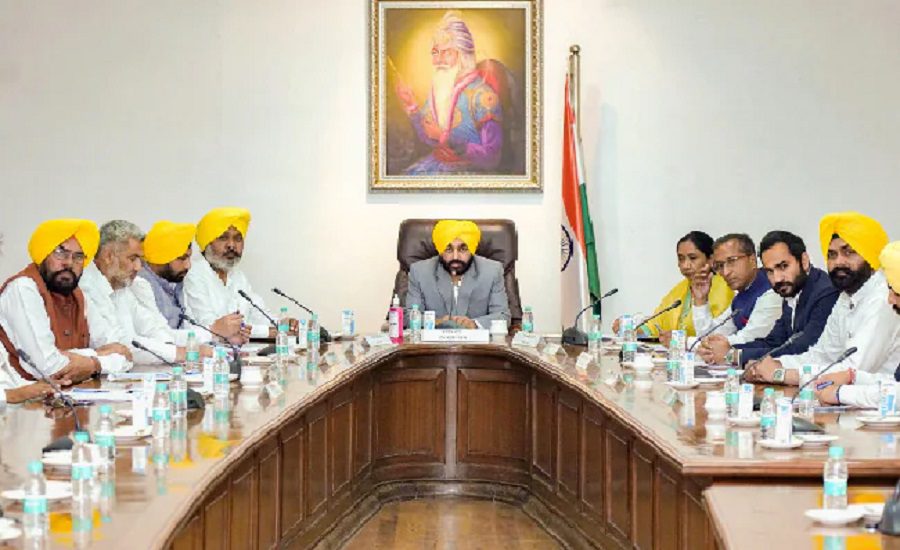
Chandigarh: In a major move to regulate education costs, Punjab Chief Minister Bhagwant Mann has announced a strict new framework to control fee hikes in private schools. The proposed law will cap annual fee increases at 5%, cover all mandatory charges, and impose heavy penalties on schools violating the rules. The legislation will be introduced in the upcoming Punjab Assembly session and will apply to all private schools across the state.
5% Cap on Annual Fee Hike for All Private Schools
Under the new regulatory structure:
- Maximum 5% annual fee increase will be allowed
- The cap will apply not only to tuition fees but also to all compulsory charges and funds
- Aim is to reduce financial burden on parents and stop arbitrary fee hikes
Chief Minister Bhagwant Mann said the government will no longer tolerate exploitation in the name of education and called the proposed law one of the strictest in the country.
Schools to Refund Excess Fees Collected in Last 3 Years
The government has also taken a strong stance against past overcharging by schools.
- Schools that increased fees beyond limits in the last three years must refund excess amounts
- Institutions that raised fees by more than 15% during this period will face strict scrutiny
- Investigations will be conducted into all pending complaints related to fee hikes
Heavy Penalties for Violating Schools
The proposed law includes a tiered penalty system:
- First violation: ₹30,000 to ₹1 lakh fine (based on school level)
- Repeat violations: ₹60,000 to ₹2 lakh fine
- Third violation: Possible cancellation of school recognition or affiliation
- Additional penalties may include mandatory refund of excess fees to parents
The government said strict enforcement will ensure transparency and accountability in private education.
Regulatory Bodies to Monitor Fee Structures
A district-level regulatory system will oversee fee structures and complaints:
- Headed by Deputy Commissioner (DC) or Additional DC
- District Education Officer (Secondary) will serve as member secretary
- Includes two nominated members
- Must decide complaints within 60 days
These bodies will have powers similar to a civil court, including the ability to investigate fee structures and issue binding orders.
Audit of Private Schools Under Consideration
To ensure financial transparency, the government is also considering mandatory audits of private schools:
- Chartered Accountant committees may be formed
- Financial records from the past 3–5 years will be reviewed
- Audits will examine fees, expenses, salaries, infrastructure spending, and fund usage
- Objective is to check whether fee hikes are justified or driven by profit motives
Strong Action Against “Profit-Driven Education”
CM Bhagwant Mann criticized previous regulatory weaknesses, stating that earlier amendments in 2019 allowed schools to bypass fee limits through disclosure mechanisms. He said these loopholes enabled unchecked fee hikes and placed excessive burden on parents.
The Chief Minister emphasized that education should not become a profit-making business and reaffirmed that the government will ensure transparency, fairness, and accountability in the sector.
Historical Context: 2016 Law and 2019 Amendments
The regulation is based on the Punjab Regulation of Fee of Unaided Educational Institutions Act, 2016, which originally capped annual fee hikes at 8%.
However:
- 2019 amendments introduced a disclosure system allowing higher fee increases with public notice
- Enforcement of these rules remained weak in practice
- The new framework seeks to close these loopholes completely
Government’s Vision: Affordable and Fair Education
The Punjab government has stated that the objective of the new law is to:
- Prevent exploitation of parents and students
- Ensure education remains affordable for economically weaker families
- Stop commercialization of school education
- Guarantee that no child is deprived of education due to high fees
CM Mann reiterated that the new law will ensure “no school is allowed to exploit parents under any circumstances.”
Punjab’s proposed education reform marks one of the strongest regulatory interventions in private school fee structures in India. With a strict 5% cap, refund provisions, financial audits, and strong penalties, the government aims to bring transparency and fairness to the education system while reducing the financial pressure on families.