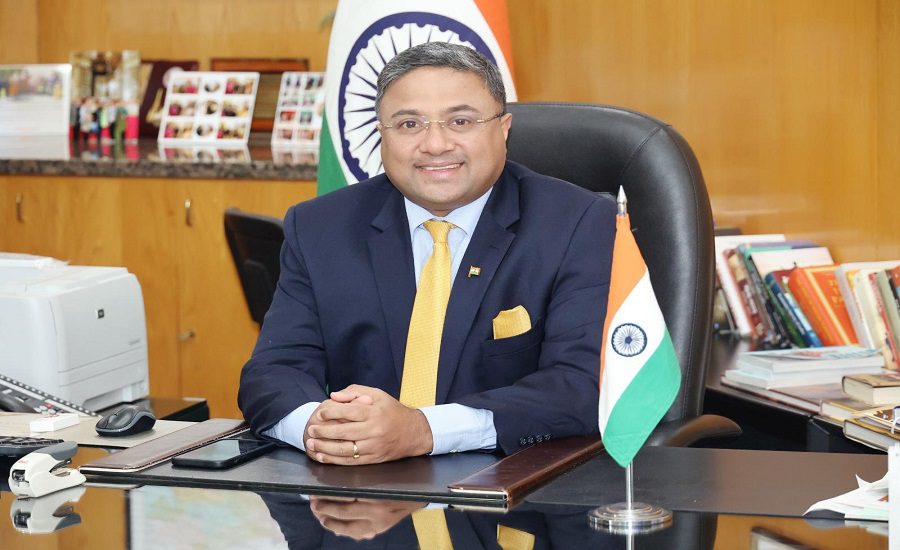
New Delhi: Sibi George, one of India’s most experienced diplomats and a 1993-batch Indian Foreign Service (IFS) officer, has become the focus of national attention after a forceful exchange with a Norwegian journalist during Prime Minister Narendra Modi’s visit to Norway.
During a Ministry of External Affairs media briefing in Oslo, journalist Helle Lyng questioned India’s record on press freedom, minority rights and human rights. Responding firmly, George defended India’s democratic institutions, constitutional safeguards and vibrant media landscape.
“You know how many stories are up here (in India). We have a lot of breaking news every day. At least 200 TV channels in Delhi alone, in English, Hindi and multiple languages. People have no understanding of the scale of India,” George said.
He further criticized what he described as selective narratives based on NGO reports, saying some observers read “one or two reports” and draw sweeping conclusions about the country.
The exchange quickly went viral across social media platforms, with many users praising George for articulating India’s position with clarity and confidence on the global stage.
Read also: Who Is IFS Ravi Shankar? Career Diplomat Appointed India’s Next Ambassador to Greece
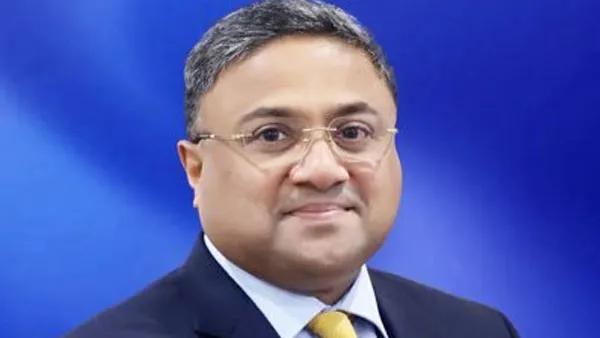
Currently Serving as Secretary (West) in the Ministry of External Affairs
Sibi George currently serves as Secretary (West) in the Ministry of External Affairs, where he oversees India’s strategic, political and economic engagement with Europe, West Asia and several multilateral forums.
This is one of the most senior positions in the Indian diplomatic service and involves managing relations with countries of major geopolitical significance.
Early Life and Academic Excellence
Born on May 20, 1967, Sibi George hails from Kerala’s Kottayam district and belongs to the Podimattam family of Pala.
He has an outstanding academic record and was a gold medallist in both graduation and post-graduation.
George also earned a diploma in Arabic from The American University in Cairo and underwent executive training at premier institutions including:
- Lal Bahadur Shastri National Academy of Administration
- Indian Institute of Management Ahmedabad
- Indian Institute of Management Bangalore
- Indian Institute of Foreign Trade
- Indian School of Business
Distinguished Diplomatic Career Spanning Three Decades
Since joining the Indian Foreign Service in 1993, George has served in some of India’s most strategically important diplomatic postings.
Early Overseas Assignments
He began his career in Cairo as Political Officer and later served in Doha as First Secretary, handling consular, media and community affairs.
He subsequently worked as Political Counsellor in Islamabad and as Political and Commercial Counsellor in Washington, D.C.
Deputy Chief of Mission Roles
George served as Deputy Chief of Mission in Tehran and Riyadh, where he played a key role in assisting Indian expatriates, especially during the Saudi Nitaqat labour reforms.
Ambassadorial Postings
Over the years, he has served as India’s Ambassador to:
- Japan
- Switzerland
- Kuwait
- Liechtenstein
- Marshall Islands
- Vatican City
Key Contributions at MEA Headquarters
At MEA headquarters in New Delhi, Sibi George served in the East Asia Division, coordinated the India–Africa Forum Summit, and later headed the Administration, Establishment and Welfare divisions.
His work has included high-level policy coordination, international summits and administrative leadership.
Recipient of the S.K. Singh Award for Excellence
In 2014, George received the prestigious S.K. Singh Award for Excellence in the Indian Foreign Service in recognition of his distinguished service and his efforts in supporting Indian workers in Saudi Arabia.
Family Life
Sibi George is married to artist Joice John Pampoorethu, and the couple has three children.
Why His Oslo Remarks Resonated
George’s strong rebuttal in Norway struck a chord with many Indians who felt he effectively defended the country against what they viewed as selective criticism.
Supporters praised his clarity, confidence and command over facts, while critics argued that the incident also reflected broader debates over press access and democratic accountability.
Regardless of the differing opinions, the episode has brought renewed public attention to one of India’s most seasoned and respected diplomats.
Read also: Who Is IFS Officer Pranay Verma? Senior Diplomat Appointed India’s Ambassador to Belgium, EU