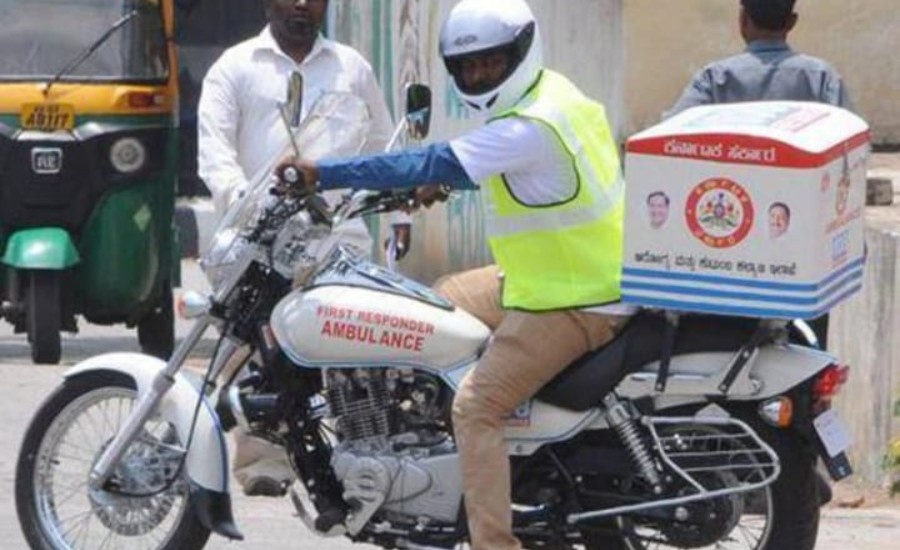
New Delhi: In a significant step towards strengthening emergency medical response and improving last-mile healthcare access, the Ministry of Road Transport and Highways (MoRTH) has issued a draft notification proposing amendments to the Central Motor Vehicles Rules (CMVR), 1989, to establish a comprehensive regulatory framework for two-wheeled road ambulances across the country.
The proposed framework aims to standardise the construction, functional safety, registration and operation of two-wheeled road ambulances, which are expected to play a crucial role in providing rapid emergency medical assistance in rural, remote and hilly regions where conventional ambulances often face mobility challenges.
First National Standards for Two-Wheeled Road Ambulances
At present, two-wheeled road ambulances are not recognised as a separate vehicle category under the Central Motor Vehicles Rules, resulting in the absence of uniform national standards for their construction, functional safety, patient handling systems, registration, type approval and fitness inspection.
Read Also: Jharkhand Seeks AIIMS for Ranchi, 400 Ambulances to Boost Healthcare Infrastructure
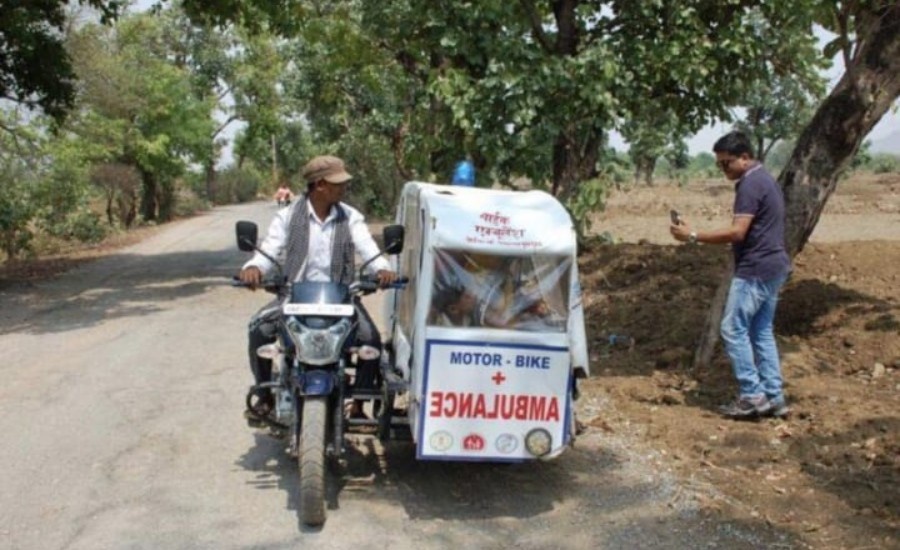
To address these gaps, the Ministry has proposed adoption of AIS-209 (Part 1):2026 – Construction and Functional Requirements for Life Support Two-Wheeled Road Ambulances, which lays down detailed technical and operational standards for these specialised vehicles.
Key Provisions of the Draft Rules
The proposed amendments include several important provisions:
- Applicability: L2-category two-wheeled road ambulances manufactured on or after 1 October 2027 will be required to comply with AIS-209 (Part 1):2026.
- Emergency Warning Lights: Top emergency lights fitted on these ambulances must also comply with the new standard from 1 October 2027.
- Area of Operation: State Governments will determine the areas where these ambulances can be registered and operated.
- Fitness Requirements: Two-wheeled road ambulances will be classified as transport vehicles and will require renewal of their fitness certificate every two years.
Dedicated Safety and Inspection Standards
The draft rules prescribe comprehensive inspection requirements to ensure the safety and reliability of these vehicles.
Fitness inspections will verify:
- Secure mounting of the ambulance accessory or patient-conveyance unit.
- Tyres and rims.
- Emergency warning lights.
- Patient stretcher and locking mechanism.
- Patient restraint systems.
- Loading and unloading mechanisms.
- Availability, accessibility and validity of the fire extinguisher.
The proposed AIS-209 (Part 1):2026 also defines a two-wheeled road ambulance as an L2-category vehicle fitted with an ambulance accessory unit or patient-conveyance system.
The standard lays down construction and functional requirements covering vehicle stability, braking performance, parking brake efficiency, gradeability, rear visibility, coupling integrity, emergency warning devices, and safe patient loading, restraint and protection from environmental exposure.
Improving Last-Mile Emergency Healthcare
According to the Ministry, the proposed framework is expected to improve safety, accountability and operational reliability in the design and use of two-wheeled road ambulances.
Officials said the initiative will help deliver faster emergency response and improve access to emergency medical care, particularly in rural, remote and hilly regions where conventional ambulances may face access constraints.
Draft Rules Open for Public Feedback
The Ministry has invited public comments on the draft notification for 30 days. After examining the feedback received, the amendments to the Central Motor Vehicles Rules, 1989 will be finalised.
The proposed framework is expected to establish uniform national standards while bringing greater safety and accountability to the design and operation of two-wheeled road ambulances across the country.