Dehradun: Uttarakhand’s disaster management framework has received strong international appreciation at the BRICS Disaster Risk Reduction (DRR) Working Group meeting, positioning the Himalayan state as a global example of resilience and coordinated response.
The recognition came during the second technical session of the BRICS DRR Working Group held in Puri from June 3 to 5 under India’s presidency.
Global Participation from 11 Countries
The three-day meeting saw participation from senior officials and policymakers from 11 countries, including Brazil, Russia, India, China, South Africa, Egypt, Ethiopia, Iran, Saudi Arabia, the United Arab Emirates, and Indonesia.
The discussions focused on key themes such as disaster risk reduction, resilient infrastructure, early warning systems, and rapid response mechanisms.
Uttarakhand’s Disaster Response Model Highlights
Uttarakhand’s disaster management practices were widely appreciated, particularly for their effectiveness in handling complex Himalayan terrain challenges such as landslides, flash floods, and glacial lake risks.
Key presentations highlighted:
- Multi-agency coordination systems
- Scientific disaster mitigation planning
- Technology-driven monitoring mechanisms
Officials emphasized how these systems have helped reduce disaster impact across vulnerable regions.
Silkyara Tunnel Rescue and Dharali Response Gain Global Attention
Special focus was given to the Silkyara Tunnel Rescue Operation and disaster management efforts in Dharali, both cited as successful examples of coordinated emergency response under extreme conditions.
International delegates described these operations as outstanding examples of:
- Technical efficiency
- Administrative coordination
- Human resilience and sensitivity
The operations were presented as benchmark models for complex rescue missions.
Presentation by SDRF and ULMMC Experts
State Disaster Response Force Uttarakhand Commander Arpan Yaduvanshi and Dr. Shantanu Sarkar, Director of the Uttarakhand Landslide Mitigation and Management Centre, represented the state at the meeting.
They presented detailed insights into Uttarakhand’s disaster preparedness systems, focusing on the region’s geographical vulnerabilities and adaptive response strategies.
Technology-Driven Disaster Management Approach
Experts highlighted the increasing role of advanced technologies in disaster mitigation, including:
- Geospatial technology
- Remote sensing systems
- Data analytics for predictive risk assessment
These tools, officials said, are becoming crucial in strengthening early warning and response capabilities.
Local Community Participation Strengthened
Officials stressed the importance of involving local communities in disaster preparedness and response, especially in remote and mountainous regions.
They noted that grassroots participation significantly improves response time and resilience during emergencies.
CM Pushkar Singh Dhami’s Leadership Highlighted
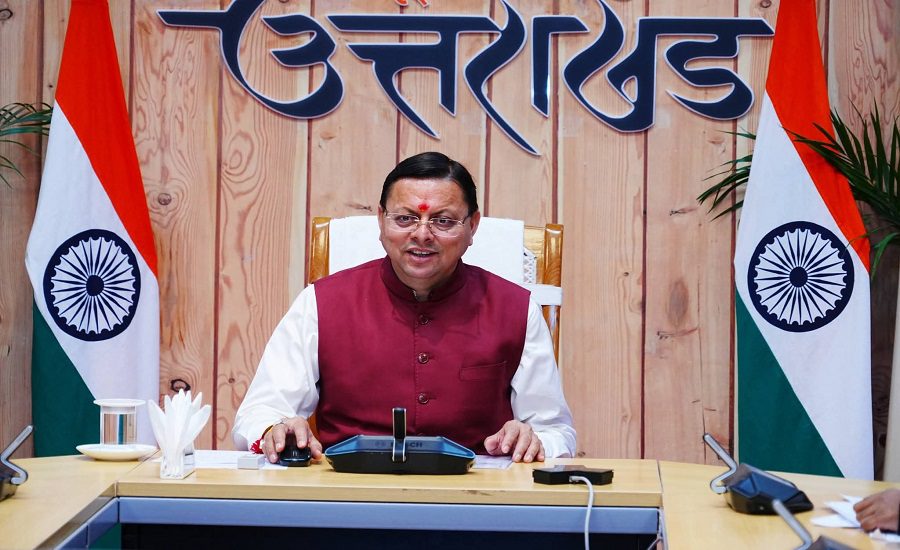
Pushkar Singh Dhami was credited for fostering stronger inter-agency coordination and a proactive disaster management approach in the state.
Officials stated that his leadership has helped integrate scientific planning with ground-level execution, minimizing disaster impact.
Silkyara Operation Called a Symbol of Unity and Courage
Speaking on the Silkyara Tunnel rescue mission, CM Dhami said it was more than just a rescue operation—it represented unity, determination, and courage.
He acknowledged the role of coordinated agencies, national leadership guidance, and the efforts of rat miners in successfully completing the high-risk operation.
The BRICS DRR Working Group meeting highlighted Uttarakhand as a leading example in disaster risk reduction and emergency response. With its blend of technology, coordination, and community participation, the state’s model is increasingly being recognized as a global benchmark for disaster resilience.