In the narrow lanes of small towns and the silent stretches of rural Rajasthan, the narcotics trade does not always look dramatic. It moves quietly. Often invisible. Hidden behind ordinary faces and routine activity. But in Jhalawar, this quiet network has been steadily disrupted. Not by chance, but by design.
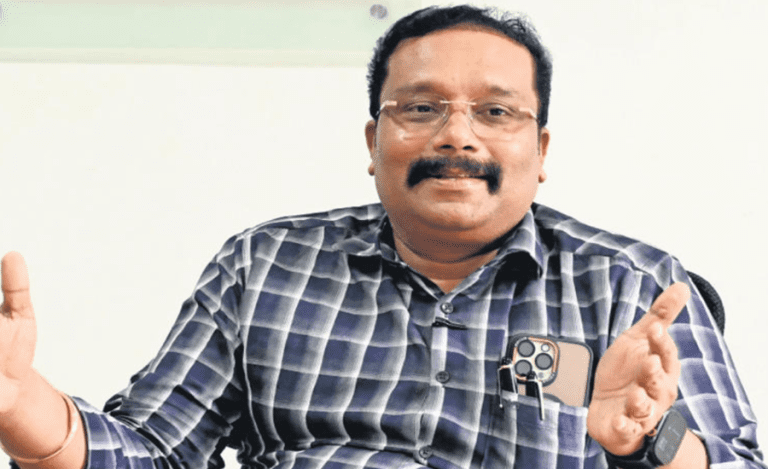
At the center of this effort is Amit Budania, an Indian Police Service officer of the 2018 batch (Rajasthan cadre), currently serving as Superintendent of Police, Jhalawar. A recipient of the Police (Special Duty) Medal in 2022 and the Union Home Minister’s Medal for Excellence in Investigation in 2023, Budania represents a new generation of officers who are combining ground intelligence with data-driven policing.
His method is clear. Don’t just catch offenders. Break the system that sustains them.
INTELLIGENCE FIRST, ACTION NEXT
Budania’s approach begins long before a raid is conducted or an arrest is made. It starts with information. Not just one source, but many.
His teams monitor social media patterns. They collect inputs from constables on the ground. They track past offenders. And then, they connect the dots.
“Our approach has been intelligence-led and multi-layered,” he says. “We rely on social media inputs, ground intelligence, and technical surveillance. Equally important is studying previous criminal records and link analysis.”
This link analysis is key. Instead of treating each arrest as a separate case, his teams try to uncover networks. Who is connected to whom? Who is financing the trade? Where is the supply coming from?
The goal is simple. Move from catching individuals to dismantling syndicates.
THE HUMAN NETWORK BEHIND THE SYSTEM
While technology plays a role, Budania does not underestimate the value of human intelligence. In fact, he puts it at the center of his strategy.
Constables, often overlooked in larger narratives, are his most important assets. They gather local information. They understand village dynamics. They notice patterns outsiders might miss.
Also Read- IPS Sagarika Nath: From District Policing to the Frontlines of National Security
This grassroots intelligence is then layered with technical inputs. The result is a sharper, more accurate picture of the narcotics ecosystem.
It is this combination that allows the police to act with precision rather than guesswork.
ENFORCEMENT WITH A SOCIAL LENS
Narcotics policing, Budania believes, cannot succeed through enforcement alone. The demand side must be addressed with equal urgency.
In districts like Jhalawar and Pratapgarh, where rural linkages run deep, the drug trade often feeds on vulnerability. Poverty. Lack of awareness. Addiction.
Budania’s response has been to bring community engagement into the policing framework.
“Enforcement alone cannot dismantle the narcotics ecosystem,” he explains. “We work closely with health departments on de-addiction and rehabilitation. Reducing demand is as important as disrupting supply.”
His teams regularly conduct awareness campaigns in schools and colleges. The focus is on youth. On prevention. On building resistance before addiction takes root.
This dual strategy—strict enforcement and social intervention—aims to break the cycle from both ends.
COORDINATION IN HIGH-RISK OPERATIONS
Operations under the NDPS Act are rarely simple. They are high-risk. They require speed, secrecy, and precision.
For Budania, coordination is everything.
“Close coordination at every level is the backbone of successful NDPS operations,” he says. “We ensure constant information sharing and clear operational roles.”
The District Special Team, local police stations, and senior officers work as one unit. Informant inputs are verified and integrated. Field teams are briefed in detail. Senior officers maintain real-time oversight.
This structured coordination reduces errors. It improves response time. And most importantly, it increases the chances of hitting the right targets.
FOLLOW THE MONEY, BREAK THE NETWORK
One of the most significant shifts in Budania’s strategy has been moving beyond arrests to financial disruption.
Drug networks survive because they generate money. Take away the money, and the system weakens.
Under Operation Divya Prahar in Jhalawar, Budania has focused on attaching illegal assets under Section 68F of the NDPS Act. The results have been striking.
Properties worth around ₹130 crore in market value have been frozen so far.
“Our focus is not limited to arrests,” he says. “We aim to weaken the financial foundations of narcotics syndicates.”
This approach sends a strong message. Crime may bring short-term gains, but it will not secure long-term wealth.
AI AS THE NEXT FORCE MULTIPLIER
As policing evolves, Budania sees technology—especially Artificial Intelligence—playing a bigger role.
But he views AI not as a replacement for human judgment, but as a tool to strengthen it.
“AI can assist in identifying associates, mapping networks, tracking vehicles, and analyzing financial trails,” he explains. “Used properly, it can significantly enhance investigation quality.”
He believes AI can act as a powerful support system for investigators. It can process large volumes of data quickly. It can identify patterns that might otherwise be missed.
In complex narcotics cases, where networks span districts and states, such capabilities can make a critical difference.
FIXING THE WEAK LINKS IN INVESTIGATION
One of the biggest challenges in NDPS cases is not detection, but conviction. Cases often fail due to procedural lapses.
Budania sees AI as a solution here as well.
“AI can help identify procedural gaps before they affect trial,” he says. “It can flag missing links in evidence and strengthen documentation.”
From checking compliance requirements to reviewing case files, AI can act as a quality-control layer.
This is particularly important in NDPS cases, where strict legal procedures must be followed. Even small errors can lead to acquittals.
BUILDING THE FUTURE OF NARCOTICS POLICING
Looking ahead, Budania believes AI-driven systems will become an integral part of policing.
Tools that analyze FIRs, case diaries, and evidence chains can help investigators identify gaps early. They can improve case quality before it reaches court.
“AI-assisted scrutiny can detect gaps in recovery memos, witness linkage, and forensic follow-up,” he notes. “Such tools can strengthen cases significantly.”
While systems like these are still evolving, the direction is clear. Policing is becoming more data-driven. More analytical. More precise.
A MODEL THAT GOES BEYOND ONE DISTRICT
What stands out in Jhalawar is not just the number of cases or seizures. It is the clarity of approach.
Intelligence-led policing. Strong grassroots inputs. Financial disruption. Community engagement. And a forward-looking embrace of technology.
Each element reinforces the other.
In a fight where the adversary constantly adapts, Budania’s strategy shows that policing too must evolve. Quietly. Systematically. And with purpose.
Because in the end, the real success of narcotics policing is not just in the arrests made—but in the networks that stop functioning altogether.
Also Read- Digital Trails, Ground Intelligence: A New Era of Policing in Jharsuguda