There are some officers who inherit legacy. Others inherit comfort. But a few enter public service with nothing except conviction, curiosity, and the courage to build something from scratch.
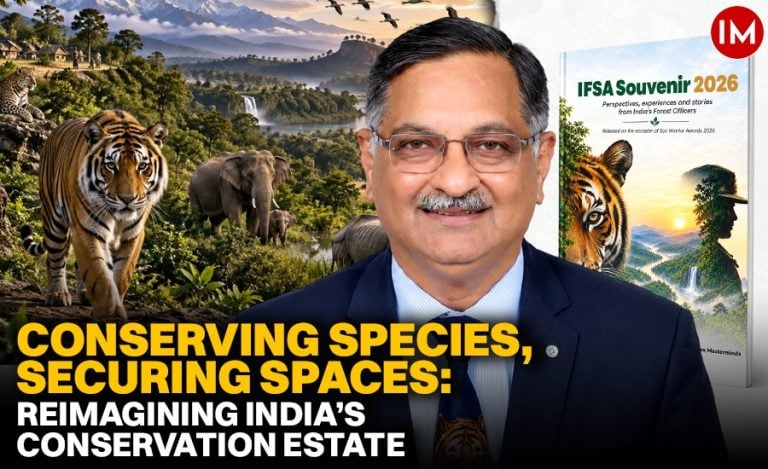
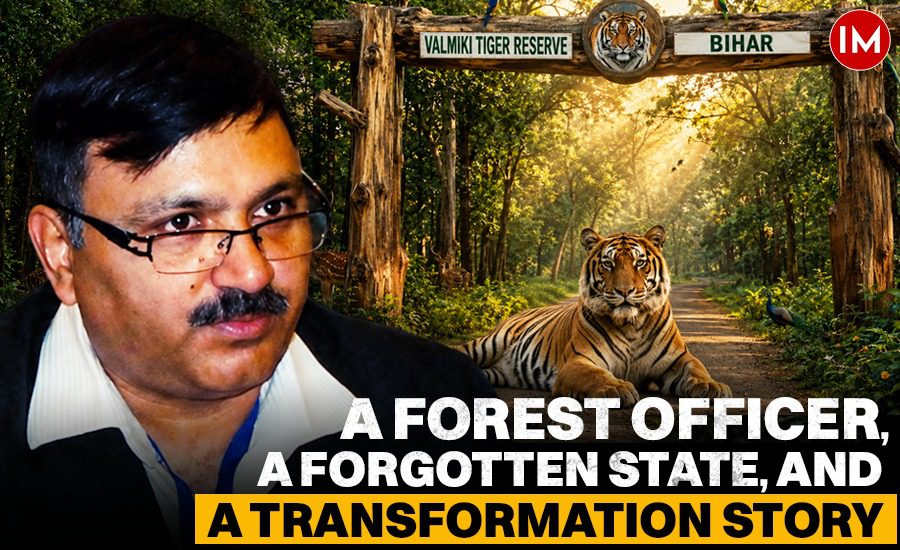
For Mr. Arvinder Singh, senior Indian Forest Service officer of 1995 batch and Bihar’s PCCF (Development) and Chief Wildlife Warden, the journey into forestry was never accidental. It was deeply rooted in science, nature, and a desire to work with living ecosystems. Today, he stands at the center of Bihar’s ecological transformation — leading wildlife conservation, eco-tourism expansion, green cover restoration, and biodiversity protection in a state once rarely associated with forests or wildlife.
Yet, as he candidly admits, when he was first allotted the Bihar cadre, his reaction was not excitement.
“I was disappointed initially,” he says honestly during a conversation with Indian Masterminds .
But what once felt like an unexpected posting slowly became the defining opportunity of his life.
“FORESTRY WAS THE NATURAL CHOICE”
Born and educated in Punjab, Mr. Singh pursued higher studies in agriculture and microbiology before entering civil services. Unlike many aspirants who prepare for multiple examinations simultaneously, his focus remained singular from the beginning.
“I never wrote any other examination. I always felt that if there is one service that can take my knowledge forward, it is the Indian Forest Service.”
For him, forestry was not merely a career option — it was an intellectual extension of agriculture and biological sciences.
“To handle biological systems, forestry was the natural choice after agriculture.”
His clarity of purpose helped him enter a field that even today remains less publicly celebrated than the IAS or IPS, despite carrying immense ecological and administrative responsibility.
Also Read – How Bihar’s NBPDCL Became One of India’s Top 5 DISCOMs Through Smart Governance and Technology
THE INITIAL DISAPPOINTMENT OF BIHAR
When he received the Bihar cadre, however, he struggled with disappointment.
At the time, Bihar was not seen as a major forestry state. Most of the undivided state’s dense forests had gone to Jharkhand after bifurcation. Bihar’s forest cover remained limited, fragmented, and largely concentrated along the southern fringe bordering Jharkhand.
“I should be honest — initially I was disappointed.”
In fact, after academy training, he immediately joined a nine-month wildlife course at the Wildlife Institute of India, perhaps searching for a deeper connection with the field he loved.
But everything changed once he returned to Bihar and received his first divisional posting.
“When you have to start from zero, you can do anything.” That realization transformed his outlook completely.
“What I thought was a disadvantage actually became a blessing in disguise.” Today, he says he cannot imagine being happier in any other cadre.
BUILDING BIHAR’S GREEN TRANSFORMATION
Over the years, Mr. Singh became part of Bihar’s larger environmental transformation story.
When he served in the Agriculture Department, Bihar was aggressively focusing on improving agricultural productivity. He found himself at the center of that push as Director of Agriculture.
“No state had created an Agriculture Cabinet like Bihar.”
The government brought together multiple departments — agriculture, fisheries, dairy, forestry, and allied sectors — under one coordinated framework to improve crop production and rural outcomes.
During this period, Bihar recorded dramatic jumps in agricultural productivity.
“We increased wheat and paddy productivity to record levels. Food grain production increased massively in a single season.”
Alongside productivity growth came institution building. Agricultural colleges were developed, modern infrastructure was created, and agroforestry emerged as a major strategy.
Since Bihar had limited notified forest area, the state focused on expanding green cover outside forests.
“We realized the best strategy was to go beyond forests.” Under agroforestry initiatives, massive plantation drives were launched year after year.
“Today, Bihar plants nearly five crore saplings annually.” The result has been remarkable. Bihar’s green cover, once barely around 6–7 percent, has now climbed close to 15 percent, steadily moving toward the state’s long-term target.
THE OFFICER WHO WROTE BOOKS FOR FOREST GUARDS
One of the most fascinating chapters of Mr. Singh’s journey began during his wildlife training in 1999.
At the Wildlife Institute of India, he noticed something deeply troubling: even wildlife education relied heavily on line sketches and limited visual material. More importantly, frontline forest guards often lacked practical field guides that could help them identify species or handle wildlife cases effectively.
“If I, as a trained wildlife officer, found identification difficult, how would my guards and foresters manage?”
That question stayed with him.
What followed was a decade-long mission.
Without modern technology, without easy internet access, and without photography resources, he began creating a practical wildlife identification book designed specifically for frontline forest staff.
“I didn’t even have a computer then. I took a loan to buy one.”
He taught himself software, hired painters to create illustrations because of copyright limitations, arranged scanning systems, and painstakingly built the project piece by piece.
Photography during those years was expensive and technically difficult. Wildlife photography was even harder. So he innovated constantly.
“It was solution after solution.”
The book eventually took nearly ten years to complete.
Published around 2005–06, the work became far more than a wildlife encyclopedia. It was designed as an operational manual for forest guards.
“They don’t need complicated scientific literature. They need practical information.”
The book explained species identification, habitat details, rescue procedures, feeding methods, and even information related to poaching and wildlife body-part trade — all from the perspective of helping frontline staff perform better.
Later, he published another book focused specifically on Bihar’s wildlife landscapes, sanctuaries, and conservation areas.
CONSERVATION BEYOND TIGERS
While tiger conservation often dominates public imagination, Mr. Singh believes biodiversity protection must go far beyond charismatic species.
Under his leadership and the department’s efforts, Bihar has witnessed significant progress in wildlife conservation.
Valmiki Tiger Reserve, Bihar’s only tiger reserve, has seen tiger numbers rise dramatically over the years. Simultaneously, the state has focused on wetlands, migratory birds, crocodiles, Gangetic dolphins, and endangered bird species.
He points out that Bihar is uniquely positioned ecologically because of its rivers, wetlands, and biodiversity corridors connected to Nepal and Jharkhand.
The state is also working toward strengthening rhino presence in the Valmiki landscape while expanding eco-tourism circuits across Rajgir, Kaimur, Rohtas, Munger, Nawada, and other districts.
For him, conservation and tourism must complement each other.
“If people experience nature closely, they begin valuing conservation.”
SPORTS, DISCIPLINE, AND STAYING BALANCED
Away from files and forests, Mr. Singh has always remained deeply connected to sports.
During his school and college years, he represented teams at national and inter-university levels in football, table tennis, and cricket.
Even today, despite his demanding schedule, he continues participating in departmental sports meets whenever possible.
“You have to do something to keep yourself mentally and physically fit.”
That philosophy perhaps explains the energy with which he continues handling diverse responsibilities — from wildlife conservation to eco-tourism expansion, policy planning, institution building, and environmental restoration.
“BIHAR BECAME MY BIGGEST OPPORTUNITY”
Today, when he looks back at the moment he first felt disappointed with the Bihar cadre, Mr. Singh smiles at the irony.
The state he once viewed with uncertainty ultimately gave him the freedom to innovate, experiment, and create impact across multiple sectors.
From forests to food security, from wildlife books to eco-tourism circuits, from agricultural reforms to biodiversity conservation — his career has evolved into a story of transformation alongside Bihar itself.
And perhaps that is the most remarkable part of his journey: not merely that he changed the system, but that the system changed him too.