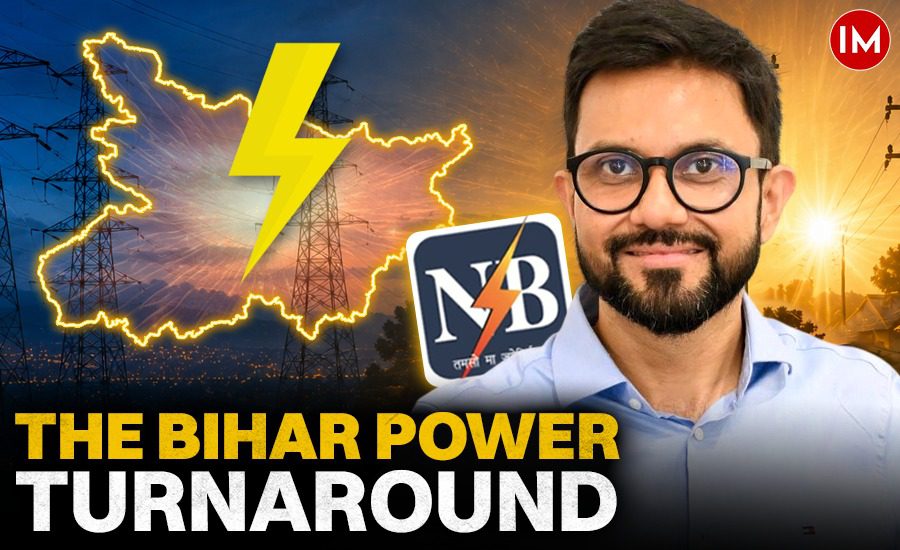
For decades, power distribution companies in India were often associated with long queues, inaccurate billing, power theft, mounting losses and endless consumer complaints. But in North Bihar, a quiet transformation is changing that narrative. Armed with artificial intelligence, digital platforms, smart prepaid meters and a consumer-centric administrative model, the North Bihar Power Distribution Company Limited (NBPDCL) has emerged as one of the country’s best-performing state-owned DISCOMs.
The latest recognition came when the utility earned an ‘A’ Rating in the Rural Electrification Corporation’s (REC) Consumer Service Rating of Distribution Utilities (CSRD) and secured a place among the Top 5 state-owned DISCOMs in India. For a utility serving over 134.25 lakh consumers across 21 districts, nearly 88 percent of whom are domestic users, the achievement represents much more than an award—it reflects a structural transformation in the way public services are delivered.
Speaking to Indian Masterminds, Rahul Kumar, a 2011-batch Bihar cadre IAS officer and Managing Director of NBPDCL, says the turnaround has been driven by a simple philosophy: putting the consumer at the centre while leveraging technology to improve efficiency.
“Our objective has been to ensure that consumers never have to pay for the inefficiencies of the utility. Profitability and affordability are not opposites—they reinforce each other when systems become efficient,” he says.
A DIGITAL REVOLUTION IN POWER DISTRIBUTION
At the heart of NBPDCL’s transformation is its move towards a fully digital consumer interface. The company’s Suvidha App has integrated multiple services—including new electricity connections, bill payments and grievance registration—onto a single platform, reducing the need for physical visits to offices.
The rollout of nearly 60 lakh smart prepaid meters across North Bihar has been another game changer. The technology has automated billing, eliminated manual meter-reading errors and reduced delays associated with paper-based systems. Consumers can now monitor and manage their electricity usage in real time while making digital payments through UPI, Bharat Bill Payment System (BBPS), net banking and recharge kiosks.
To further improve billing accuracy, NBPDCL has deployed Optical Character Recognition (OCR)-based billing, virtually eliminating manual data-entry mistakes.
The impact is visible. Collection efficiency has reached an impressive 97.63 percent, while digital payments have replaced long waits at cash counters with transactions that take less than a minute.
Also Read – From AI Cameras to Boom Barriers: The Policing Innovations That Transformed Pune’s Ganeshotsav
TAKING GOVERNANCE TO THE VILLAGE
While digital innovation has transformed urban consumer services, NBPDCL has also focused on improving accessibility in rural areas.
Traditionally, consumers had to travel to district headquarters during fixed hours on designated days to present their grievances before senior officials. To decentralise this process, the state government launched the Sahyog Shivir Initiative in May 2026. Under this programme, utility teams along with other departments visit village panchayats on the first and third Tuesday of every month, resolving complaints on the spot.
Alongside this, the 1912 customer care helpline provides round-the-clock assistance, while a two-tier Consumer Grievance Redressal Forum (CGRF) ensures that complaints are systematically addressed.
This blend of digital access and grassroots outreach has helped NBPDCL create a governance model that is both technology-enabled and citizen-friendly.
THE SMART METER ADVANTAGE
The smart prepaid meter programme is not merely about automated billing; it forms the backbone of NBPDCL’s larger strategy to reduce technical and commercial losses.
With real-time consumption data available at the consumer level, the utility now has unprecedented visibility across its network. Around 94 percent of consumers have been digitally tagged to their designated Distribution Transformers (DTs), while all DTs are linked to feeders. This allows for transformer-wise energy accounting and helps identify areas with abnormal line losses.
The data generated by the smart grid is then analysed using AI-powered analytics, enabling the company to detect unusual consumption patterns and suspected power theft. Rather than conducting broad, random inspections, field teams now receive targeted intelligence, making enforcement far more effective.
During the financial year 2025-26 alone, these data-driven anti-theft operations helped identify over 28,000 cases of electricity theft, resulting in penalties worth more than ₹83 crore.
BUILDING A STRONGER POWER NETWORK
Technology alone cannot deliver reliable electricity without robust infrastructure. Recognising this, NBPDCL has simultaneously invested in strengthening its operational backbone.
The company has shifted from a reactive maintenance model to a condition-based preventive maintenance system. Substation teams regularly use thermal imaging cameras to identify overheating transformers and faulty connections before they lead to major breakdowns. Periodic oil testing and insulation monitoring have also become standard practice, extending equipment life and reducing technical losses.
Under the Revamped Distribution Sector Scheme (RDSS), bare overhead conductors are being replaced with Aerial Bunched Cables (ABC) to curb illegal tapping and improve safety. Distribution lines have been rationalised to minimise resistance losses, while feeder and transformer segregation has enabled better load management. Upgrades to the High Voltage Distribution System (HVDS) and deployment of energy-efficient transformers are further strengthening the network.
AN ADMINISTRATIVE MODEL DRIVEN BY ACCOUNTABILITY
The turnaround has also been powered by administrative reforms. NBPDCL has converted its operational circles into individual profit-and-loss centres, encouraging local accountability. Field engineers and administrators are incentivised based on measurable improvements in revenue collection and operational performance.
A company-level Flying Squad monitors field discipline and acts on intelligence generated by the utility’s digital systems. Simultaneously, fresh recruitment drives and specialised training programmes in engineering and advanced grid finance have helped build institutional capacity.
According to Rahul Kumar, administrative innovation is just as important as technological innovation.
“Digital transformation is not simply about introducing new technology. It is about changing the way the organisation works, empowering field teams with better data and ensuring that every decision is backed by evidence and accountability,” he tells Indian Masterminds.
EFFICIENCY THAT BENEFITS THE CONSUMER
Perhaps the most striking aspect of NBPDCL’s transformation is that improved financial performance has gone hand in hand with consumer welfare.
The utility reported a profit of ₹2,214 crore in FY 2025-26, driven by efficiency gains rather than tariff hikes. Timely state subsidy support and stronger revenue collection have created financial stability, allowing the company to maintain consumer-friendly policies.
Domestic consumers continue to receive 125 units of free electricity along with tariff subsidies, while prompt-payment incentives, smart meter rebates and green tariff rebates encourage responsible energy use. The introduction of Time-of-Day (ToD) tariffs for higher-load consumers also promotes shifting consumption away from peak demand periods, reducing stress on the grid and lowering procurement costs.
The utility has also introduced instalment-based payment options, helping consumers with legacy dues return to the formal billing system without undue financial hardship.
A MODEL FOR THE FUTURE
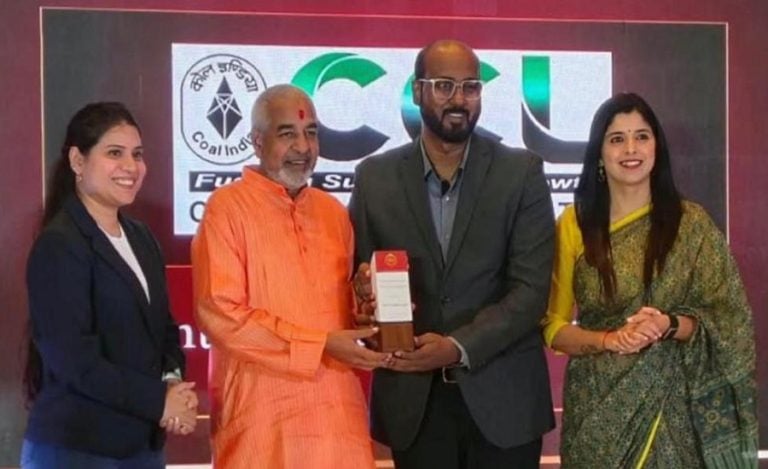
NBPDCL’s success has already received national recognition through the Annual Integrated Distribution Awards (AIDA), including honours for the Best Use of Smart Meter Data for Purposes Other Than Billing and the Gold Award for Improvement in Consumer Satisfaction in Digital Payment.
Yet the story unfolding in North Bihar is larger than awards and rankings. It demonstrates how a public utility can transform itself through a combination of technology, administrative reforms and citizen-centric governance.
In a sector long burdened by inefficiency and financial stress, NBPDCL is showing that digital innovation and good governance can go hand in hand. More importantly, it offers a template that other utilities across the country may well seek to emulate—one where better data, stronger accountability and a relentless focus on consumers are powering not just the grid, but the future of public service delivery itself.