Punjab has emerged as the top-performing State in school education in the NITI Aayog 2026 rankings, driven by strong gains in foundational learning, improved infrastructure, and large-scale reforms like Mission Samarth.
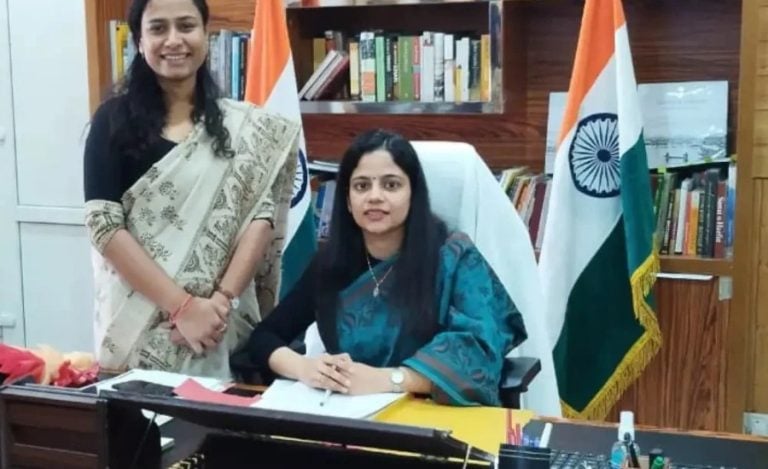
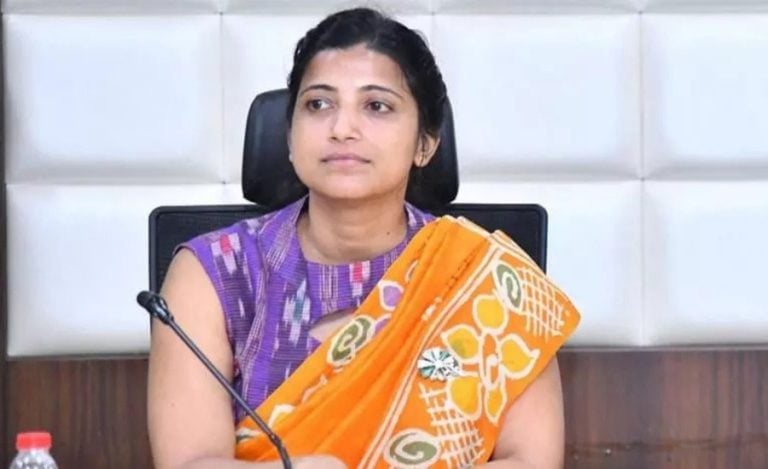
2009 batch IAS officer Sonali Giri, currently posted as administrative secretary of the School Education Department, Punjab, in exclusive conversation with Indian Masterminds, talks about the success, emphasising that the success is the result of incremental, well-implemented reforms, with a strong focus on data-driven governance, skill development, and ensuring no child is left behind. Meanwhile, Dr. Navneet Kad of SCERT-Punjab highlights that the shift toward comprehension-based, level-specific teaching under Mission Samarth has been central to improving real classroom outcomes.
Punjab tops National Education Rankings, signals shift in public schooling
“This achievement is a result of incremental transformations, driven by sustained reforms in pedagogy, infrastructure, and governance,” says Sonali Giri, Administrative Secretary of the School Education Department, Punjab.
Punjab has emerged as the best-performing state in school education, marking a significant shift in India’s education landscape. The state’s rise is rooted in measurable improvements in both foundational and secondary learning outcomes, supported by large-scale infrastructure upgrades and governance reforms. Data released by the State shows that 82% of Class III students have achieved proficiency in language and 78% in mathematics, exceeding comparable figures from traditionally high-performing States. At the secondary level, Class IX mathematics proficiency has reached 52%, indicating continuity in academic strengthening beyond early grades.
Read Also: Why UPSC Prelims 2026 Has Sparked a Debate on Fairness and Inclusivity
These gains are complemented by systemic improvements such as near-universal electrification of schools, widespread digital infrastructure, and improved student-teacher ratios. The transformation has been policy-driven, with initiatives like Mission Samarth and Schools of Eminence acting as key pillars. The State has also recorded a perceptible shift in public perception, with increasing numbers of government school students qualifying for competitive exams like JEE and NEET.
Improving Learning Outcomes: Foundational gains drive the transformation
“The core focus has been on comprehension and conceptual clarity, ensuring that learning is meaningful and not merely procedural,” explains Dr. Navneet Kad, Resource Person at SCERT Punjab, in conversation with Indian Masterminds.
Punjab’s education reforms have yielded significant gains in foundational literacy and numeracy, aligning closely with the goals of the National Education Policy 2020. According to 2026 indicators, 82% of Class III students demonstrate language proficiency while 78% meet benchmarks in mathematics, reflecting a robust foundation at the primary level. Importantly, these gains are not isolated to early education, as evidenced by 52% proficiency in Class IX mathematics, suggesting sustained academic progress across grades. Dr. Kad emphasises that these outcomes are the result of carefully designed pedagogical interventions that prioritise understanding over rote memorisation. She notes that the introduction of level-based teaching has enabled educators to tailor instruction according to a child’s actual learning stage, thereby addressing learning gaps more effectively. The reforms also incorporate continuous assessments, enabling real-time feedback and course correction.
Classroom observations indicate that students who previously struggled with basic literacy are now able to read full sentences and perform arithmetic operations independently. This shift reflects not only improved test scores but also enhanced cognitive engagement in classrooms. The emphasis on foundational competencies has created a ripple effect, strengthening performance at higher levels and contributing to the state’s overall educational excellence.
Mission Samarth at scale: Reaching over 12 lakh students across Punjab
“Mission Samarth represents a shift from scheme-based intervention to a comprehensive learning system that leaves no child behind,” notes Sonali Giri- Admin Secy, School Education.
Mission Samarth has evolved into one of the largest school education programmes in the country, currently impacting over 12 lakh students and engaging more than 70,000 teachers across Punjab’s government schools. The programme’s defining feature is its level-based teaching methodology, which ensures that instruction is aligned with students’ actual learning abilities rather than their grade level. This approach directly supports national FLN goals and addresses the long-standing issue of grade-level mismatch in Indian classrooms.
Dr. Kad highlights that the programme has institutionalised structured lesson plans, targeted interventions, and regular assessments, creating a consistent framework for learning across schools. The scale of implementation ensures that reforms are not limited to select institutions but reach the entire government school ecosystem. Teachers are trained extensively to adopt adaptive teaching strategies, while monitoring systems track student progress in real time. The programme’s success lies in its ability to combine scale with depth, ensuring both wide coverage and meaningful learning outcomes. By integrating pedagogy, assessment, and accountability, Mission Samarth has become the backbone of Punjab’s education reform model.
Mission Samarth 4.0: Technology and accountability redefine governance
“Data-driven monitoring has brought accountability into the system, ensuring that policy translates into measurable classroom outcomes.”
The latest phase, Mission Samarth 4.0, introduces a series of reforms that redefine school governance in Punjab. Central to this is a real-time attendance tracking system linked to learning outcomes, with automated SMS alerts sent to parents, thereby strengthening parental involvement. Baseline and periodic assessments have been institutionalised, enabling continuous monitoring of student progress and timely interventions. The programme ensures on-time delivery of free textbooks and learning materials, addressing logistical gaps that previously hindered learning continuity. Additionally, the deployment of campus managers, sanitation workers, and security staff has improved the overall school environment, allowing teachers to focus on academic delivery.
Data dashboards and monitoring systems provide administrators with granular insights into school performance, facilitating evidence-based decision-making. This integration of technology and governance marks a shift from traditional administrative models to a more responsive and accountable system. The emphasis on transparency and real-time data ensures that reforms are not merely policy declarations but actively implemented at the ground level, reinforcing the credibility of the education system.
Infrastructure and system-level improvements enable learning gains
“Infrastructure is not an add-on but a critical enabler of learning outcomes,” says Sonali Giri, Administrative Secretary, School Education Department.
Punjab’s education reforms are supported by significant improvements in school infrastructure, creating an enabling environment for effective learning. Nearly 99.9% of government schools are now electrified, while 99% are equipped with functional computers, showing a near-universal digital baseline. Over 80% of schools have smart classrooms, facilitating interactive and technology-driven learning experiences.
The student-teacher ratio has improved to approximately 22:1, one of the best in the country, following the recruitment and regularisation of around 30,000 teachers, with plans to add 10,000 more. Sonali Giri, Admin. Secy, School Education, notes that this improved ratio ensures more personalised attention and better classroom engagement. The State has also recorded a decline in dropout rates, with over 90% of students transitioning from Class X to XI, indicating improved retention. Importantly, the gap between rural and urban education infrastructure has narrowed, ensuring more equitable access. These systemic improvements ensure that pedagogical reforms are effectively implemented, translating policy initiatives into tangible classroom outcomes.
Schools of Eminence, holistic education reform framework
“Reforms have been incremental, and together they have built a robust education framework for Punjab,” explains Sonali Giri.
The Schools of Eminence programme represents a flagship initiative aimed at creating high-quality public schools with world-class facilities. Currently covering 118 schools, the initiative is set to expand further. According to the Admin. Secy, the programme is built on three pillars: infrastructure development, teacher rationalisation, and technological integration. Schools are equipped with modern desks, laboratories, and digital tools, creating a learning environment comparable to private institutions. Teacher deployment is optimised to maintain favourable student-teacher ratios, ensuring academic effectiveness.
Technology plays a crucial role, particularly for Classes IX to XII, where students receive access to smart learning tools and competitive exam preparation support. The programme also extends support to high-performing non-SoE schools, ensuring that excellence is not confined to select institutions. This integrated approach ensures that academic achievement is complemented by skill development, preparing students for both higher education and real-world challenges.
Equity, skills, and future readiness take centre stage
“Education today must go beyond textbooks to include skills, aptitude, and real-world readiness,” says Sonali Giri.
Punjab’s reforms place strong emphasis on inclusivity and future readiness, addressing both social and economic dimensions of education. The State has focused on improving girls’ enrolment by strengthening gender-specific infrastructure such as separate toilets, menstrual hygiene facilities, safe transport, and secure school environments. The Secy highlights that dropout rates for Classes IX to XII are now lower in government schools than in private institutions, indicating growing trust in public education.
Skill development and aptitude building have been integrated into the curriculum, recognising that education is not limited to traditional academic subjects. Initiatives like the Business Blaster programme provide students in Classes XI and XII with seed funding to develop entrepreneurial ideas, inculcating innovation and self-reliance. This shift towards holistic education ensures that students are better equipped to navigate contemporary challenges and opportunities. The reforms also aim to bridge rural-urban disparities, ensuring equitable access to quality education across the state.
Strengthening FLN through complementary initiatives
“Experiential learning has replaced rote methods, making classrooms more engaging and effective,” notes Dr. Navneet Kad.
Complementing Mission Samarth are several initiatives aimed at strengthening foundational learning. The “Khed Pitara” programme, backed by an investment of ₹9 crore, provides play-based learning kits to 7.5 lakh young students, promoting activity-based learning. These kits encourage cognitive development through interactive methods, making learning more engaging for early-grade students.
Teachers are supported through structured training modules and pedagogical tools designed to improve classroom delivery. Dr. Kad emphasises that these interventions align with the broader objective of achieving universal foundational literacy and numeracy. The shift from rote memorisation to experiential learning has enhanced student engagement and improved retention of concepts. These initiatives ensure that foundational learning reforms are comprehensive, addressing both content and delivery mechanisms. By integrating play-based and activity-driven approaches, Punjab is creating a more dynamic and effective early education ecosystem.
Budgetary commitment and data-driven governance
“Unless we know where we fall, we cannot rise, data and evidence are central to our reform strategy,” says Sonali Giri.
Punjab’s education transformation is underpinned by strong financial and policy support, with ₹19,279 crore allocated to the sector in the 2026–27 budget, the highest among all departments. This significant investment shows the prioritisation of education as a key driver of development. The reforms are further strengthened by a robust data-driven governance framework, which tracks school performance across 18 modules. Advanced analytics, including AI-based projections, enable policymakers to set clear baseline and achievement targets, ensuring measurable outcomes.
Admin. Secy, Sonali Giri notes that this evidence-based approach allows for continuous monitoring and timely interventions, making the system more responsive and effective. The integration of data into decision-making processes ensures that policies are not only well-designed but also effectively implemented. This combination of financial commitment and data-driven governance has been instrumental in sustaining the momentum of reforms and achieving tangible results.
Read Also: 293 Lives Rebuilt: How Ujjain Police Is Redefining Policing Through Empathy and Rehabilitation