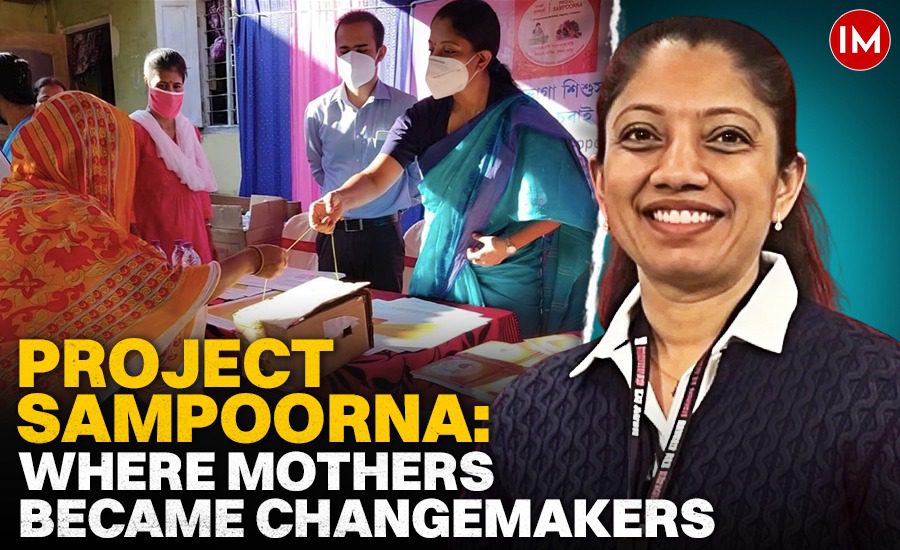
What makes a crisis more complex is its quiet normalization: malnutrition often goes unrecognised, becoming part of everyday life in many households where frail bodies, low energy, and recurring illness are accepted as routine. It is within these realities, Project Sampoorna emerges as an innovative intervention of 2014 batch IAS officer Dr. M. S. Lakshmi Priya, attempting to break the cycle not just through nutritional support, but by reshaping awareness, behaviour, and community participation at the grassroots level.
In an exclusive conversation with Indian Masterminds, Dr. M. S. Lakshmi Priya talks about the concern, innovative intervention and her future vision.
The Silent Emergency: Why Malnutrition Demands Urgency
“The purpose of becoming an IAS officer feels fulfilled when your initiative is helping people at the grassroots and the nation benefits from it.”
Malnutrition rarely announces itself loudly, yet it shapes destinies in the quietest and most irreversible ways. India’s persistent struggle with malnutrition is seen in its ranking of 102 out of 123 countries in the Global Hunger Index, with a score of 25.8 placing it in the “serious” category. The challenge is high levels of child stunting and wasting, widespread anaemia among women as highlighted by NFHS-5, and social factors such as teenage pregnancies that continue to aggravate nutritional vulnerabilities across states.
To tackle this problem from its root cause, Project Sampoorna was launched, a community-driven nutrition initiative launched by Dr. M. S. Lakshmi Priya during her tenure as Deputy Commissioner of Bongaigaon, Assam, with the aim of identifying and addressing acute malnutrition among children through scientific assessment and grassroots participation.
At its core lies the “Buddy Mother” model, a simple but impactful idea where a mother of a malnourished child is paired with a mother of a healthy child from the same locality, creating a relationship of trust through which practical knowledge on nutrition, hygiene, and childcare flows naturally. This approach shifts the focus from top-down delivery to behavioural change within the community, turning mothers into active agents of transformation rather than passive beneficiaries.
The Birth of Project Sampoorna: A Pandemic-Era Innovation
“Bongaigaon was my second posting, and the ignition to start this initiative came during the COVID pandemic. Around the same time, I became a mother, so this initiative also has a personal reason.”
Project Sampoorna did not emerge as just another administrative scheme, it took shape at a moment when crisis and empathy intersected. Launched during ‘Poshan Maah’ in September 2020, in the middle of a pandemic that had already exposed vulnerabilities in public health systems, the initiative was rooted in both urgency and lived experience. In Bongaigaon, Assam, where over 2,400 children were identified as malnourished, the need for action was immediate and undeniable. What followed was not a hurried response but a carefully designed, collaborative effort involving institutions like IIT Guwahati, NIRD, and Tezpur Medical College, supported by a four-tier administrative mechanism that ensured accountability at every level.
The project drew strength from convergence, health, social welfare, education, and rural development departments working together, breaking bureaucratic silos to address a deeply human problem. In many ways, ‘Project Sampoorna’ became a reflection of governance that listens before it acts.
The “Buddy Mother” Model: Behavioural Change at the Grassroots
“This is a bottom-up approach. One mother nudges the other, and ASHA workers and mothers themselves become the biggest ambassadors of the project.”
At the heart of Project Sampoorna lies a simple yet transformative idea, that the most effective solutions often come from within the community itself. The “Buddy Mother” model pairs a mother of an undernourished child with a mother whose child is healthy, usually from the same neighbourhood, sharing similar socio-economic realities. What follows is not formal training but a relationship built on trust, familiarity, and everyday interaction. Conversations happen in kitchens, courtyards, and Anganwadi centres, where practical advice replaces abstract instruction. Diet charts become part of daily routines, and small changes: how food is prepared, how often a child is fed, how hygiene is maintained, begin to accumulate into visible progress.
This model works because it respects lived experience; it does not impose solutions but gently nudges behaviour. Over time, these peer-driven interactions create a ripple effect, where learning spreads organically, and communities begin to take ownership of change.
Science Meets Simplicity: Evidence-Based Interventions
“We observed protein deficiency among children through field surveys, and that shaped many of our interventions.”
What gives Project Sampoorna its quiet strength is the way scientific tools were utilised into everyday practice. A simplified WHO growth chart was introduced across Anganwadi centres, allowing frontline workers to move beyond basic weight-for-age assessments and accurately identify children suffering from Severe and Moderate Acute Malnutrition. Once identified, mothers were brought into the intervention not as passive recipients but as active participants, paired with buddy mothers who guided them through practical, locally relevant practices.
This engagement was subjective and target specific, questionnaires captured baseline awareness, training sessions introduced improved feeding and hygiene methods, and the same tools later measured how much had changed. Inside homes, dietary charts pasted on walls became part of daily life, with mothers marking each meal as a small step towards recovery. Nutritional gaps, particularly protein deficiency, were addressed through the regular provision of eggs and milk, ensuring that improvement was both visible and consistent. For children requiring intensive care, short-term admission to Nutrition Rehabilitation Centres was supported by continued follow-up, ensuring that recovery did not remain confined to institutional care but extended into everyday life.
Beyond Nutrition: Livelihood Convergence for Sustainability
“Without economic stability, nutritional gains cannot be sustained. Families need regular income to maintain these improvements.”
One of the most insightful aspects of Project Sampoorna is its recognition that malnutrition is as much an economic issue as it is a health concern. For families dependent on daily wages, even short-term disruptions such as visiting a nutrition rehabilitation centre, can mean loss of income, pushing them back into the same cycle they are trying to escape.
To address this, the project integrated livelihood support by linking mothers to self-help groups under the National Rural Livelihood Mission. This ensured not only financial stability but also empowerment, enabling women to play a more active role in household decisions. Over time, this convergence created a more resilient system where improvements in nutrition were supported by improvements in income, reducing the chances of relapse and making the change sustainable.
Community Ownership: From Awareness to Empowerment
“Initially, there was a huge awareness gap. Today, I see visible change everywhere, it reflects real behavioural transformation.”
Perhaps the most profound shift brought about by Project Sampoorna is in the way communities perceive nutrition itself. In the beginning, many mothers believed that feeding their children regularly was sufficient, unaware of the importance of nutritional balance. Changing this mindset required patience, persistence, and culturally sensitive communication. Awareness campaigns, food fairs, and continuous engagement gradually bridged this gap, turning passive recipients into active participants.
The use of simple, visual markers like ‘bindi’ to track progress made improvement tangible, creating a sense of achievement that was shared across communities. The initiative also benefited from strong local support and collective participation, highlighting the idea that meaningful change is rarely the result of isolated effort, it is built through trust, collaboration, and shared responsibility.
Stories from the Ground: Where Change Becomes Personal
“When you see these changes on the ground, it makes your belief that community-led efforts can achieve real transformation.”
Behind every statistic in Project Sampoorna is a story of quiet resilience. There are mothers who once struggled to understand why their children were not gaining weight, now confidently following diet charts and sharing their experiences with others. There are children who moved from being underweight and inactive to healthy and playful, their progress recorded week by week with care and hope.
These transformations show moments of relief, tears of joy, and a renewed sense of possibility. The project’s success lies in these everyday victories, where policy translates into lived change, and governance becomes something people can feel in their daily lives.
Impact and Recognition: A Model for the Nation
“I was surprised by the scale of community participation. It showed that when people take ownership, change becomes unstoppable.”
The outcomes of Project Sampoorna have been remarkable, with over 95 percent of malnourished children in Bongaigaon brought back to normal health within a year. This achievement earned the district the Prime Minister’s Award for Excellence in Public Administration in the Innovation category, a recognition that reflects both the scale and the sustainability of the intervention.
The project has also been acknowledged as a model that can be replicated across regions, showing how community participation and women’s empowerment can drive large-scale change. Beyond awards, however, its true significance lies in the confidence it has instilled, in administrators, in communities, and in the idea that complex challenges can be addressed through simple, thoughtful solutions.
The Road Ahead: From District to National Movement
“My vision is to scale this approach to a pan-India level and make it a national movement. For young administrators, be fearless and keep going.”
As Project Sampoorna looks beyond Bongaigaon, its journey offers a inspiring blueprint for the future of governance in India. It highlights the importance of listening to communities, of designing interventions that people can relate to, and of building systems that are both accountable and compassionate.
At the same time, it raises important questions about gaps that still remain, such as the need for continued nutritional monitoring beyond early childhood. For IAS officer Dr. Lakshmi Priya, the journey is far from over, it is evolving into a larger vision of a nationwide movement against malnutrition. In that vision lies a powerful reminder: real change does not begin with policy documents, but with people and sometimes, with something as simple as one mother helping another.
Also Read – How IAS Officer Manisha Khatri IS Turning Nashik Kumbh 2027 Into A Digital Mega City