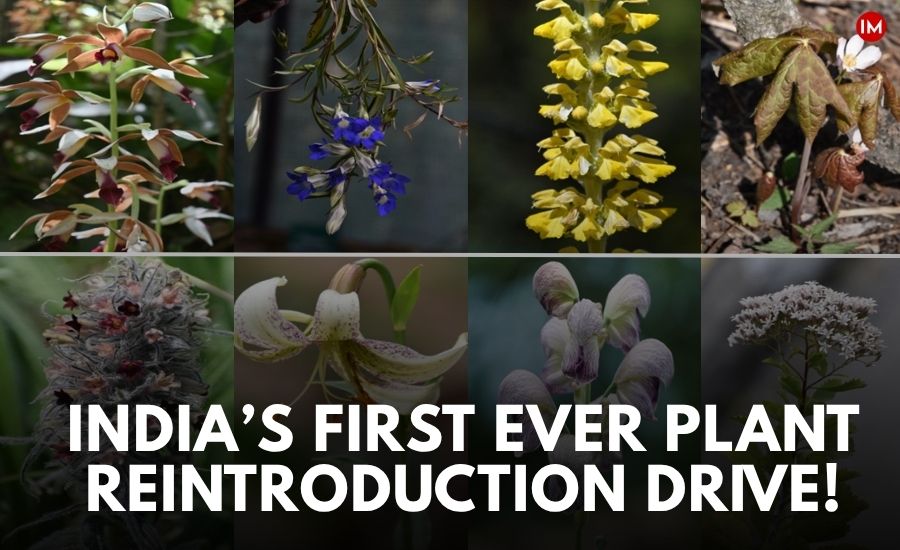
In a groundbreaking move, the Research Wing of the Uttarakhand Forest Department has launched India’s first systematic programme to reintroduce rare, endangered, and threatened (RET) plant species to their natural habitats. This ambitious initiative, spearheaded by IFS officer Sanjiv Chaturvedi, a 2002-batch officer of the Uttarakhand cadre and Chief Conservator of Forests (Working Plan and Research), Uttarakhand, aims to restore 14 critically endangered or threatened plant species to their original ecosystems in the Western Himalayas. The project, which began with the onset of the monsoon in July 2025, marks a significant step in conserving Uttarakhand’s rich floral biodiversity, setting a model that could inspire similar efforts across the country.
A UNIQUE CONSERVATION MISSION
Uttarakhand, a biodiversity hotspot, is home to a stunning variety of plant species, particularly in its high-altitude ecosystems ranging from alpine meadows to the tarai regions. Many of these plants, including those with significant medicinal and cultural value, are endemic to the Western Himalayas. However, overexploitation, habitat degradation, climate change, and low regeneration rates have pushed several species to the brink of extinction. Recognising this crisis, the Uttarakhand Forest Department’s Research Wing has taken up the challenge of reviving 14 RET plant species, selected based on their status on the IUCN Red List and the Uttarakhand State Biodiversity Board’s list of threatened species.
“This is the first time in India that a conservation programme is focusing exclusively on reintroducing rare and endangered plant species to their natural habitats,” IFS Sanjiv Chaturvedi told Indian Masterminds. “While such efforts have been common for animal species, this initiative for plants is a new frontier in conservation.”
The 14 species chosen for this project include Himalayan Gentian, White Himalayan Lily, Red Crane Orchid, Golden Himalayan Spike, Doon Cheese Wood, Kumaon Fan Palm, Indian Spikenard, Patwa, and Himalayan Arnebia, among others. Four of these species are classified as critically endangered by the IUCN, three are endangered, one is vulnerable, and the rest are listed as threatened by the State Biodiversity Board or international research publications. Most of these plants are valued for their medicinal properties, which has led to their overharvesting from the wild, severely depleting their populations.
A METHODICAL APPROACH TO RESTORATION
The reintroduction process is a carefully planned operation. Over the years, the Research Wing has developed species-specific propagation techniques at its high-altitude nurseries, such as those in Devvan, Harshil, Mandal, Munsyari, Gaja, Haldwani, Kalsi, and Shyampur. These nurseries have successfully propagated the selected species using seeds, rhizomes, bulbs, or stem cuttings. For instance, Himalayan Gentian has been propagated through seeds at the Devvan nursery, while White Himalayan Lily has been cultivated through bulb division at Devvan and Harshil nurseries.
To ensure the plants’ survival, the department conducted extensive assessments of their historical habitats. Field staff and junior research fellows (JRFs) used primary evidence, such as direct observations, and secondary sources, including earlier publications, to map these locations. The habitats, which range from alpine meadows to deciduous forests, were identified across various altitudinal zones in Uttarakhand, including remote and challenging terrains. The department’s infrastructure, including research centres in these difficult-to-access areas, has been a key advantage in this effort.
Once the habitats were mapped, the team carried out groundwork to prepare the sites for reintroduction. This included addressing threats like grazing, trampling, deforestation, and infrastructure development. GPS coordinates of each reintroduction site have been recorded, and protection mechanisms, such as fencing or monitoring patrols, have been put in place to safeguard the plants. The first phase of planting, which began with the monsoon, is expected to wrap up by the end of July 2025. After this, the department will monitor the sites regularly, assessing the plants’ survivability, growth, and population trends with the help of field staff, JRFs, and external experts.
THE PLANTS AT THE HEART OF THE PROJECT
The 14 species selected for reintroduction reflect the ecological and cultural richness of Uttarakhand. Here’s a closer look at a few:
Himalayan Gentian (Gentiana kurroo): Found in scattered populations around Mussoorie, Narendra Nagar, and Chakrata, this critically endangered medicinal herb is prized in Ayurveda for treating liver ailments, diabetes, and fevers. Its vulnerability stems from habitat degradation and pilferage.
White Himalayan Lily (Lilium polyphyllum): A critically endangered species confined to pockets in Chakrata and Uttarkashi, this lily is a key ingredient in Chyavanprash. Overexploitation for medicinal use has nearly wiped it out from its natural habitats.
Indian Spikenard (Nardostachys jatamansi): Critically endangered and found in alpine slopes of Nanda Devi National Park, this herb’s rhizomes yield an aromatic oil used in perfumes, sedatives, and traditional medicine. Overharvesting and grazing by livestock threaten its survival.
Doon Cheese Wood (Pittosporum eriocarpum): Endemic to Uttarakhand, this endangered tree, found in Dehradun, Tehri, and Nainital, is valued for its leaves and bark, which have antibacterial and anti-inflammatory properties. Deforestation and construction activities have reduced its populations.
Kumaon Fan Palm (Trachycarpus takil): A rare palm near-endemic to Uttarakhand, it grows in cool, moist forests at 1,800–2,700 meters. Its leaf fibers are used to make ropes and mats, but poor regeneration and habitat degradation have made it scarce.
Each species has unique ecological requirements and faces specific threats, which the Research Wing has meticulously studied to ensure successful reintroduction.
A BLUEPRINT FOR THE FUTURE
The significance of this initiative extends beyond Uttarakhand. By focusing on plant conservation—a relatively underexplored area compared to wildlife preservation—the programme sets a precedent for other states to follow. “The success of this programme will encourage similar efforts elsewhere in India,” Mr Chaturvedi noted. The department plans to expand the initiative in its next phase, incorporating additional endangered species once the current phase is evaluated.
The project also highlights the importance of preserving plants with medicinal value. Many of these species, like Indian Spikenard and Himalayan Arnebia, are critical to traditional and modern medicine, yet their overexploitation has led to their decline. By restoring these plants to their natural habitats, the initiative not only protects biodiversity but also supports sustainable use of these resources for future generations.
CHALLENGES AND COMMITMENT
Reintroducing plants to their natural habitats is no small feat. The process requires overcoming challenges like poor seed germination, habitat degradation, and external pressures such as grazing and infrastructure development. The Research Wing’s seven specialised research ranges, spread across Uttarakhand’s diverse altitudinal zones, have been instrumental in addressing these challenges. The department’s commitment to continuous monitoring and evaluation ensures that the reintroduced plants have the best chance of thriving.
By combining scientific rigour, local expertise, and a deep understanding of Uttarakhand’s ecosystems, this initiative is a bold step toward conserving the state’s botanical heritage. It underscores the critical role of targeted conservation in protecting not just individual species but entire ecosystems that depend on them.
As the first phase of planting nears completion, the Uttarakhand Forest Department is already looking ahead. With plans to expand the programme and share its findings, this effort could mark the beginning of a new chapter in India’s conservation journey—one that prioritises the often-overlooked world of plants.