Right in the heart of Mizoram lies a district called Serchhip that has an area of 1,421 sq.km of mainly moderate slope. Five rivers flow across the district, namely Tuikum, Mat, Tuichang, Tlawng and Lau.
Although the total forest cover of the district is 64.17% of the geographical area, jhumming, agriculture expansion, wood harvest for domestic fuel, and infrastructure expansion led to desertification, soil erosion and drying-up of the water springs. As the springs dried up, water scarcity became a major problem within the district.
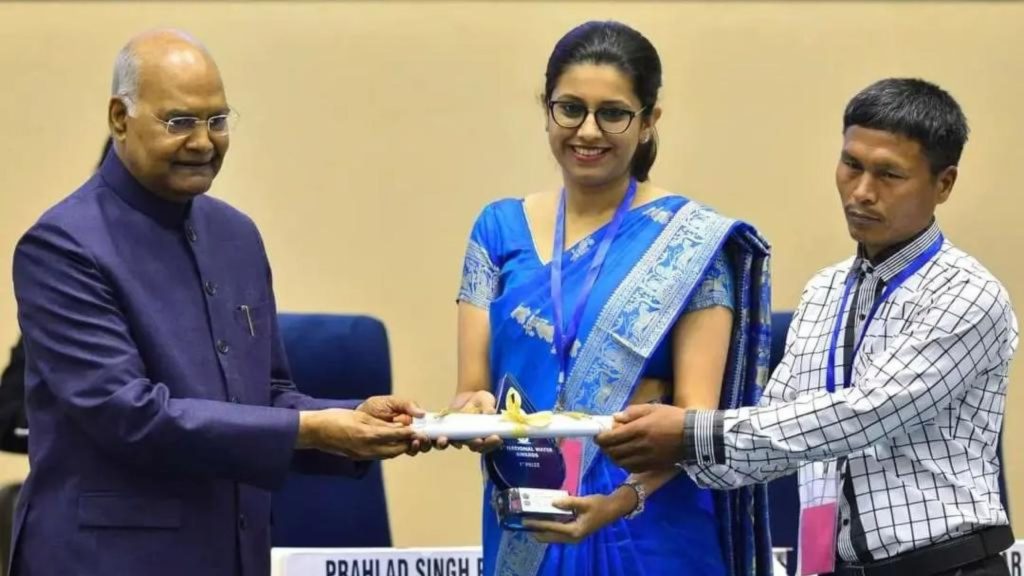
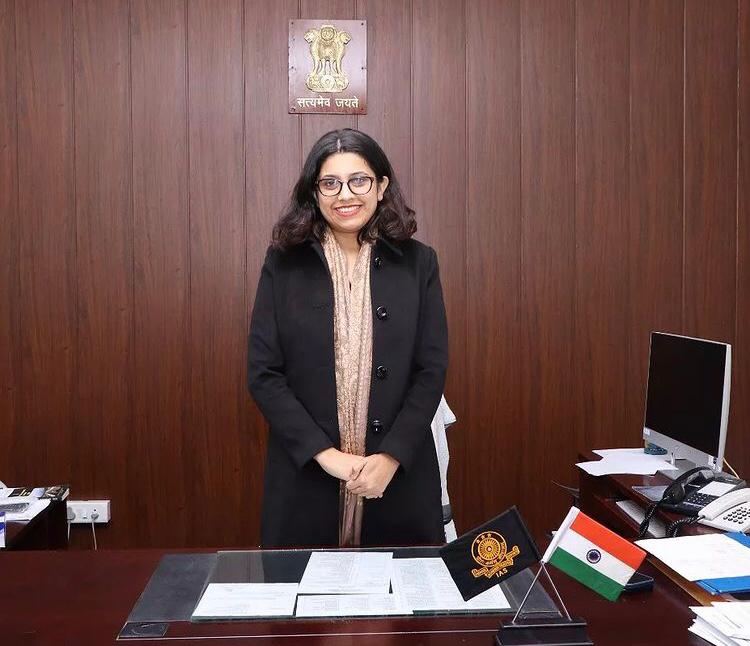
Yet, this district won two National Water Awards! To know the story behind these recognitions, Indian Masterminds spoke to the young District Collector of Serchhip district, 2016-batch IAS officer of AGMUT cadre, Ms. Nazuk Kumar.
RAIN WATER HARVESTING & CHECK DAMS
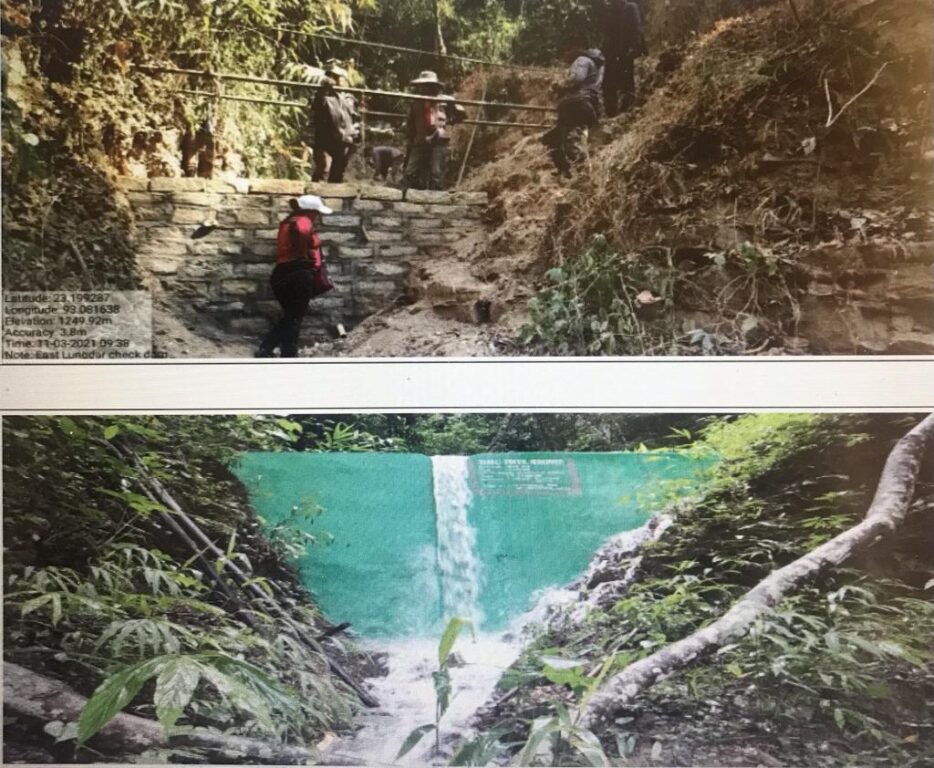
As rain water is the main source of water in Serchhip, it has to be retained as much as possible in the ground so that the ground water level remains high and water springs do not stay dry throughout the year. Rainfall is the primary source of irrigation for agriculture, which is the main livelihood of the people of the district.
However, of the total rainfall received, higher percentage is wasted due to surface run-off and leaching and very less amount remains available for crop use. Hence, planting of trees, rain water harvesting and water use efficiency are critical for increasing production and productivity. Therefore, construction of check dams and water storage structures for both crop and household use were taken up by the district administration.
Ms. Kumar said, “Given the geographical and soil conditions, the most effective method of rainwater harvesting is to collect runoff through construction of small check dams that will enhance water conservation and ground water recharge.”
Further, in every village, a Village Forest Conservation Committee and Water and Sanitation Committee (WATSAN) were set up with prominent citizens as members, and construction of Rain Water Harvesting scheme was implemented to retain sufficient amount of rain water. The water works are looked after by the WATSAN Committee at the village level in coordination with Public Health Engineering Department (PHED) staff.
And, under a scheme called FOCUS, village forest conservation activities like planting and maintenance of trees and protection of water sources were undertaken and each village were given three check dams. The location and site were carefully selected by the technical staff in consultation with the villagers.
For the villagers of Thinglian, life became fairly easy after the first check dam was constructed in their village. Before this, they use to draw water from a spring source which is at quite a distance from the village.
GROUND WATER RECHARGE
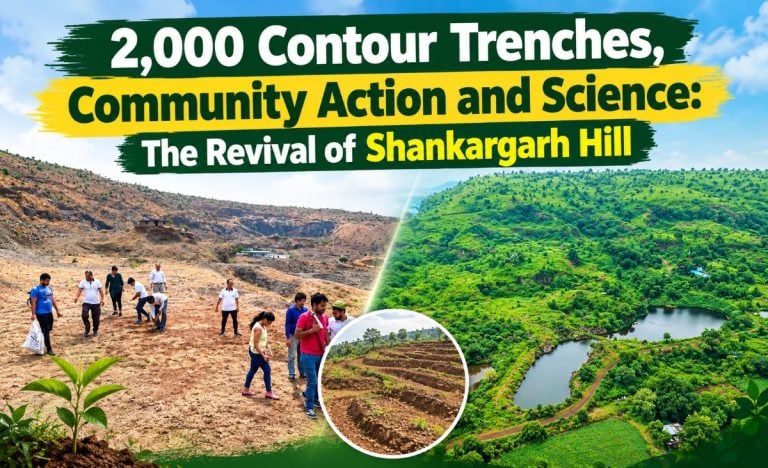
To increase ground water, water bodies revival was taken up through the active participation of the community by contour trenching and plantation of trees and marking reserved forest areas.
Digging of contour trenches slows down the rain water from rapidly running off the soil surface and helps in the percolation of rainwater underground. Construction of check dams in the source to slow down the rapid run off helps in the percolation of water underground.
In the plantations, contour trenches are dug at regular intervals for groundwater recharge where rainwater moves downward from surface water to ground water. In these trenches rainwater collects and moisture is conserved for the trees.
“The Reserve Forests are also being well maintained and protected. These forests are sources of ground water recharge. Water from the springs in these forests is being supplied through gravity for consumption to the local communities,” Ms. Kumar said.
WATER RESERVOIRS BUILT IN VILLAGES
In Serchhip district, there existed no proper facilities to collect the water received during the rainy season. In order to sort this out, water harvesting structures were constructed in some locations under MGNREGA.
Lungpho is a village within Serchhip, located at a distance of about 50 kms from the district headquarters. The village is situated on top of a hillock and the inhabitants had to traverse through steep and uneven roads to fetch water.
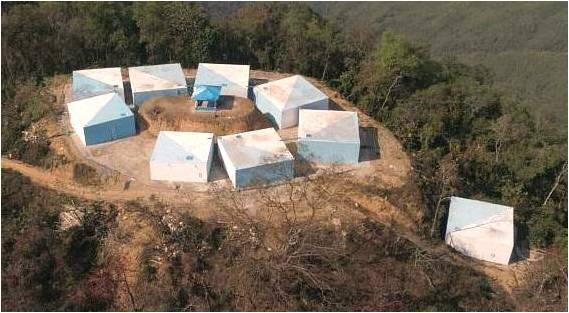
The problem becomes more acute during the dry seasons as a traditional water body in the village dries up. A permanent water retention structure was thus constructed at the source which was filled up with clayey soil. This recharges the water body down below and can now provide water supply throughout the year.
The project has become so effective that the neighbouring Rullam village also relies on it during the dry spells.
Detailing the work taken up in another village, Sialsir, Ms. Kumar said, “During dry months, people in Sialsir faced acute water shortage with only 7 litres per capita per day availability. Nine reinforced concrete cement reservoirs with capacity of 27 lakh litres were constructed under NABARD scheme. Home rain water harvesting structures were put in place and mass afforestation was done. Now people have 55 litres per capita per day available through the year.”
RESUSE OF WASTE WATER
The effluent water known as greywater has to be treated partially before being released into the ground soil. Discharging effluent water into the environment after partial treatment through a soak pit is a safer option. Hence, a community soak pit was constructed for 5-6 households for watering kitchen gardens and also to recharge the groundwater bodies.
MADE IT A MASS MOVEMENT
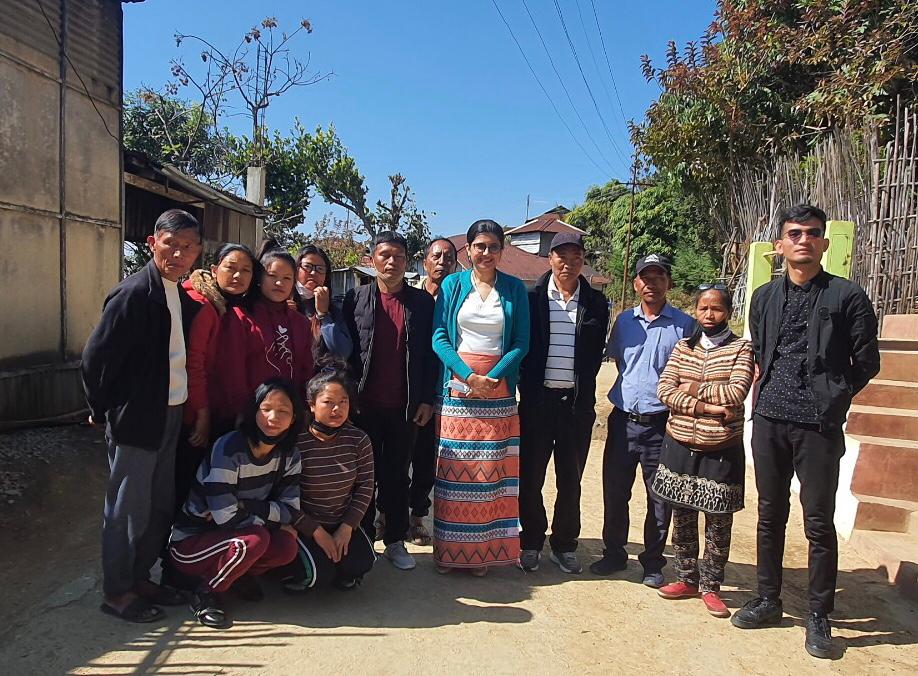
Through numerous meetings in villages, the people of the district were taught the importance of planting trees, contour trenching, check dams and the preservation and conservation of the catchment area of the water sources. The villagers now preserve and conserve water even at their household level by not wasting any water. In some villages, all households have proper roof-top rain water harvesting system and at least 2000 litres capacity reservoir.
VILLAGES SELF-SUFFICIENT IN WATER NOW
Because the villages are now self sufficient in water, it has greatly improved the public health and sanitation. It has also lifted the economy and improved social life. Now that the villagers no longer need to collect water from the spring sources and carry them home manually, they have more time to do some work for improving their income.
With combined efforts, Serchhip district has now become self sufficient in water as compared to the past two years. Villagers no longer need to walk miles to collect water from natural springs. And, neither do they have to spend their hard earned income on buying water from the private sellers.