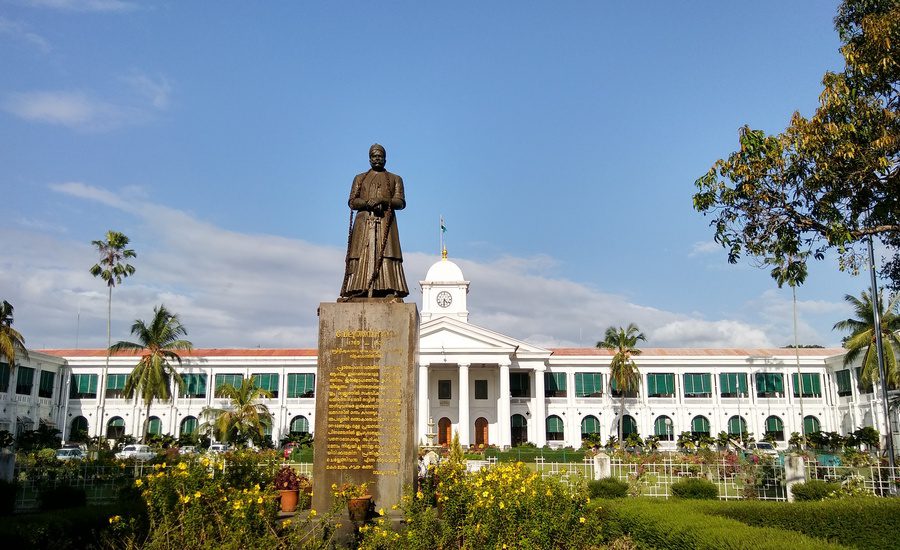
With the change of government in the God’s Own Country, the state bureaucracy too is bracing for a tectonic shift at the top. The incumbent Chief Secretary, A. Jayathilak (1991 batch), is set to complete his term by June 30, 2026. Recent controversies involving public spats with junior officers and allegations of “e-office” manipulation have made a change of guard almost certain. The question is: who will be the “Captain” of the new administration’s civil service team?
Manoj Joshi
The name at the top of the shortlist is IAS Manoj Joshi (1989 batch). Currently on central deputation as Secretary, Land Resources, Joshi is the senior-most officer in the Kerala cadre. Joshi is perceived as a “neutralizer.” Having been away from the state during the recent internal bureaucratic wars, he offers the new government a chance to hit the “reset” button. If repatriated, Joshi would have a solid tenure until January 2027, providing the administrative stability the new UDF cabinet desperately needs to roll out its 100-day plan.
The state must convince the Centre for his early repatriation—a move often seen as a litmus test for the new government’s rapport with New Delhi.
Dr. Raju Narayana Swamy
The “Anti-Corruption Crusader” of the Kerala cadre, Swamy is perhaps the most famous name. He is a senior member of the 1991 batch, the same batch as the current CS, A. Jayathilak. Despite being a civil services topper and a prolific scholar (with 32+ books and an MIT pedigree), his career has been defined by over 32 transfers and frequent run-ins with both LDF and UDF political leaderships.
While his integrity is legendary, his “uncompromising” nature often makes him a difficult choice for any political dispensation that requires a Chief Secretary to act as a bridge between the cabinet and the bureaucracy.
Sanjeev Kaushik
The 1992-batch officer Sanjeev Kaushik often seen as a strong/wildcard contender due to his seniority in the current list and impressive credentials too. Kerala usually sticks to seniority and Kaushik tops the relevant list. If appointed Kaushik ‘s tenure will be till April 2029, offering stability and continuity, which a new government prefers.
Born April 23, 1969 Kaushik, has a strong finance and policy background with international exposure. He holds a B.E. from BITS Pilani and an MBA (including from London Business School). He worked in global investment banking before joining IAS and has held key roles in the Union Finance Ministry (e.g., Additional Secretary, Department of Financial Services) and as Principal Financial Sector Specialist at the Asian Development Bank (ADB).
He recently repatriated to the Kerala cadre. His expertise suits economic/financial coordination roles in government. He is viewed as a high-profile “international veteran” option.
The 1993-Batch
While there are a few officers senior to him, Kumar’s long experience in the state’s core sectors makes him a favourite for a government looking for an “insider” who knows the files inside out. The 1993 batch holds several heavyweights who could emerge as dark horses if the government looks for a long-term tenure. Names like Bishwanath Sinha, K.R. Jyothilal, and Rajan Khobragade (who gained national acclaim during the health crises) are all in the mix. The choice will ultimately depend on whether the Chief Minister prioritizes seniority (Joshi) or “sectoral expertise” (the 1993 batch).
If the government decides to look within the state for immediate continuity, Puneet Kumar (1993 batch) emerges as a formidable contender. Currently serving as Additional Chief Secretary (Power), Kumar has navigated the high-stakes energy sector with a reputation for being a “no-nonsense” administrator. Unlike some of his peers, Kumar has managed to stay clear of the public “war of words” that plagued the Secretariat last year. His appointment would signal a move toward professional, low-profile governance.
The impending reshuffle isn’t just about the top post. The new Chief Secretary will inherit a fractured house. The public allegations by Prasanth N and the legal challenges by B. Ashok have left the IAS Association divided. “The first task for the new CS won’t be policy; it will be psychology,” says a retired Chief Secretary. “They need to restore the morale of the cadre and ensure that the ‘file-gate’ controversies are buried for good.”
What to Expect
As the new cabinet takes its oath, a massive reshuffle of District Collectors and Department Secretaries is already on the cards. However, the appointment of the 51st Chief Secretary will be the definitive signal of how the new government intends to rule: by the old guard’s rules or through a fresh, depoliticized administrative lens.
All eyes are now on the Civil Services Board meeting scheduled for later this month. For the Kerala IAS, the wait for a “healer-in-chief” is on. The final decision will likely rest with the new Chief Minister, balancing tradition, competence, and comfort level.