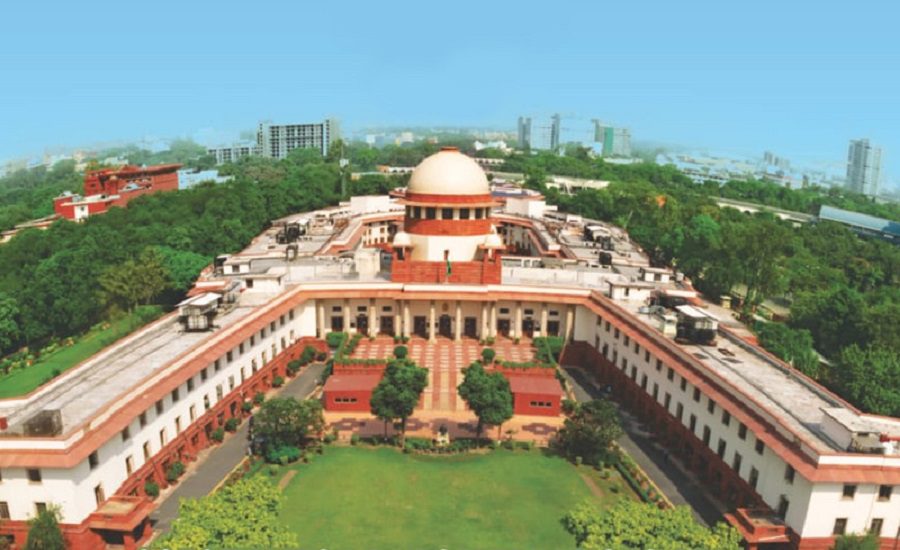
New Delhi: The Supreme Court contempt proceedings case involving Advocate Nilesh Ojha has drawn national attention after the Supreme Court of India refused to interfere with action initiated by the Bombay High Court.
The court made it clear that allegations against judges must be backed by strong evidence and raised through proper legal channels, not through public platforms like press conferences.
Advocate Nilesh Ojha Press Conference Controversy: Supreme Court Refuses to Intervene
The Supreme Court of India on April 20 declined to halt criminal contempt proceedings initiated by the Bombay High Court against Advocate Nilesh Ojha.
Read also: Supreme Court Road Safety Guidelines 2026 Explained: Key Rules, Impact, and What Changes for You
A bench of Justice Vikram Nath and Justice Sandeep Mehta observed that:
- Allegations against judges must be based on unimpeachable evidence
- Public accusations without proof can damage judicial independence
- Proper legal remedies must be followed instead of media statements
The court emphasized that such conduct crosses acceptable limits when it shifts from legal criticism to personal attacks.
Background of the Advocate Nilesh Ojha Press Conference Controversy
The case began when Advocate Nilesh Ojha, appearing before the Bombay High Court, alleged bias against a sitting judge (“Justice X”).
Key Allegations:
- Claimed conflict of interest due to alleged family links with an accused
- Suggested the judge should be disqualified
However, instead of filing a recusal plea, the advocate:
- Held a press conference
- Made public allegations about the judge’s impartiality
This prompted the High Court to take suo motu cognizance and initiate contempt proceedings.
High Court’s Action Explained
The Bombay High Court took several steps:
- Issued a show-cause notice under the Contempt of Courts Act, 1971
- Rejected Ojha’s plea to make the judge a party
- Initiated further contempt proceedings over additional allegations
- Warned other advocates involved in the filings
The court viewed the conduct as potentially harmful to the judiciary’s reputation.
Supreme Court’s Strong Observations
The apex court delivered sharp remarks on professional ethics:
- Taking judicial matters to the media may sensationalise proceedings
- Personal allegations against judges can scandalise the institution
- Lawyers must act with restraint, responsibility, and professionalism
The court noted that criticism of judgments is allowed, but attacks on a judge’s integrity are not.
Judicial Accountability vs Judicial Independence
The judgment clearly balanced two important principles:
Allowed:
- Fair and reasoned criticism of court decisions
- Legal challenges through proper judicial processes
Not Allowed:
- Public accusations without evidence
- Personal attacks through press conferences
The court warned that irresponsible allegations risk weakening public trust in the judiciary.
What is Criminal Contempt
Under the Contempt of Courts Act, 1971, criminal contempt includes:
- Acts that scandalise or lower the authority of courts
- Actions that interfere with judicial proceedings
- Statements that obstruct justice
This law is meant to protect the integrity and authority of courts in India.
Final Verdict and Next Steps
The Supreme Court of India refused to stop the proceedings and directed the Bombay High Court to:
- Continue the case independently
- Decide based on merits and evidence
- Complete proceedings expeditiously