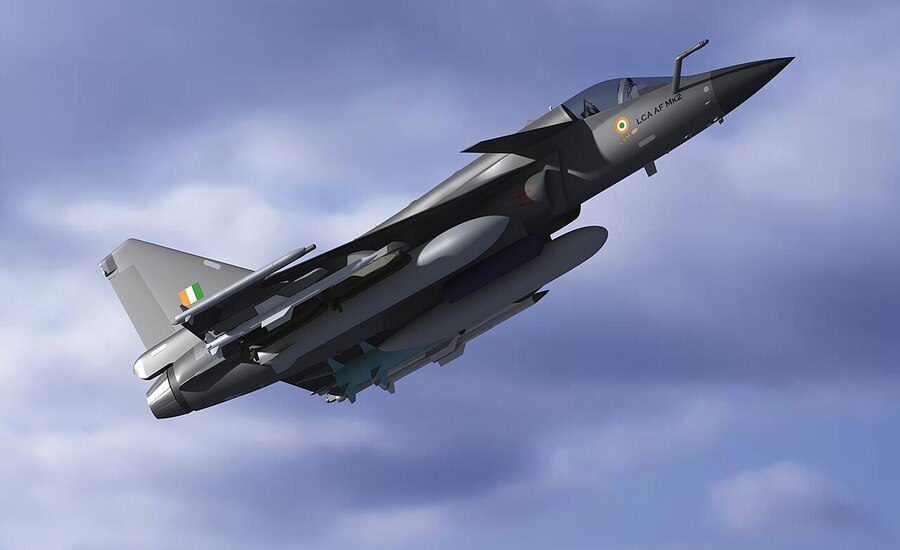
New Delhi: Tejas Mk2 maiden flight is moving closer as India accelerates critical pre-flight activities, including taxi trials and certification clearances. The indigenous fighter jet program has entered a decisive phase with ground testing, system validation, and regulatory approvals progressing rapidly.
With agencies like the Centre for Military Airworthiness and Certification (CEMILAC) pushing faster approvals, the Tejas Mk2 is now nearing its first flight window, expected in 2026.
This development marks a major step in India’s push for self-reliance in defence manufacturing and next-generation air combat capability.
Details of Tejas Mk2 Maiden Flight
India’s Tejas Mk2 (Medium Weight Fighter) has transitioned from design maturity to advanced ground testing. The first prototype is now preparing for low-speed taxi trials, a key milestone before flight testing begins.
Read also: Tejas Mk2 Features Explained: How It Surpasses Mk1A in Range, Weapons, and Combat Endurance
Engineers from Hindustan Aeronautics Limited (HAL) and the Aeronautical Development Agency (ADA) are currently completing integration checks and validating onboard systems. These tests ensure that the aircraft can safely operate on the runway before attempting take-off.
The aircraft is a major upgrade over earlier Tejas variants, featuring a heavier structure, improved avionics, and higher payload capacity.
What is the Role of CEMILAC in Tejas Mk2 Maiden Flight
The Centre for Military Airworthiness and Certification (CEMILAC) is playing a crucial role in speeding up the First Flight Clearance (FFC) process.
CEMILAC teams are actively evaluating:
- Structural strength and stress tests
- Avionics and flight control systems
- Safety and airworthiness standards
Only after clearing these parameters will the aircraft be allowed to fly.
The faster pace of certification reflects improved coordination between regulatory bodies and developers, reducing delays seen in earlier defence programs.
Taxi Trials: The Final Ground Test Before Flight
Taxi trials are a critical step before any fighter jet takes off. These are conducted in phases:
- Low-Speed Taxi Trials (LSTT): Test steering, braking, and ground handling
- High-Speed Taxi Trials (HSTT): Aircraft accelerates near take-off speed without leaving the ground
These trials help engineers verify aerodynamic stability and system response under real conditions. Successful completion of these tests will directly lead to the maiden flight.
Engine Breakthrough Strengthens Program
A major boost to the program came with the completion of 100% Transfer of Technology (ToT) for the GE F414 engine in April 2026.
This engine delivers higher thrust compared to the earlier GE F404, significantly improving performance. It also strengthens India’s domestic aerospace manufacturing ecosystem by enabling local production and maintenance.
Why Tejas Mk2 is Strategically Important
Tejas Mk2 is not just another fighter jet—it is a key part of India’s long-term air power strategy.
- It will replace aging aircraft like Mirage 2000, Jaguar, and MiG-29
- Bridges the gap between Tejas Mk1A and future stealth fighter programs
- Supports indigenous weapons integration like Astra missiles
The aircraft is designed as a 4.5-generation multirole fighter with advanced avionics and combat capabilities.
Expected Timeline for Tejas Mk2 Maiden Flight
Current indicators suggest that the Tejas Mk2 maiden flight could take place around mid-2026, depending on successful completion of taxi trials and certification.
If achieved on schedule, it will be a landmark moment for India’s defence aviation sector.