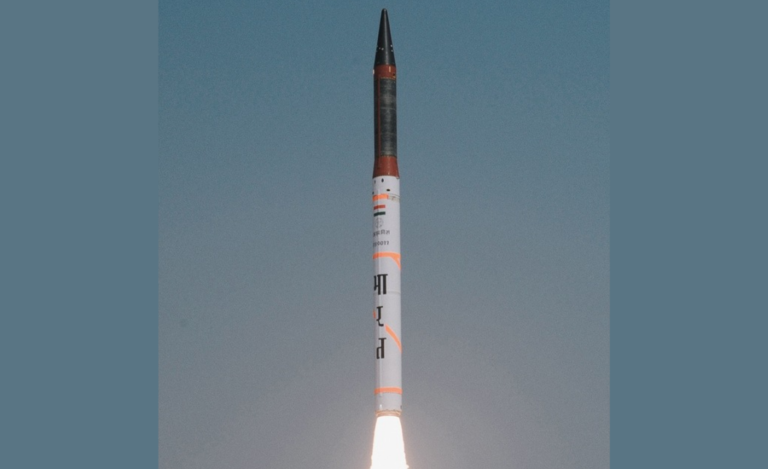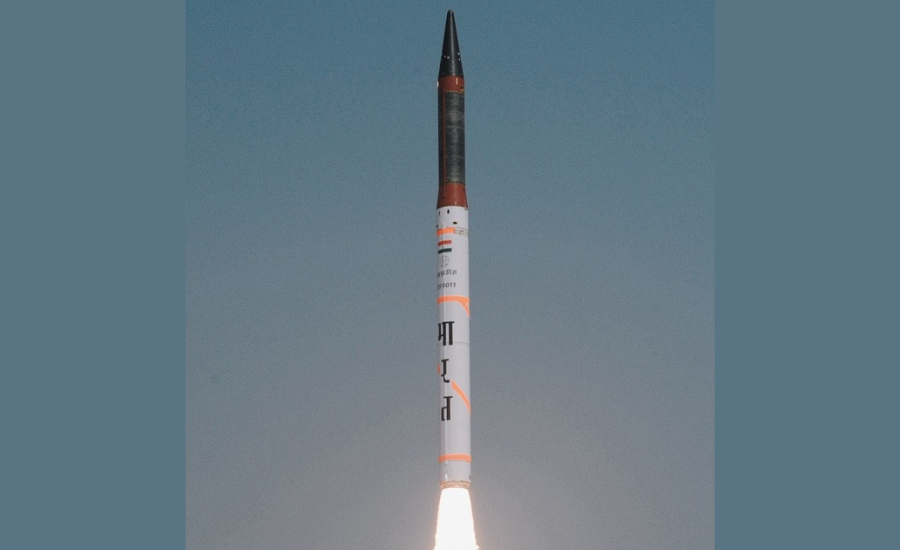
Orissa: The Agni-IV missile test marks another important milestone in India’s strategic defence capability. India successfully carried out the user trial of the Agni-IV medium-range ballistic missile from the Integrated Test Range at Chandipur, Odisha, under the supervision of the Strategic Forces Command (SFC) on 06 August. According to the Ministry of Defence, the successful launch validated the missile’s operational readiness and technical performance, strengthening India’s credible strategic deterrence.
Details of Agni-IV Missile Test
The Ministry of Defence confirmed that the Strategic Forces Command successfully conducted the user trial of the Agni-IV missile. The launch took place from the Integrated Test Range in Chandipur, Odisha.
Read also: What is Agni-VI ICBM? India’s Long-Range Missile Features, Range & Status
Officials said the test met all mission objectives and confirmed the missile’s operational reliability. The Agni-IV is a two-stage, solid-fuelled medium-range ballistic missile capable of striking targets up to 4,000 km away.
What Makes Agni-IV Missile Important
The Agni-IV fills the capability gap between the Agni-II and Agni-V missile systems. It provides India with a highly reliable strategic missile capable of carrying both conventional and nuclear payloads, giving the country greater flexibility in maintaining a credible minimum deterrence. Its range enables India to cover a large part of its strategic neighbourhood while strengthening national security.
What are the Features of Agni-IV Missile
According to official information from the Ministry of Defence and DRDO, the Agni-IV has several advanced technologies:
- Range of up to 4,000 km
- Two-stage solid-fuel propulsion
- Payload capacity of around 1,000 kg
- Advanced ring laser gyroscope-based inertial navigation system
- High-accuracy guidance and control system
- Flex-nozzle thrust vector control technology
- Carbon-fibre composite second stage for reduced weight and better performance
These technologies improve the missile’s accuracy, reliability and survivability.
Development Journey of Agni-IV Missile
The Defence Research and Development Organisation (DRDO) started work on the Agni-IV programme in 2007. The missile was developed as an upgraded successor to the Agni-II Prime project by DRDO’s Advanced Systems Laboratory in Hyderabad. Since its first successful flight in 2010, Agni-IV has undergone multiple developmental and user trials before becoming operational with the Strategic Forces Command.
Expert Analysis: Why This Test Matters for India
Defence experts believe the latest user trial is more significant than a routine missile launch because it demonstrates operational readiness rather than experimental capability. User trials are conducted by the Strategic Forces Command instead of DRDO scientists alone. This confirms that the missile can be deployed by the armed forces under real operational conditions. The successful validation also reflects the maturity of India’s indigenous missile technology and the country’s ability to maintain a dependable strategic deterrent.
Strengthening India’s Strategic Deterrence
India follows a policy of credible minimum deterrence and No First Use (NFU) in its nuclear doctrine. Reliable missile systems like Agni-IV strengthen this doctrine by ensuring that India’s strategic forces remain operationally prepared and technologically advanced. Regular user trials also help verify system performance, crew readiness and long-term reliability without changing India’s stated nuclear policy.
Looking Ahead
With the successful Agni-IV user trial, India continues to modernise its strategic missile force. As DRDO and the Strategic Forces Command expand indigenous missile capabilities, future improvements are expected to focus on greater accuracy, survivability and operational flexibility, reinforcing India’s long-term national security objectives.