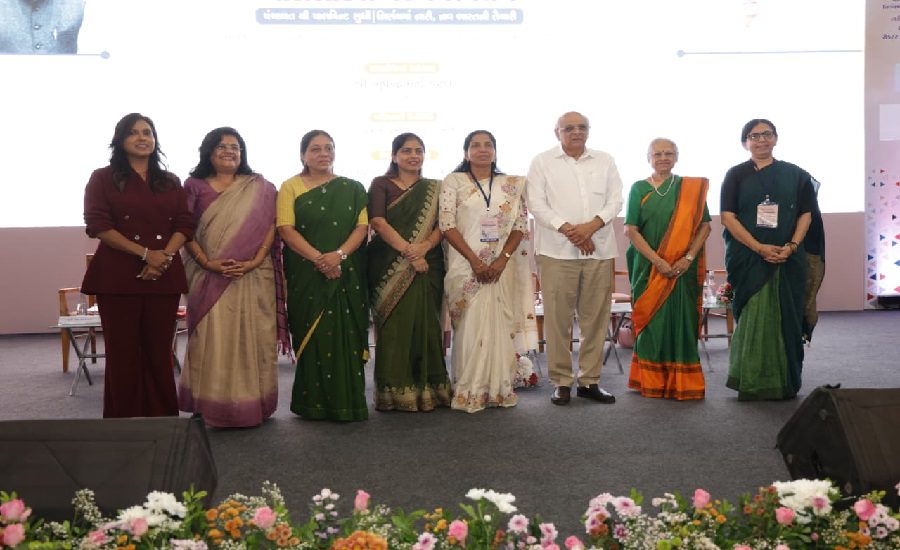
Gandhinagar: Gujarat Chief Minister Bhupendra Patel has emphasized that women-led development is the key to achieving the vision of Viksit Bharat 2047, while addressing the ‘Nari Shakti Vandan Conference’ held in Gandhinagar. He described the Nari Shakti Vandan Adhiniyam (33% women’s reservation law) as a historic milestone that will transform Indian politics.
Women-Led Development Central to India’s Future Vision
CM Patel stated that increasing women’s participation in governance and decision-making will bring:
- Greater sensitivity in policymaking
- Improved transparency
- Balanced and inclusive governance
He highlighted that the 33% reservation for women in Parliament and state legislatures will ensure stronger representation and participation in nation-building.
Nari Shakti Vandan Adhiniyam: A Historic Reform
Calling it a landmark reform inspired by Prime Minister Narendra Modi, the Chief Minister said the law:
- Ensures 33% reservation for women in legislatures
- Strengthens political participation of women
- Marks a structural shift in India’s democratic framework
He added that the legislation will play a key role in reshaping India’s political landscape in the coming years.
Gujarat’s Role in Women Empowerment Initiatives
CM Patel said Gujarat has consistently led women-centric policies, including:
- 50% reservation for women in Panchayati Raj institutions
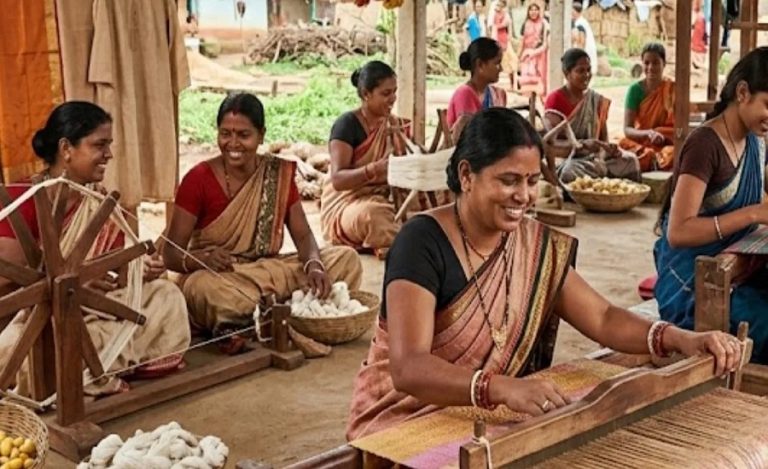
- Strong participation of women in dairy and animal husbandry sectors
- Support for self-help groups and micro-enterprises
He noted that women have played a crucial role in strengthening Gujarat’s rural economy and cooperative movement.
Welfare Schemes Driving Women’s Economic Independence
Highlighting central government initiatives, the Chief Minister said multiple schemes have empowered women, including:
- PM Jan Arogya Yojana (PMJAY) for healthcare protection
- Ujjwala Yojana for smoke-free kitchens
- “Lakhpati Didi” and “Namo Drone Didi” initiatives promoting self-employment
He added that self-help groups (SHGs) have enabled millions of women to become micro-entrepreneurs and achieve financial independence.
Women Leaders Highlight Grassroots Impact
Mayor Meera Patel on Local Governance
Gandhinagar Mayor Meera Patel said women are playing a transformative role in:
- Education and healthcare
- Sanitation and water management
- Local governance and administration
She described the 33% reservation law as a historic step toward qualitative social change, not just numerical representation.
Padma Shri Ramilaben Gamit on Rural Empowerment
Padma Shri awardee Ramilaben Gamit shared her experience of empowering rural women through:
- Over 160 self-help groups
- Skill development in tailoring, masonry, and small businesses
- Promotion of government welfare schemes at grassroots level
She emphasized that women can drive social transformation when given opportunities.
MLA Ritaben Patel on Political Empowerment
Gandhinagar North MLA Ritaben Patel highlighted that:
- Women are increasingly participating in elections
- Gujarat is leading in women’s representation in local bodies
- The reservation law will further strengthen political equality
She called it a powerful tool for social change under the vision of “Empowered Women, Empowered Society.”
FICCI Women’s Wing on Entrepreneurship
FICCI Women’s Wing Ahmedabad President Usha Jaiswal said:
- Women entrepreneurs are value creators, not just business participants
- Indian women have strong global competitiveness
- Entrepreneurship is becoming a key tool for empowerment
The Nari Shakti Vandan Conference reinforced Gujarat’s commitment to women-led development as a cornerstone of India’s long-term growth vision. Leaders emphasized that with policy support, reservation reforms, and entrepreneurship initiatives, women will play a decisive role in building a developed Gujarat and a developed India by 2047.
Read also: Gujarat CM Bhupendra Patel Lays Foundation Stone for Piparia River Revitalisation Project in Amreli