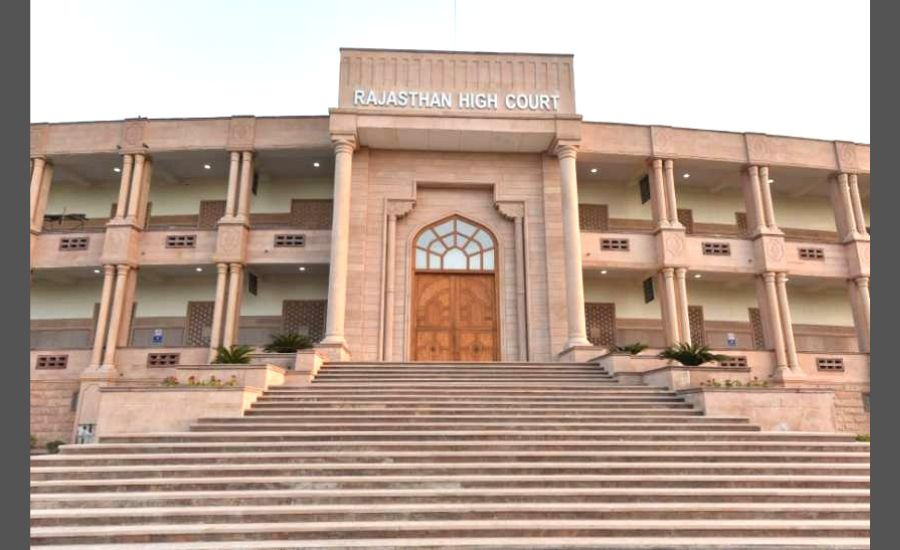
Jaipur: In a significant Ad Hoc appointment ruling, Rajasthan High court directed the state authorities to consider regularising an employee who had served for 28 years on an ad-hoc basis.
The court made it clear that an ad-hoc appointment cannot be used as a reason to deny rightful claims after decades of continuous service. This judgment reinforces the principle of fairness and highlights the need for authorities to act responsibly toward long-serving employees.
Background of the Ad Hoc Appointment Ruling
The case involved an employee who had been working under the Rajasthan government for nearly three decades. Despite his long and continuous service, he remained on an ad-hoc basis without being granted permanent status.
The petitioner approached the court seeking regularisation, arguing that such prolonged ad-hoc employment was unjust and violated principles of fair treatment.
Ad Hoc Appointment Ruling: Key Observations by the Court
The Rajasthan High Court made several important observations:
- The court noted that 28 years of continuous service cannot be ignored.
- It stated that keeping an employee on an ad-hoc basis for such a long time is not justified.
- The bench emphasized that administrative delays or policies cannot defeat legitimate claims.
- It clearly held that ad-hoc status should not be used as a permanent arrangement.
The court stressed that fairness and equity must guide government decisions in such cases.
Court’s Direction to the State Government
The High Court did not directly order regularisation but gave a strong direction:
- The state government must consider the employee’s case for regularisation.
- The decision should be taken within a reasonable time frame.
- Authorities must evaluate the employee’s long service and eligibility fairly.
This ensures that the final decision remains with the administration but under judicial guidance.