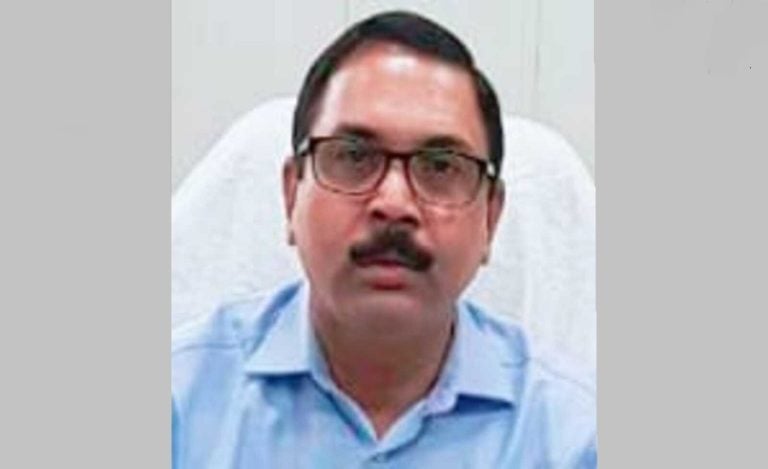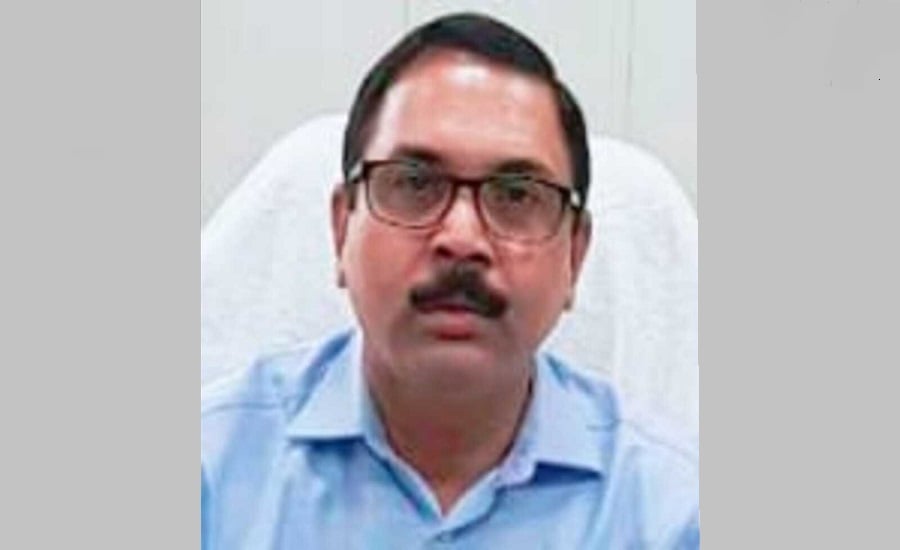
Chandigarh: The Central Bureau of Investigation (CBI) has alleged that Ram Kumar Singh, an IAS officer of the 2012 batch from the Haryana cadre who served as Municipal Commissioner of the Panchkula Municipal Corporation, played an active role in facilitating the alleged diversion of civic funds in a ₹645-crore public funds embezzlement case involving IDFC First Bank and its Sector 32 branch in Chandigarh.
According to the CBI’s supplementary chargesheet filed on September 2 before the CBI Special Judge in Panchkula, Singh allegedly helped advance a proposal from IDFC First Bank, sidelined an accounts officer who sought competitive quotations from banks, and facilitated the issuance and handling of cheques used in transactions that the agency says were part of the alleged fraud.
Singh, a promoted IAS officer of the 2012 batch, served as Panchkula Municipal Corporation Commissioner from July 2025 to January 2026. During the same period, he also held charge as District Municipal Commissioner, giving him supervisory control over the Kalka Municipal Council.
The CBI has alleged that Singh caused a wrongful loss of ₹100 crore to the Panchkula Municipal Corporation and ₹18.46 crore to the Kalka council.
CBI Alleges Singh Sidelined Officer Over Bank Quotations
The CBI’s case against Singh includes an incident involving Anil Kumar, a section officer in the corporation’s accounts branch.
On October 24, 2025, Anil received a file proposing the opening of a savings account with IDFC First Bank. He followed the prescribed procedure and recorded that quotations should be invited from different banks for savings accounts and fixed deposits to avoid litigation in the future.
The file subsequently reached Singh. The CBI alleges that Singh called Anil to his chamber and questioned why he had written the requirement for competitive quotations when the commissioner had already indicated that the bank was offering a higher fixed-deposit rate.
Anil reportedly told Singh that the rules required rates to be quoted first. The CBI says Singh then asked him to leave.
Around a fortnight later, on November 11, Singh signed an order sending Anil back to his parent posting in the Supplies and Disposal Directorate and instructed him not to report to the corporation’s office.
According to the agency, the draft order was shared on WhatsApp by Naresh Kumar, a Haryana government employee who had no role in the corporation, with Abhay Kumar, a former IDFC First Bank employee.
The CBI describes the episode as an overt act suggesting intent rather than negligence.
Charges Against IAS Officer Ram Kumar Singh
Singh was among 19 additional accused named in the CBI’s third and latest chargesheet in the case. The agency had also sought sanction under Section 17A of the Prevention of Corruption Act for investigating six IAS officers, including Singh.
The other officers named in the sanction request are Vineet Garg, Pankaj Agarwal, Mohammed Shayin, Saket Kumar and Pardeep Kumar.
Across its chargesheets, the CBI has named 37 individuals as accused.
The charges against Singh include:
- Criminal conspiracy
- Criminal breach of trust by a public servant
- Cheating
- Forgery of valuable security
- Using forged documents as genuine
- Falsification of accounts
- Destruction of evidence
- Bribery-related offences under the Prevention of Corruption Act
The CBI alleges that Singh handed over several signed cheques to bank officials through intermediaries, ostensibly for creating fixed deposits. The agency says the funds were debited through those cheques, but the corresponding fixed deposits were never created and the money was instead routed to shell entities allegedly controlled by accused bank officials.
How the Alleged IDFC First Bank Fraud Was Facilitated
The CBI’s September 2 chargesheet examines transactions involving eight Haryana government bodies whose funds were allegedly moved into accounts at IDFC First Bank and AU Small Finance Bank.
The agency’s first chargesheet was filed on May 21 and named 13 accused and two shell companies. A supplementary report was filed on June 12.
According to the CBI, the alleged fraud followed a seven-stage pattern:
- False offers of unusually high interest rates were made for fixed deposits.
- Bank accounts were opened in violation of Finance Department rules.
- Funds were transferred beyond prescribed limits.
- Warning signs and objections were allegedly ignored.
- Forged bank statements and fixed-deposit receipts were created.
- Favours were allegedly extended to officials.
- The diverted money was converted into cash, gold and property.
The agency says the Panchkula and Kalka transactions formed part of the same broader alleged scheme.
Former Bank Employee Allegedly Remained Involved
The chargesheet details communications between Singh and Abhay Kumar between October and December 2025 concerning the opening of a new account at IDFC First Bank’s Sector 32 branch in Chandigarh.
The CBI says senior IDFC officials had detected irregular transactions in government accounts in April and May 2025. Abhay was terminated from the bank on June 10, while Ribhav Rishi, then branch manager of the Sector 32 branch, resigned.
Despite no longer being a bank employee, Abhay allegedly continued to facilitate communication regarding the proposed account.
On October 14, Saurav Sharma of the Haryana State Pollution Control Board reportedly contacted Abhay through WhatsApp to arrange a meeting with senior accounts officer Surinder Jain.
Abhay met Jain on October 17 at Sector 14 in Panchkula and was taken to Singh’s chamber. The CBI notes that there was no pending matter before the corporation that would explain the visit.
At 2:10 pm, Abhay allegedly sent Singh a WhatsApp message with an attachment while signing off as “Relationship Manager, IDFC First Bank”, despite no longer holding that position.
Around the same time, Seema Dhiman, the banker authoriser at IDFC’s Sector 32 branch, emailed the corporation offering an 8.60% interest rate on fixed deposits between ₹2 crore and ₹100 crore for one year.
The CBI says the email referred to discussions with Abhay.
Singh allegedly marked the communication to the senior accounts officer with instructions to process it immediately because the bank was offering 8.60% interest.
Changing Interest Rates Raised Questions
On October 18, Abhay allegedly sent Jain a banking proposal dated October 17 offering 8.60% interest.
On October 23, another proposal was submitted at Singh’s personal assistant’s office, this time offering 7.50%. Abhay reportedly informed Jain that both proposals had been submitted.
The CBI says the second proposal related to the Kalka council. The proposals were assigned inward numbers 12240 and 12241.
The Panchkula savings account at IDFC First Bank’s Sector 32 branch was opened on October 29, according to the chargesheet.
However, the letter inviting quotations from banks was sent only on October 30, with October 31 as the deadline. Singh signed the letter.
The CBI says several banks received the letter only on the cut-off date, with some receiving it after working hours. No letter was sent to IDFC’s Sector 32 branch.
On October 30, Abhay allegedly told Jain that any letter should be sent directly to him through WhatsApp to prevent other people from getting involved.
IDFC’s Sector 32 branch eventually submitted a 7.60% quotation on October 31, which the CBI says was the last of 15 quotations received. The proposal was sent from Abhay’s personal Gmail account.
The agency notes that the 7.60% rate was close to, but higher than, the previous highest bid of 7.45% from Jana Small Finance Bank.
Meanwhile, IDFC’s Sector 11 branch, where the corporation already maintained a savings account, quoted 6.45% through an official bank email.
The CBI says Singh was aware of the figures because they were present on the file but did not act on the discrepancy.
₹102 Crore Moved Into New Sector 32 Account
On October 31, the quotations were evaluated and approved.
The CBI says Singh signed letters asking Bandhan Bank to break fixed deposits and transfer ₹77.42 crore, while AU Small Finance Bank was asked to transfer another ₹25 crore.
The agency flagged the sequence of dispatch numbers, saying instructions to move the funds appeared to have been issued before the formal evaluation and approval of quotations had been completed.
An official from IDFC’s Sector 11 branch reportedly urged Jain to retain the money at that branch, which was located about a kilometre from the corporation’s office.
Jain allegedly responded that the Sector 32 account had been opened on the commissioner’s orders.
Between November 3 and 4, more than ₹102 crore reached the newly opened Sector 32 account.
CBI Flags Five Cheques Carrying False Dates
The corporation subsequently issued five cheques to IDFC for opening fixed deposits. Each cheque was dated October 31, 2025.
Three cheques were for ₹20 crore each and two were for ₹10 crore each, taking the total to ₹80 crore. The words “For FDR” were written on the back, and the cheques were signed by Singh and Jain.
The CBI says the dates on the cheques were false because the cheque book for the new account was delivered only on November 3, when the first credit also reached the account.
The agency further alleges that cheques were not required to create fixed deposits. According to the chargesheet, government bodies could open FDs through a letter alone.
The CBI says Singh was aware of this procedure because fixed deposits created at Kalka and earlier Panchkula deposits with Bandhan Bank and AU Small Finance Bank had been processed through letters.
The agency alleges that IDFC had tightened controls from May 2025, requiring approval from the bank’s country head for transfers above ₹10 crore without a cheque. As a result, signed cheques from the corporation were allegedly needed to facilitate larger transfers.
On November 19, Naresh Kumar reportedly pressed Abhay to collect the cheque book from Jain. Abhay allegedly replied that “sir” had not signed and wanted the fixed deposits first.
At 4:16 pm that day, Abhay allegedly sent Naresh photographs of the five cheques.
CBI Alleges Fake Fixed Deposit Receipts Were Created
After more than ₹102 crore had been deposited into the new account, the corporation received five fixed deposit receipts representing ₹80 crore, dated November 4.
The CBI says no such fixed deposits were actually created.
The agency also flagged that the receipts were dated nearly two weeks before the cheques were handed over, which it described as impossible based on the transaction sequence.
On November 24, Abhay allegedly sent soft copies of the receipts to Naresh through WhatsApp.
The CBI says Naresh later informed Abhay that he was sitting with Singh and sent photographs showing a table with food and drinks. The agency says the same table was subsequently recovered during a search of Singh’s residence.
The soft copies described the account’s mode of operation as “Singly”, while the hard copies placed on the corporation’s file stated “Jointly”.
The CBI interprets the change as evidence that Singh saw the draft receipts, had them corrected and subsequently placed them on the official file while allegedly knowing that they were fabricated.
Cheques Allegedly Handed Over at Singh’s Residence
By the end of November, money had allegedly started moving out of the corporation’s IDFC account.
On November 27, ₹10 crore was transferred to the Development and Panchayats Department’s account. Another ₹10 crore was transferred to Durga Foods and RK Enterprises on November 29.
The chargesheet says Naresh received ₹20 lakh through two bank accounts.
By December 24, the CBI says ₹100 crore had been debited from the corporation’s account through 22 transactions.
The beneficiaries allegedly included Swastik Desh Projects, Durga Foods, Tirupati Foods, Jhimjham Enterprises and SRR Planning Gurus Pvt Ltd.
A corporation note dated December 17 had already flagged discrepancies between deposit dates and debits. The bank reportedly attributed the mismatch to a technical error in its December 19 response.
On December 23, Singh approved breaking the five deposits and creating fresh ones. The related letter carried four cheques.
The next day, Naresh was allegedly at Singh’s residence. According to the CBI, he collected four ₹20-crore cheques from the house and sent photographs of the house and cheques to Abhay.
One of the cheques was used the same day to transfer ₹20 crore, while three signed cheques allegedly remain unaccounted for.
CBI Says Bank Statements Exposed Further Irregularities
On January 9, 2026, an accounts clerk compared a bank statement emailed by IDFC with another statement allegedly supplied by Abhay in person.
The two statements did not match. The clerk reportedly handed both documents to Jain, but the CBI says no action was taken.
On January 12, the corporation put up another note complaining about delayed interest credits and poor service from IDFC’s Sector 32 branch.
The note proposed closing the savings account at Sector 32 while retaining the fixed deposits at the same branch. Singh approved the proposal.
The CBI alleges that this step was intended to prevent the deposits from being shifted to IDFC’s Sector 11 branch, which could have exposed the fact that the alleged fixed deposits did not exist.
Kalka Council Transactions Followed Similar Pattern
The CBI says a similar pattern emerged in the transactions involving the Kalka Municipal Council.
Kalka already had eight accounts containing ₹42.07 crore as of September 30, 2025, and there was no file recording a need for another account.
On October 23, Abhay allegedly submitted an IDFC First Bank proposal to Singh’s personal assistant.
Singh reportedly wrote “EO Kalka to put up” on the proposal and handed it to Kalka Executive Officer Jarnail Singh at his Panchkula office.
The CBI says Singh directed that the account be opened at IDFC’s Sector 32 branch in Chandigarh, around 30 km away, despite a nearer branch being available.
Jarnail Singh reportedly told the CBI that he processed the proposal under pressure from the district commissioner.
By November 17, ₹30 crore had moved into the new account, including ₹18 crore transferred from IndusInd Bank despite efforts to stop the transaction.
Four fixed deposits worth ₹11.76 crore were created at the actual rate of 6.3%, while forged receipts allegedly showed a higher rate of 7.6%.
On January 20, ₹18.46 crore was moved out through an internal ledger account, which meant that no SMS alert was generated. The money was allegedly transferred to four private entities.
The cheque used for the transfer allegedly carried forged signatures of the executive officer and accounts officer.
CBI Tracks Alleged Cash Movement
The agency says the alleged cash movement occurred in two parts.
The first took place on January 11, 2026. According to the CBI, former branch manager Ribhav Rishi instructed a delivery man, Rahul, to collect ₹50 lakh from his house in Sector 20.
Rahul was reportedly in Ambala and arranged for Amritpal Singh to collect the cash. The CBI says the money was then taken to a house in Sector 19, Chandigarh.
The agency says the address and mobile number provided to the delivery man belonged to Singh. Rahul’s phone reportedly called Singh’s number at 6:59 pm for 43 seconds, while Amritpal’s phone was located in Sector 19 later that evening.
The second alleged payment took place on January 22, two days after the Kalka transfer. The CBI says ₹2 crore was collected from locations in Chandigarh and Mohali and handed to a hawala operator in Burail.
The money was allegedly routed through associates in Delhi’s Kucha Ghasi Ram area of Chandni Chowk. The CBI says the recipient was to be identified using a ₹10 note whose serial number had been provided in advance.
The agency alleges that Singh’s son, Prashant, collected the money with his friend Rajinder Singh Bains.
The CBI says slips and receipts connected to the alleged cash delivery were seized during searches in July.
CBI Links Panchkula and Kalka Transactions
The agency says the allegations against Singh cannot be considered as isolated incidents.
According to the chargesheet, the private banking proposal brought to Singh, the removal of the officer who sought competitive quotations, cheques carrying allegedly false dates, cheques handed over at his residence and the January 12 note are all alleged to have contributed to the larger scheme.
The CBI has therefore invoked allegations of conspiracy and taking undue advantage against Singh.
Singh’s side was not available in the chargesheet material provided.
₹645-Crore Case Came to Light in February 2026
The wider alleged fraud came to light in February 2026 after a committee constituted by the Director of the Development and Panchayats Department examined discrepancies in the department’s IDFC First Bank account.
Its February 11 report referred to forged statements and cheques whose signatures appeared inconsistent.
One cheque reportedly showed ₹2.5 crore in figures but ₹25 crore in words, yet the bank honoured it.
The State Vigilance and Anti-Corruption Bureau in Panchkula registered an FIR against unknown bank officials on February 22.
The Haryana government and the Centre subsequently handed the matter to the CBI in March and April. The CBI re-registered the case on April 8.
The investigation has since expanded to multiple government bodies and individuals, with the agency alleging a wider conspiracy involving bank officials, intermediaries, government officials and private entities.
Note: The allegations described above are based on the CBI’s chargesheet and investigation. The accused are presumed innocent unless proven guilty by a court.
About the CBI
The Central Bureau of Investigation (CBI) is India’s premier investigating agency for major cases involving corruption, economic offences and serious crimes. It functions under the Department of Personnel and Training (DoPT), Ministry of Personnel, Public Grievances and Pensions, Government of India.
Read also: Fake IAS, Secret Claims and a Luxury House: Why CBI Is Looking Into Manish Gupta