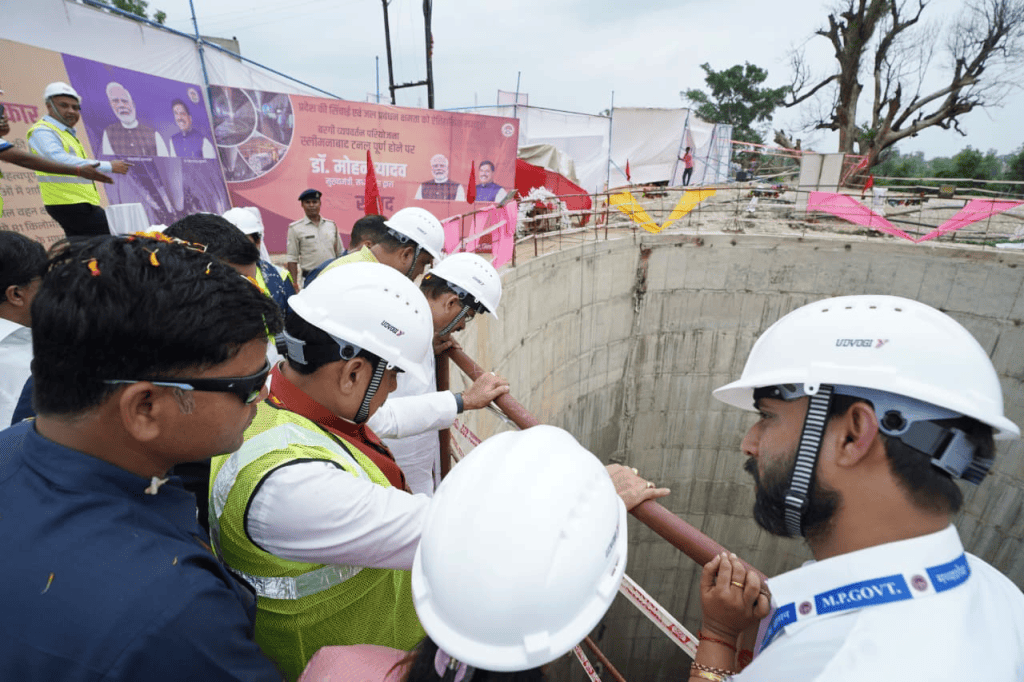
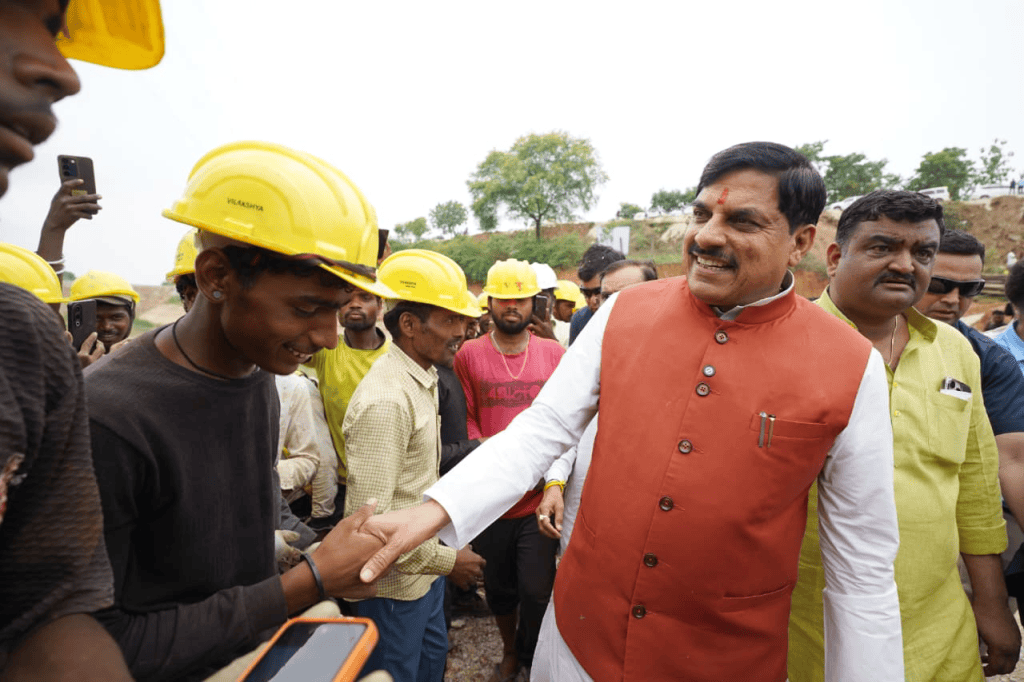
Bhopal: Madhya Pradesh Chief Minister Dr. Mohan Yadav inspected the under-construction Sleemanabad Tunnel Project in Katni district on July 17, 2026, describing it as an engineering marvel that will transform agriculture and water availability across the Vindhya and Mahakaushal regions.
The ambitious project, once completed, will provide permanent irrigation facilities to around 1,450 villages and irrigate approximately 2.45 lakh hectares of agricultural land across Jabalpur, Katni, Maihar, Satna, Rewa and Panna districts.
The Chief Minister said the tunnel is a dream project that will bring major economic and agricultural benefits to the region.
Sleemanabad Tunnel: A ₹1,610 Crore Engineering Achievement
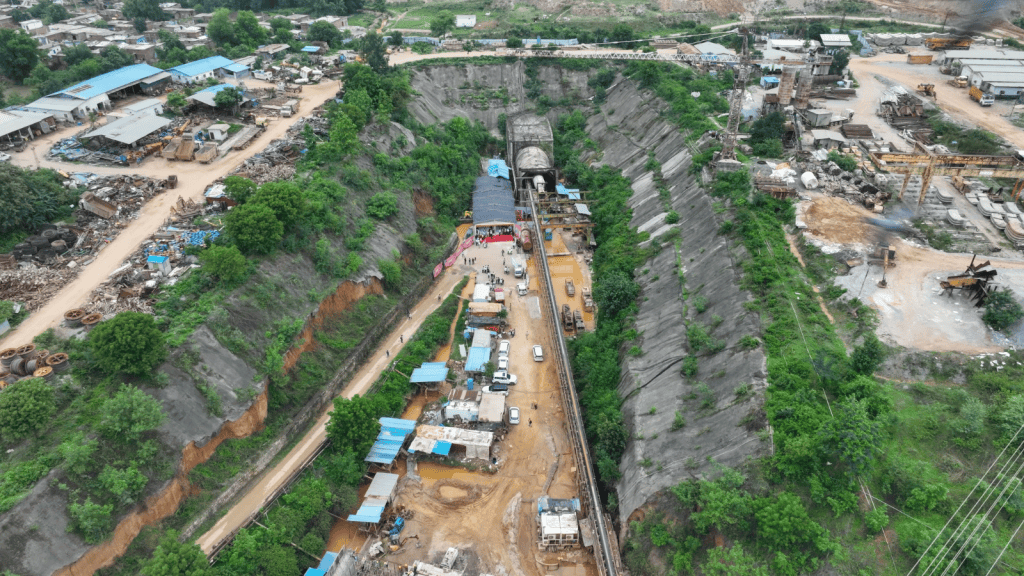
The Sleemanabad Tunnel is being constructed as part of the Narmada-based irrigation system to carry water through the Vindhya mountain range and deliver it towards the Son river basin.
Key Highlights of the Project
- Tunnel Length: 11.952 km
- Tunnel Diameter: 10.14 metres
- Total Project Cost: Around ₹1,610.47 crore spent so far
- Initial Contract Cost: ₹799 crore (awarded in 2008)
- Completion Status: Around 96.66% work completed
- Irrigation Benefit: 2.45 lakh hectares of farmland
- Villages Benefited: Around 1,450 villages
The project includes a 12.135 km long open-cut canal, which has already been completed along with the main tunnel construction.
Read also: CM Mohan Yadav Launches MP Balaram Krishi Mahotsav 2026, Announces Major Farmer Welfare Initiatives
Tunnel Will Transform Agriculture in Five Districts
The project is expected to provide irrigation benefits to major parts of the Vindhya and Mahakaushal regions.
The irrigation coverage will include:
- Katni: 21,823 hectares
- Maihar: 54,227 hectares
- Satna: 1,04,970 hectares
- Rewa: 3,532 hectares
- Panna: 448 hectares
The tunnel will allow Narmada water to reach these areas through a gravity-based flow system without depending on heavy pumping infrastructure.
CM Mohan Yadav Highlights Challenges in Tunnel Construction
During the inspection, Chief Minister Mohan Yadav said that the construction of the tunnel involved several technical and geological challenges.
He said that work was initially carried out in three shifts of eight hours each. By 2015, only 1,406 metres of tunnel boring had been completed, after which the pace of construction needed improvement.
Later, advanced tunnel boring technology imported from Germany was used from the upstream side to accelerate progress.
25,000 Litres of Water Leakage Per Minute Created Major Challenges
The tunnel construction faced difficult underground conditions, including:
- Hard marble and limestone formations
- Strong dolomite layers
- Underground caves filled with water
- Sudden soil collapses
- Heavy water pressure inside the tunnel
At some locations, water leakage reached nearly 25,000 litres per minute, creating major safety challenges for engineers and workers.
A US-made machine used during construction also suffered damage. Later, an advanced German Herrenknecht tunnel boring machine was introduced along with specialised grouting technology to overcome underground difficulties.
Tunnel Designed to Remain Safe for 100 Years
CM Mohan Yadav said the tunnel has been designed with advanced engineering standards and will remain safe for around 100 years.
He added that even severe earthquakes will not impact the structure significantly.
The tunnel passes beneath densely populated areas, highways, and railway tracks, yet construction was completed without causing damage to surrounding infrastructure.
Project to Boost Farming and Economic Growth
The Chief Minister said the tunnel will become a major source of prosperity for farmers and businesses in the region.
He highlighted that:
- Irrigation coverage in Madhya Pradesh has increased significantly over the years.
- Farmers will receive water for the upcoming Rabi crop season.
- Drinking water availability will improve in several areas.
- Some locations may also benefit from power generation opportunities.
He appealed to farmers not to sell their land, saying the region has the potential to become a leading agricultural hub.
Sleemanabad Tunnel to Bring Narmada Water to Son Basin
The tunnel is considered unique because it will transport Narmada water through the Vindhya ranges using natural gravitational force.
While the Narmada river normally flows towards the Gulf of Khambhat, this project will enable water movement towards the Son river basin, creating new possibilities for irrigation and greenery in the region.
Government Roadmap for Irrigation Expansion
According to the state government’s roadmap, work on the remaining project components is progressing rapidly.
Planned Irrigation Targets
- 44,160 hectares of irrigation capacity has already been developed.
- By December 2026, irrigation coverage is expected to reach 87,433 hectares.
- By December 2027, the target is to provide irrigation facilities across 1,54,693 hectares.
The overall target is to achieve irrigation coverage of around 1.85 lakh hectares across five districts under the project.
Additionally, the tunnel will provide water to irrigation projects covering around 30,307 hectares managed by the Water Resources Department.
Sleemanabad Tunnel to Become a Future Engineering Case Study
CM Mohan Yadav said the nearly 12-km-long tunnel project will become a case study in engineering due to its difficult construction conditions and innovative solutions.
The project is expected to play a crucial role in improving agricultural productivity, reducing migration, increasing rural income, and supporting sustainable development across Vindhya and Mahakaushal regions.
Read also: MP CM Mohan Yadav Honours Promoted Police Officers, Completes Long-Pending Promotion Process