19 November 2026
ADVERTISEMENT
ADVERTISEMENT

India Set for Underwater Strike Revolution: How Russia’s 1,500 KM Cruise Missile Could Transform Indian Navy’s War Strategy

Russia’s Kalibr-PL missile offer could transform the Indian Navy’s submarine strike capability with a 1,500 km range and stealth attack power.
India Russia Kalibr-PL Cruise Missile Deal
Indian Masterminds Stories

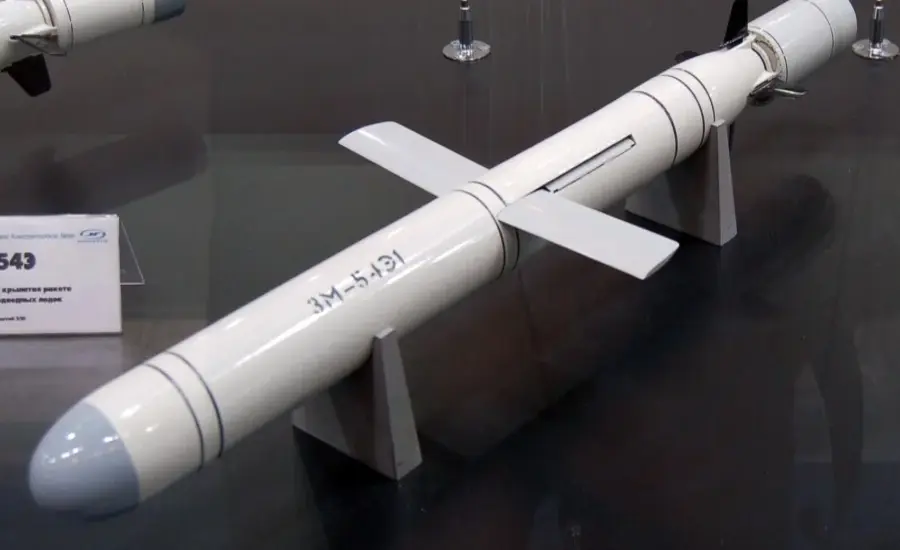
New Delhi: Russia has reportedly proposed supplying the long-range 3M-14E Kalibr-PL submarine-launched cruise missile to boost India’s underwater strike capability. 

This move comes as the Indian Navy looks for advanced precision weapons under its upcoming requirements. The Kalibr-PL, known for its long range and ease of integration, could significantly enhance India’s ability to strike deep into enemy territory while remaining undetected underwater.

What is the Kalibr-PL Cruise Missile?

The Kalibr-PL is a submarine-launched land-attack cruise missile developed by Russia. 

Read also: Explained: How India’s New Heavy Weight Torpedo Will Transform Indian Navy’s Combat Capabilities

It is part of the larger Kalibr missile family used by the Russian Navy.

  • Designed for launch from submarines
  • Can hit land-based targets with high precision
  • Uses low-altitude flight to avoid radar detection
  • Known for stealth and long-range strike capability

The missile is combat-tested and has been used in real conflict situations, proving its operational reliability.

What are the Features of Kalibr-PL Cruise Missile

  • Range: Up to ~1,500 km
  • Launch platform: Standard 533 mm torpedo tubes
  • Speed: Subsonic cruise with possible high-speed terminal phase
  • Guidance: Advanced navigation systems for precision strike
  • Warhead: Conventional (high explosive)

This range is far beyond the Indian Navy’s current requirement of 50–500 km, making it a highly capable option.

What is the Importance of India Russia Kalibr-PL Cruise Missile Deal

The Indian Navy is actively seeking long-range precision strike weapons for its submarine fleet. The goal is to:

  • Strengthen underwater deterrence
  • Enable deep strikes without surfacing
  • Improve survivability against enemy anti-submarine warfare (ASW)

Currently, India is developing its own submarine-launched cruise missile (SLCM), but it may take several years to become fully operational.

Strategic Advantage of India Russia Kalibr-PL Cruise Missile Deal

If India accepts the Russian offer, it could gain several key advantages:

1. Deep Strike from Safe Distance

Submarines equipped with Kalibr-PL could strike targets up to 1,500 km away without entering enemy radar zones.

2. “Silent Strike” Capability

The missile flies at low altitude, making it difficult to detect, allowing surprise attacks on:

  • Airbases
  • Naval ports
  • Command centers
  • Military infrastructure

3. Rapid Deployment

The biggest advantage is that no major structural changes are required. The missile can be launched from existing torpedo tubes.

Compatibility with Indian Submarines

The Kalibr-PL is especially suitable for:

  • Kilo-class (Sindhughosh-class) submarines
  • Scorpene-class submarines

Because these submarines already use similar systems (like Club-S), integration would mainly involve software upgrades and minor adjustments.

This makes the Kalibr-PL a cost-effective and fast solution.

Strategic Context: Why Russia Made This Offer

Russia’s proposal is seen as:

  • A response to India’s growing naval needs
  • An effort to strengthen defence ties with India
  • A way to offer a “ready solution” before India’s indigenous systems are ready

Experts describe it as a “bridge capability” until India develops its own advanced submarine-launched missiles.

Regional Impact of India Russia Kalibr-PL Cruise Missile Deal

If deployed, the Kalibr-PL could shift the strategic balance in the Indo-Pacific region:

  • Increase India’s deterrence against China and Pakistan
  • Extend India’s strike reach across critical regions
  • Enhance second-strike capability (important for nuclear doctrine, if adapted)

This would make Indian submarines more powerful and flexible in modern naval warfare.

Read also: Make in India Shine: DRDO Validated Game-Changing Submarine-Launched Cruise Missile, Targets Both Land and Water


Indian Masterminds Stories
Join our WhatsApp Channel
ADVERTISEMENT
ADVERTISEMENT
Related Stories
ADVERTISEMENT
ADVERTISEMENT
NEWS
Odisha Government
Odisha Deploys Six IAS Officers Across Seven Districts as Cyclone Akvan Approaches; 47,000 Evacuated
CAPF Training Institutes
MHA Transfers Three IAS Officers from Delhi to Jammu and Kashmir; Dilraj Kaur, Nikhil Kumar and Ashok Kumar Shifted
fm nirmala sitharaman
Banking for Viksit Bharat 2047: High-Level Committee Initiates Stakeholder Consultations on Sector Reforms 
India-Japan Maritime Cooperation
Rajnath Singh Visits Japan Naval Base, Highlights Growing India-Japan Maritime Cooperation
Vinimay digital platform
Amit Shah Congratulates JKP, Army and CRPF for Neutralising Lashkar's Last Known Active Local Terrorist in Kashmir
Indian PSU bank merger
PSBs Record Highest-Ever ₹1.10 Lakh Crore Net Profit in H1 FY27, Business Crosses ₹300 Lakh Crore
Chief Minister Rekha Gupta
Delhi Govt Approves Rs 10 Lakh Ayushman Bharat Health Cover for Transgender Community
Delhi Anti-Pollution Measures
CM Rekha Gupta Vows to Continue Strict Anti-Pollution Measures, Appeals to Delhi Residents for Public Support 
ADVERTISEMENT
ADVERTISEMENT
Videos
Five years after Kargil, India sent its cricketing heroes to Pakistan where terrorism posed a deadly threat. The man guarding them, former Special Director of Intelligence Bureau, Mr. Yashovardhan Azad, reveals what all went behind the scenes during that crucial tour. 
Trust No One, Said His Instinct in Pakistan
Gajendra Singh Shekhawat
How India Plans to Boost Tourism, Create Jobs and Ease Overcrowding : Gajendra Singh Shekhawat on the Road to 2047
Dr Saket Badola IFS
Beyond Tigers and Safaris: How Corbett Literature Festival Wants to Change the Conservation Conversation
ADVERTISEMENT
UPSC Stories
Mayank Gurjar
He Lost His Father in Class 12, Then Cleared UPSC in One Attempt to Become an IPS Officer
After losing his father in Class 12, Mayank Gurjar held on to his dream of public service, graduated...
Gautam UPSC
He Studied at 4 AM in a 10×10 Mumbai Slum Room; Today, Gautam Padibhar is an Indian Forest Service Officer
Meet IFS officer Gautam Padhibhar, a 2023-batch Chhattisgarh cadre officer who rose from financial hardship...
Aniket Sagar ICoAS
No Coaching, Full-Time Job and Two Attempts: How Aniket Sagar Cleared ICoAS
Aniket Sagar, a chartered accountant from Bundelkhand, cleared UPSC ICoAS 2025 after working at PwC,...
CSR NEWS
Coal India CSR Programme
Coal India Organises CSR Programme to Align Mining Operations with Community Development 
Initiative Aims to Strengthen CSR Implementation in Coal-Bearing Regions and Improve Community Well-Being...
hurl
HURL Signs MoU with Injot Trust to Launch Project ANGOR for Children's Education in Assam
The three-year CSR initiative will cover five locations in Assam, focusing on holistic education, digital...
cmpdil
CMPDIL Partners with Tata Steel Foundation to Upgrade Technical Education at ITI Tamar 
The project will modernise training infrastructure with robotic welding technology, digital learning...
ADVERTISEMENT
ADVERTISEMENT
ADVERTISEMENT
Latest
IAS Pulkit Singh
How Chandrapur's SHG Women Are Running Safari Vehicles and Earning Through Tadoba Tourism
Odisha Government
Odisha Deploys Six IAS Officers Across Seven Districts as Cyclone Akvan Approaches; 47,000 Evacuated
ADVERTISEMENT
ADVERTISEMENT
ADVERTISEMENT
ADVERTISEMENT
ADVERTISEMENT
ADVERTISEMENT
ADVERTISEMENT
Videos
Five years after Kargil, India sent its cricketing heroes to Pakistan where terrorism posed a deadly threat. The man guarding them, former Special Director of Intelligence Bureau, Mr. Yashovardhan Azad, reveals what all went behind the scenes during that crucial tour. 
Gajendra Singh Shekhawat
Dr Saket Badola IFS
ADVERTISEMENT
ADVERTISEMENT