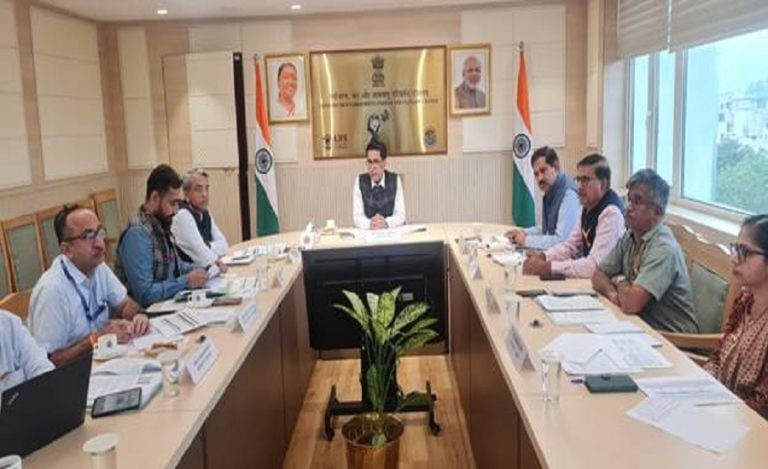
New Delhi: National Investment Policy for Urea-2026 (NIPU-2026) has been approved by the Union Cabinet to encourage new investments in India’s urea manufacturing sector. The policy aims to increase domestic fertilizer production, reduce import dependence, and strengthen the vision of Atmanirbhar Bharat. It also introduces a more transparent financial framework for investors while supporting India’s long-term food and fertilizer security.
What is National Investment Policy for Urea-2026
The Cabinet Committee on Economic Affairs (CCEA), chaired by Prime Minister Narendra Modi, approved the National Investment Policy for Urea-2026 (NIPU-2026) on 15 July 2026.
The policy has been proposed by the Department of Fertilizers to attract fresh investments for setting up gas-based urea manufacturing plants across the country.
What is the Importance of National Investment Policy for Urea-2026
India still imports a significant quantity of urea to meet domestic demand. Although domestic production has increased over the past decade, the country continues to face a gap between production and consumption. The new policy aims to reduce this gap by encouraging private and public sector investments in new fertilizer plants.
What are the Benefits of NIPU-2026
The government says the policy will:
- Encourage investment in new gas-based urea plants.
- Improve India’s fertilizer self-sufficiency.
- Reduce dependence on imported urea.
- Increase transparency in financial support for investors.
- Save more than ₹250 crore per plant compared with the earlier NIP-2012 policy.
Major Changes Compared to NIP-2012
The new policy introduces several important reforms. It separates fixed and variable costs to make the financial structure more transparent. It also introduces a viable Return on Equity (RoE) with a minimum return of 12% and a maximum limit of 16%.
In addition, foreign exchange risk will be reduced by converting fixed costs into Indian Rupees using yearly average exchange rates. These changes are expected to improve investment confidence.
Current Status of India’s Urea Industry
According to the Department of Fertilizers:
- India currently has 33 operational urea manufacturing units.
- Their total reassessed installed capacity is 269.42 lakh metric tonnes (LMT).
- Under the earlier NIP-2012, six new urea plants were established, including four joint venture units and two private sector plants.
How Will Farmers Benefit?
Higher domestic urea production can improve fertilizer availability across the country. Reducing imports may also strengthen supply security and help maintain a stable fertilizer distribution system for farmers during peak agricultural seasons.
Government’s Vision
The government believes NIPU-2026 will attract fresh investment, strengthen India’s fertilizer manufacturing ecosystem, and support the broader goal of building a self-reliant economy under Atmanirbhar Bharat.
Read also: What is BHAVYA Portal? How It Will Give Wings to Atmanirbhar Bharat Goal