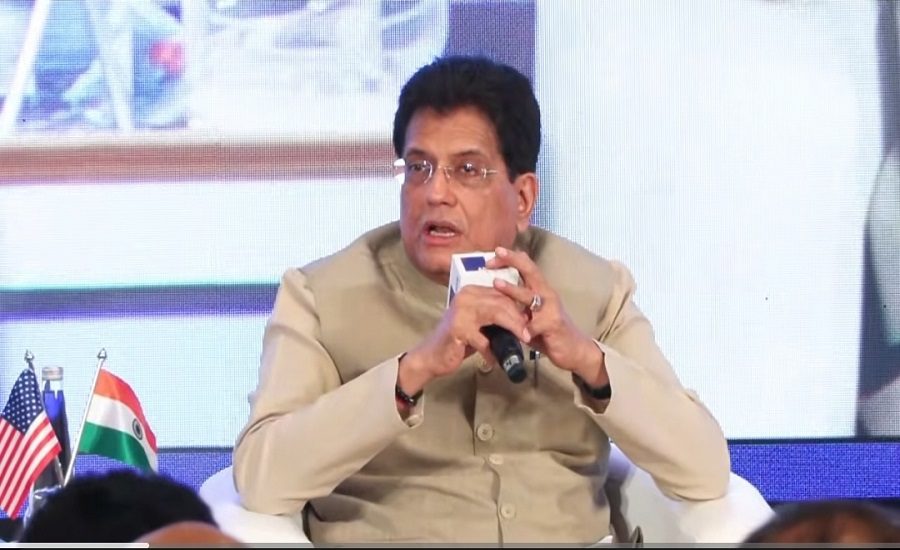
New Delhi: BHAVYA Portal was officially launched by Union Commerce and Industry Minister Piyush Goyal as a major step towards implementing the Bharat Audyogik Vikas Yojana (BHAVYA).
The initiative aims to create a competitive and transparent framework for developing industrial parks across India. Through the portal, states can submit project proposals, while investors can access key information on land availability, infrastructure, and investment opportunities.
What is the BHAVYA Scheme
BHAVYA (Bharat Audyogik Vikas Yojana) is a flagship industrial infrastructure programme of the Government of India.
Read also: India Eyes Rs 20,000 Crore in Organic Exports Within Three Years: Piyush Goyal
Key Highlights
- ₹33,660 crore approved for the scheme.
- Development of 100 industrial parks across India.
- Focus on attracting domestic and foreign investments.
- Creation of large-scale employment opportunities.
- Promotion of manufacturing-led economic growth.
- Plug-and-play industrial infrastructure for faster business setup.
What is the BHAVYA Portal
The BHAVYA Portal will serve as a digital platform for:
- Submission of industrial park proposals by states.
- Monitoring and implementation of projects.
- Providing investors with information on:
- Land availability
- Connectivity
- Utilities
- Industrial ecosystem
- Infrastructure facilities
The platform is expected to improve transparency and make investment decisions easier for businesses.
How Will Industrial Parks Be Developed?
According to the government:
- States will provide land.
- The Central Government will support infrastructure creation.
- Implementation will be led by the National Industrial Corridor Development Corporation (NICDC).
- A 51:49 partnership model between states and NICDC will be used.
- Parks will be designed according to local industrial strengths.
Size and Location of Industrial Parks
The proposed industrial parks will vary in size based on regional requirements.
Planned Categories
- Around 25 acres in hilly and Northeastern regions.
- 100–500 acres in medium-sized states and regions.
- Up to 1,000 acres near major cities and industrial hubs.
This flexible approach is intended to ensure that each park matches local economic potential and industrial demand.
BHAVYA Portal: Focus on Startups, Deep-Tech and Innovation
One of the notable features of the scheme is the government’s plan to create dedicated spaces for:
- Startups
- Deep-tech companies
- Research and Development (R&D)
- Technology-driven enterprises
- Innovation-led businesses
This could strengthen India’s innovation ecosystem while supporting emerging industries.
BHAVYA Portal: Modern Testing Infrastructure Planned
The government also announced plans to establish advanced testing facilities within BHAVYA parks.
Proposed Partnerships
- BIS (Bureau of Indian Standards)
- Export Inspection Agency (EIA)
- FSSAI
Such facilities are expected to help industries meet quality and export standards more efficiently.
Why the Scheme Matters
Economic Benefits Expected
- Increased manufacturing investment.
- Faster industrial project execution.
- Improved ease of doing business.
- Higher employment generation.
- Stronger export competitiveness.
- Better regional industrial development.
The scheme aligns with India’s broader objective of becoming a global manufacturing and investment destination.
Analysis: A Major Push for Industrial Growth
The launch of the BHAVYA Portal marks the operational phase of one of India’s largest industrial infrastructure programmes.
Strengths
- Competitive selection of projects.
- Digital-first implementation and monitoring.
- Focus on investor readiness.
- Integration of startup and innovation ecosystems.
- Large-scale infrastructure support.
Challenges
- Timely land acquisition by states.
- Coordination between central and state agencies.
- Ensuring uniform infrastructure quality.
- Attracting sufficient private investment across all regions.
If implemented effectively, the BHAVYA scheme could significantly strengthen India’s manufacturing base and accelerate job creation over the coming years.