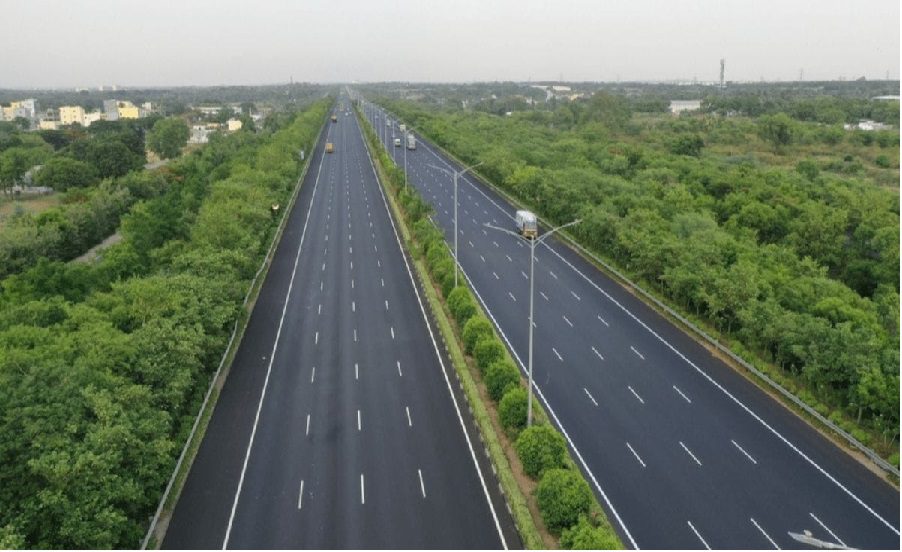
Gandhinagar: The Gujarat government has announced an ambitious infrastructure initiative to construct 20 climate-resilient roads across multiple districts using environmentally friendly green technology. The project, backed by an allocation of ₹1,147 crore in the state budget, aims to modernise road infrastructure while reducing environmental impact and construction costs.
The initiative aligns with the broader vision of large-scale sustainable development and focuses on recycling existing road materials, reducing carbon emissions, and improving long-term durability.
Green Infrastructure Push Under State Development Plan
According to an official government release, the road development programme is being implemented under the leadership of Chief Minister Bhupendra Patel and is aligned with national infrastructure goals focused on sustainability and rapid development.
The project emphasises the reuse of materials from existing roads, including old pavement, soil, and aggregates, which will be stabilised and reprocessed for reuse in new road layers. This approach is expected to significantly reduce dependency on fresh raw materials and lower overall project costs.
District-Wise List of Roads Included in the Project
The 20 identified road projects span several districts of Gujarat, improving connectivity across rural, semi-urban, and industrial regions.
Key routes include:
- Lanwa–Manund–Sander–Balisana Road and Radhanpur–Mashali–Madhapura Road (Patan)
- Bhidiya Somnath Road (Gir Somnath)
- Santrampur–Jalod Road (Mahisagar)
- Dayadara–Nabipur–Janor Road and Ilav–Kosamba Road (Bharuch)
- Morbi–Nani Vavdi–Baghthala Road (Morbi)
- Surendranagar Bypass Road (Surendranagar)
- Dindoli–Karadwa–Iklera Road (Surat)
- Manglej–Nareshwar Road and Karjan–Amod Road (Vadodara)
- Kosindra–Bhakha Road (Chhota Udepur)
- Isarwada–Undel Road and Vadtal–Jol–Bakrol Road (Anand)
- Valam–Kadi Road and Peplu–Kapra Road (Mehsana)
- Luni–Gundala–Patri–Tappar–Babiya Road (Kutch)
- Talaja–Gopnath Road (Bhavnagar)
- Kalavad–Jamvanthali–Fala Road (Jamnagar)
- Kothara Approach Road (Narmada)
Advanced Engineering Techniques for Durable Roads
The construction plan incorporates multiple modern engineering techniques designed to increase road strength and lifespan. These include:
- Road widening and resurfacing
- Reinforced Cement Concrete (RCC) gutter lines
- Earthwork and side shoulder strengthening
- Installation of road furniture and rumble strips
- Four-laning where required
- Use of white topping and glass grid technology
A key feature of the project is the application of Stress Absorbing Membrane Interlayer (SAMI), a high-tech fibre layer used before asphalt laying. This helps prevent cracking, absorb heavy traffic load, and enhance road durability.
Recycling-Based Construction to Reduce Costs and Emissions
A major highlight of the initiative is the reuse of old road material. The construction process involves:
- Excavation of existing road surfaces
- Pulverising and stabilising old pavement materials
- Lime and chemical treatment for strengthening
- Dry rolling, cement spreading, and compaction
- Re-laying processed material for reuse in road construction
This green approach reduces the need for fresh construction material, thereby cutting costs and lowering environmental damage caused by mining and transport of raw materials.
Boost to Industrial and Rural Connectivity in Bharuch
In a separate approval under the same green infrastructure push, the state has sanctioned ₹50 crore for reconstruction of the Jambusar–Tankali–Deola road in Bharuch district using similar eco-friendly technology.
This route is strategically important as it connects:
- Pharmaceutical bulk drug parks near Jambusar
- ONGC operational facilities
- Coastal salt farming areas near Deola
- Shrimp farming zones along the coastline
- Major transport links to Vadodara district, railways, airports, and expressways
The upgraded road is expected to significantly improve logistics efficiency and support industrial growth in the region.
Focus on Sustainability and Long-Term Infrastructure Growth
Officials stated that the green technology-driven road projects will not only enhance connectivity but also ensure long-term sustainability. By reducing carbon emissions, reusing construction materials, and improving road lifespan, the initiative marks a shift towards environmentally responsible infrastructure development in Gujarat.
The project is expected to strengthen both rural connectivity and industrial corridors while supporting economic activity across the state.