In an era where governance is increasingly expected to be fast, transparent, and citizen-centric, technology – especially Artificial Intelligence (AI) – is emerging as a powerful enabler. Moving beyond conventional digitisation, AI has the potential to not only process information but also analyse, prioritise, and act – transforming how governments respond to citizens.
In Maharashtra’s Dhule district, this transformation is no longer theoretical. It is already underway.
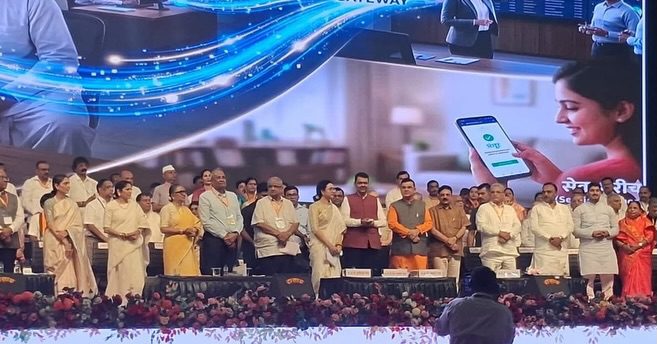
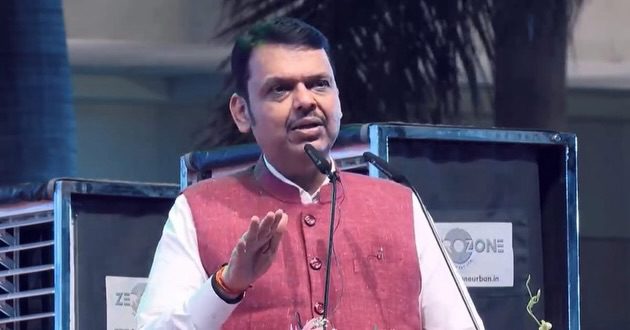
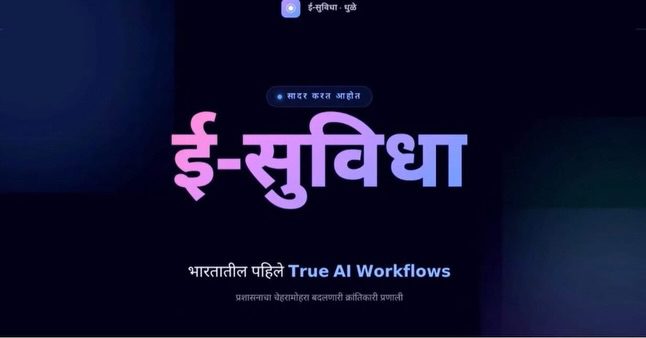
Led by District Collector and 2017-batch IAS officer Bhagyashree Vispute, the district has introduced an ambitious and pioneering initiative – the AI-based E-Suvidha Portal and Dashboard – recently inaugurated by Chief Minister Devendra Fadnavis in Shirpur. Designed to streamline governance and eliminate bureaucratic delays, the platform aims to bring unprecedented efficiency, accountability, and transparency to public service delivery.
And notably, as Vispute asserts, “this is the first of its kind in India.”
“This Is Not Just Digitalisation – It Is True AI-Based Governance”
Speaking to Indian Masterminds, IAS Bhagyashree Vispute emphasised that the initiative goes far beyond conventional e-governance platforms.
“We recently launched India’s first ‘E-Suvidha’ portal and dashboard at the hands of the Honorable Chief Minister. It is not just digitalised—I would say it is a truly AI-driven system,” she explains to Indian Masterminds.
“It will feature an AI-based workflow extending right down to the Talathi and Gram Sevak levels. Even the proceedings of meetings will be generated within five minutes, including what actions need to be taken and who should issue which letters.”
Read Also: From Fear to Fearless: How IAS Bhagyashree’s ‘Veerangana’ Made Thousands of Girls Fearless in Dhule
The system, she notes, is designed to function as an intelligent administrative engine – automating processes, reducing delays, and ensuring accountability at every level.
How It All Started: A Vision Beyond Awards
The idea for the E-Suvidha portal did not emerge from a routine administrative plan, but from a deeper vision of sustainable governance.
IAS Vispute recalls, “About 100 days ago, the Chief Minister asked every district to do something innovative for good governance. But I was not focused on awards. I thought—we should do something that remains even after we leave.”
“So we started working on this six months ago, continuously improving it every day.”
Rather than chasing recognition, her focus remained on building a system that could endure, evolve, and truly serve people.
The Problem with the Old System: Delays, Loss, and Lack of Accountability
To understand the need for such a system, Vispute offers a simple yet powerful example:
“Suppose a Revenue Minister visits and meets 300 people who submit petitions. What usually happens? Some get misplaced, some are delayed, and everything is handled manually.”
“Files move from one officer to another – one month, two months, three months. By the time the Minister returns, there is often no clear answer on what action was taken.”
This inefficiency, she explains, not only delays justice but also erodes trust in governance.
How the E-Suvidha Portal Works: AI at the Core of Administration
The AI-based E-Suvidha dashboard transforms this entire process into a seamless, trackable workflow.
From Petition to Resolution—A Smart Workflow
- Petitions (even up to 300 at a time) are uploaded into the system along with contact details
- Login access is provided to senior officials like the Revenue Minister, PA, or OSD
- Tasks are assigned digitally and routed automatically to the concerned department
- The system identifies the relevant Head of Department (HOD)
- Each case is analysed and prioritised as High, Medium, or Low
“If the priority is high, the HOD must resolve it within seven days,” Vispute explains.
Automated Intelligence with Deep Integration
The system is powered by a massive database:
- Over 1.5 lakh Government Resolutions (GRs) uploaded
- AI automatically retrieves and analyses relevant policies
- Officers can access past records and references instantly
“The system provides a complete analysis. The officer just needs to compile documents and act,” she says.

Real-Time Transparency: Every Step, Every Update
One of the most impactful features is real-time tracking for both citizens and administrators.
“The applicant receives continuous updates—‘your file moved here today, now it’s there.’ At the same time, the Revenue Minister also gets updates at every stage,” IAS Vispute explains.
“Once the matter is disposed of, both are informed immediately.”
This eliminates uncertainty, improves communication, and builds trust.
No More Excuses: Accountability Built into the System
With everything online, administrative loopholes shrink significantly.
“Officers cannot say ‘files are missing’ or ‘papers are not available.’ Everything is accessible online,” she says.
The system ensures:
- Clear responsibility at each level
- Digital record of actions taken
- Timely escalation of delays
Extending to the Grassroots: From Secretariat to Village Level
Unlike many top-heavy digital systems, E-Suvidha is designed to function across all administrative tiers.
“It will extend till the Talathi and Gram Sevak levels,” she highlights.
This ensures that governance reforms are not confined to offices but reach the grassroots.
Beyond Petitions: Smart Transfers and Administrative Transparency
The platform is not limited to grievance redressal. It also includes innovative modules like transfer and posting management.
“We recently added a feature where details of officers—their postings, tenure, additional charges, performance records – everything will be visible,” she explains.
“This helps prevent misinformation, favoritism, and ensures transparency in decision-making.”
Funding and Execution: Powered by ‘Gatiman Prashasan’
Despite its scale and ambition, the project was implemented using existing resources.
“It is funded under the ‘Gatiman Prashasan’ scheme, which has a budget head for good governance in the District Development Plan,” she says.
Interestingly, she credits her team for the technical execution:
“I am not technically savvy. I do not come from an engineering background. The team worked as technical assistants and made this possible.”
District-Wide Rollout and Continuous Evolution
The portal has now been launched across the entire Dhule district, following months of preparation.
“We have just implemented it district-wide. For the past six months, we kept improving it daily,” she shares.
Even after launch, the system continues to evolve with new features being added regularly.
Impact: Faster Decisions, Transparent Governance, Empowered Citizens
The expected impact of the E-Suvidha portal is transformative:
- Faster grievance redressal
- Reduced administrative delays
- Enhanced transparency
- Real-time monitoring for senior officials
- Improved citizen satisfaction
Most importantly, it bridges the gap between citizens and administration.
The Bigger Picture: A Model for the Nation
While Maharashtra already has platforms like Aaple Sarkar for online services and district portals for certificates and land records, Dhule’s E-Suvidha dashboard goes a step further – bringing intelligence, automation, and accountability into one unified system.
Its success could pave the way for replication across districts and states.
“We Wanted Something That Lasts”
At its core, this initiative is not just about technology – it is about intent.
“I wanted to create something sustainable – something that remains even after we leave,” says IAS Bhagyashree Vispute.
In doing so, she and her team may have just set a new benchmark for AI-driven governance in India – where administration is not just efficient, but responsive, transparent, and truly citizen-first.
Read Also: Meet Sangeeta Raghav: The First Female Magistrate from UP to Shine at National Yoga Championship