Chennai: India has taken a major step toward becoming a leader in underwater robotics with the inauguration of the CMARS Facility Chennai at the National Institute of Ocean Technology (NIOT).
The new Centre for Marine Autonomous Robotics Systems (CMARS) will focus on developing advanced autonomous underwater technologies for deep-sea exploration, maritime surveillance, environmental monitoring, and blue economy applications.
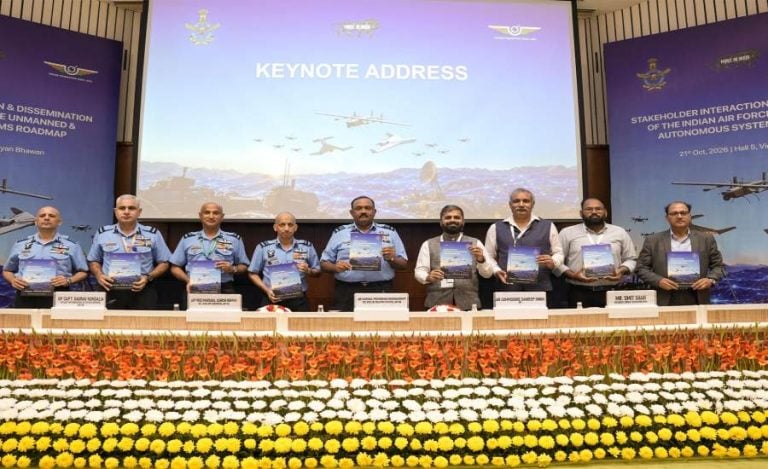
The facility was inaugurated during the National Underwater Robotics Workshop (UWR-2026) attended by around 300 experts, researchers, industry leaders, and policymakers.
What is CMARS
The Centre for Marine Autonomous Robotics Systems (CMARS) is a dedicated research and development hub established at NIOT in Chennai.
According to official information released by the Ministry of Earth Sciences and NIOT:
- CMARS will develop marine autonomous and robotic technologies.
- The centre will support research, testing, deployment, and operation of underwater robotic systems.
- It will promote indigenous innovation in marine technologies.
- The facility is expected to support India’s long-term ocean exploration goals.
Who Inaugurated the CMARS Facility Chennai
The facility was inaugurated by:
- Vice Admiral Biswajit Dasgupta, National Maritime Security Coordinator
- Dr. M. V. Ramana Murthy, Mission Director, Deep Ocean Mission
The inauguration took place in the presence of:
- Dr. Balaji Ramakrishnan, Director, NIOT
The launch was part of the National Underwater Robotics Workshop organized by NIOT in Chennai.
Key Technologies CMARS Will Focus On
The new centre is expected to work on several cutting-edge technologies, including:
Autonomous Underwater Vehicles (AUVs)
- Unmanned underwater systems capable of independent operations.
- Useful for seabed mapping and ocean research.
Remotely Operated Vehicles (ROVs)
- Underwater robots controlled from the surface.
- Used for inspection and maintenance of underwater infrastructure.
Unmanned Surface Vessels (USVs)
- Autonomous boats for surveillance and monitoring missions.
AI-Based Navigation Systems
- Artificial intelligence for underwater navigation and obstacle avoidance.
Advanced Underwater Sensors
- Systems for collecting oceanographic and environmental data.
Why CMARS Matters for India
Strengthening Maritime Security
India has a coastline of over 7,500 km and vast maritime interests across the Indian Ocean Region.
CMARS can help develop:
- Underwater surveillance technologies
- Monitoring of strategic sea routes
- Detection of underwater threats
- Protection of critical maritime infrastructure
Advanced autonomous systems reduce dependence on human-operated missions and improve operational efficiency.
Supporting the Deep Ocean Mission
The Government of India’s Deep Ocean Mission aims to enhance exploration of ocean resources and develop indigenous deep-sea technologies.
CMARS is expected to become a major technological pillar supporting:
- Deep-sea exploration
- Resource assessment
- Ocean observation
- Scientific research missions
Boost to India’s Blue Economy
The blue economy is becoming a key growth area for India.
CMARS will contribute through:
- Marine resource mapping
- Fisheries management support
- Offshore energy exploration
- Environmental monitoring
- Sustainable ocean resource utilization
Experts believe advanced marine robotics will help India better utilize its ocean resources while maintaining environmental sustainability.
CMARS Facility Chennai: Strategic Importance of Underwater Robotics
Modern naval and civilian operations increasingly rely on autonomous systems.
Some major applications include:
- Submarine support operations
- Underwater cable monitoring
- Port security
- Offshore oil and gas inspections
- Search and rescue missions
- Disaster response
With growing geopolitical competition in the Indo-Pacific region, indigenous underwater robotic capabilities are becoming strategically important for maritime nations.
Industry and Research Impact
The UWR-2026 workshop brought together approximately 300 delegates from:
- Academic institutions
- Research organizations
- Government agencies
- Industry stakeholders
- Startups
This collaborative ecosystem is expected to accelerate innovation and create opportunities for Indian researchers and marine technology companies.