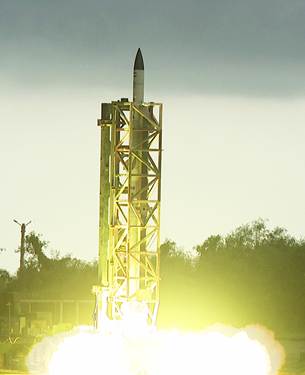
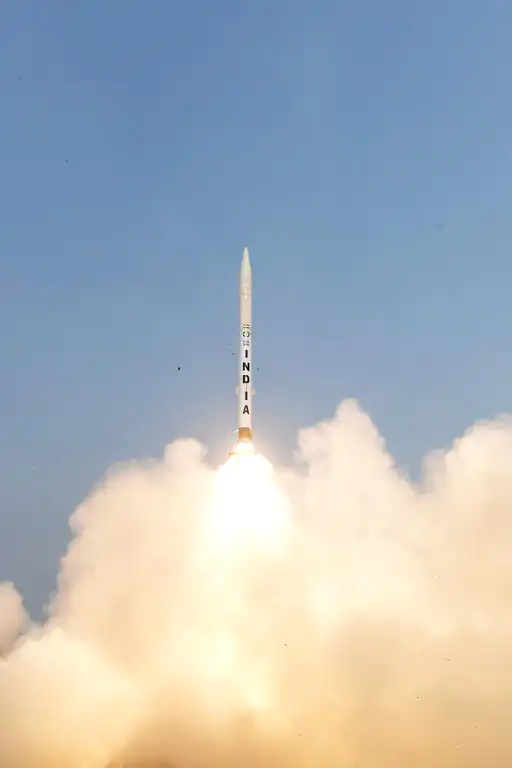
New Delhi: In a major boost to India’s strategic defence capabilities, the Defence Research and Development Organisation (DRDO) has successfully demonstrated the country’s next-generation Multi-Layered Ballistic Missile Defence (BMD) System, capable of intercepting and destroying long-range ballistic missile threats, including missiles in the Intercontinental Ballistic Missile (ICBM) class.
The successful trials, conducted on June 10 and 11, mark a significant milestone in India’s indigenous defence programme and place the country among a select group of nations possessing advanced ballistic missile defence capabilities.
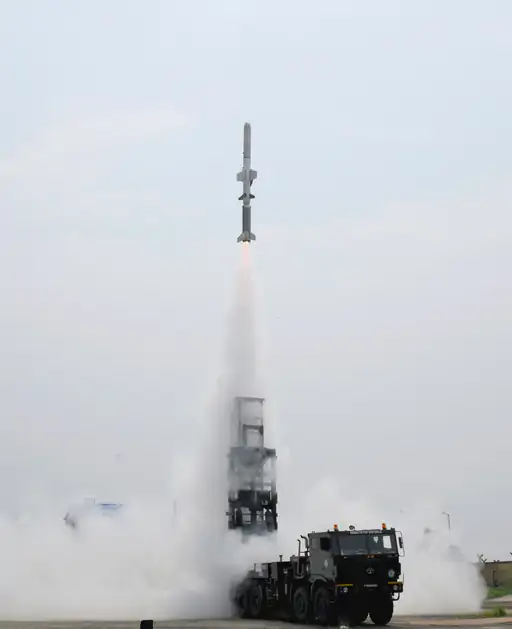
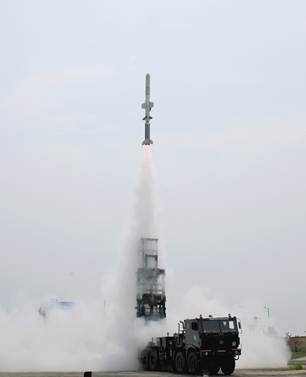
Alongside the BMD demonstration, DRDO also successfully carried out the maiden flight test of the Naval Anti-Ship Missile-Medium Range (NASM-MR), further strengthening India’s maritime strike capabilities.
Defence experts believe the achievement significantly enhances India’s ability to defend critical military and civilian infrastructure against long-range missile attacks while reinforcing its status as a major military power.
Three Consecutive Flight Tests Successfully Conducted
According to DRDO, three consecutive flight tests were conducted over two days to validate multiple critical defence technologies designed to tackle evolving missile threats.
Read Also: Beyond Pinaka: How Private Defence Companies Are Reshaping India’s Future Rocket Force
The tests demonstrated:
- Multi-layered Ballistic Missile Defence capability
- Successful interception of long-range ballistic missile targets
- Advanced tracking and engagement systems
- Capability to counter ICBM-class missile threats
- Successful maiden test of Naval Anti-Ship Missile-Medium Range (NASM-MR)
Senior officials from DRDO and the armed forces closely monitored the trials.
The successful interception of designated targets confirmed the effectiveness of India’s indigenous missile defence architecture against sophisticated long-range missile threats.
India Joins Elite Group of Nations with Advanced BMD Capability
The latest achievement places India among a very small group of countries possessing operational ballistic missile defence systems capable of engaging long-range and potentially intercontinental ballistic missile threats.
Before India, only a handful of nations possessed similar capabilities, including:
- United States
- Russia
- Israel
- China
With this successful demonstration, India has effectively joined the elite club of nations capable of deploying layered missile defence against advanced ballistic missile attacks.
What Is a Multi-Layered Ballistic Missile Defence System?
A Ballistic Missile Defence (BMD) system is designed to detect, track and destroy enemy ballistic missiles before they can reach their intended targets.
The system functions through multiple layers:
Detection Phase
Advanced radar systems detect incoming missile launches and continuously track their trajectory.
Threat Assessment
Command-and-control systems evaluate the threat level and predict the missile’s likely impact point.
Interception
Interceptor missiles are launched to destroy the incoming ballistic missile during flight.
Multiple Layers of Protection
A key feature of a layered defence architecture is redundancy.
If the first interceptor misses or fails to neutralise the target, additional interceptor layers engage the threat, dramatically increasing the probability of a successful kill.
This layered approach ensures greater reliability against sophisticated missile attacks.
Capable of Countering ICBM-Class Threats
One of the most significant aspects of the recent trials is India’s demonstrated capability to engage threats comparable to Intercontinental Ballistic Missiles (ICBMs).
What is an ICBM?
An Intercontinental Ballistic Missile is among the world’s most powerful strategic weapons.
Key characteristics include:
- Range exceeding 5,500 kilometres
- Ability to travel between continents
- Capability to carry conventional or nuclear warheads
- Extremely high re-entry speeds
- Difficult to intercept due to altitude and velocity
An ICBM typically ascends into near-space before re-entering Earth’s atmosphere at hypersonic speeds to strike its target.
The ability to defend against such threats represents one of the most advanced technological achievements in modern missile defence.
Earlier Phase-II BMD Trials Laid the Foundation
The latest demonstration builds upon India’s earlier success in testing the Phase-II Ballistic Missile Defence programme.
During those trials:
- A target missile simulating an enemy ballistic missile was launched from Launch Complex-IV at Dhamra, Odisha.
- Land-based and sea-based radar systems tracked the target.
- Indigenous Air Defence interceptor missiles successfully engaged and neutralised the threat.
These tests validated the advanced capabilities required to counter long-range missile threats.
Odisha Test Range Witnessed High-Security Operations
The recent trials were conducted from the Integrated Test Range (ITR) at Chandipur in Odisha.
As part of extensive safety protocols:
- Eleven villages near the launch complex were temporarily evacuated.
- Around 11,442 residents living within a 3.5-kilometre radius of Launch Pad-3 were shifted to safe locations.
- Residents were accommodated in cyclone shelters and other designated facilities.
- They were allowed to return home after completion of the tests.
Such precautionary evacuations are standard practice during strategic missile trials involving long-range weapon systems.
Successful Maiden Test of Naval Anti-Ship Missile (NASM-MR)
In another major achievement, DRDO successfully conducted the maiden flight test of the Naval Anti-Ship Missile-Medium Range (NASM-MR).
The missile is expected to significantly enhance the Indian Navy’s ability to engage hostile naval assets at medium ranges.
The successful test demonstrates India’s growing capabilities in indigenous maritime strike systems and complements the country’s expanding naval modernisation efforts.
Rajnath Singh Congratulates DRDO
Defence Minister Rajnath Singh congratulated DRDO and the armed forces for the successful demonstrations.
He described the achievement as a major milestone in strengthening India’s defence preparedness and technological self-reliance.
The Defence Minister also shared visuals from the trials, highlighting the importance of indigenous defence innovation.
DRDO Chairman Applauds Scientists and Industry
Secretary, Department of Defence R&D and DRDO Chairman Rajesh Kumar Singh closely monitored the trials and praised the efforts of scientists, engineers and industry partners involved in the programme.
He noted that the successful demonstrations showcase India’s growing capability to design and develop advanced defence systems capable of addressing emerging security challenges.
Strategic Significance for India
The successful demonstration of the multi-layered Ballistic Missile Defence System comes at a time when missile technologies are becoming increasingly sophisticated worldwide.
The achievement is expected to:
- Strengthen India’s strategic deterrence capability
- Enhance protection against long-range missile attacks
- Improve national security preparedness
- Reduce vulnerability of critical infrastructure
- Boost indigenous defence manufacturing under the Atmanirbhar Bharat initiative
- Reinforce India’s position as a major defence technology power
With the successful validation of advanced missile interception technologies and naval strike systems, India has taken another significant step toward building a comprehensive and self-reliant defence ecosystem.
Read more: Explained: Top Reasons Why France is Considering Pinaka Rocket System Procurement Now