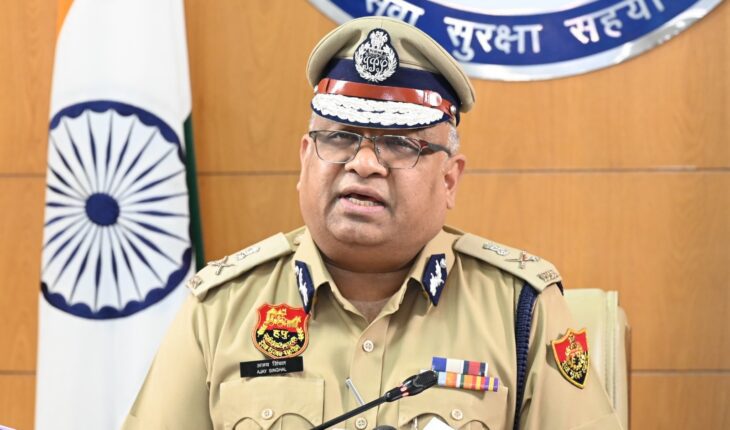
Chandigarh: In a major push to strengthen the fight against organized crime and gang activity, Haryana Director General of Police (DGP) Ajay Singhal, an IPS officer of 1992 batch, has directed police commissioners, range inspectors general and district superintendents of police to enhance coordination and intelligence-sharing across districts. The directive comes as Haryana Police revealed that it is currently tracking 10,892 accused and convicted individuals involved in serious crimes through an expanded crime-monitoring network.
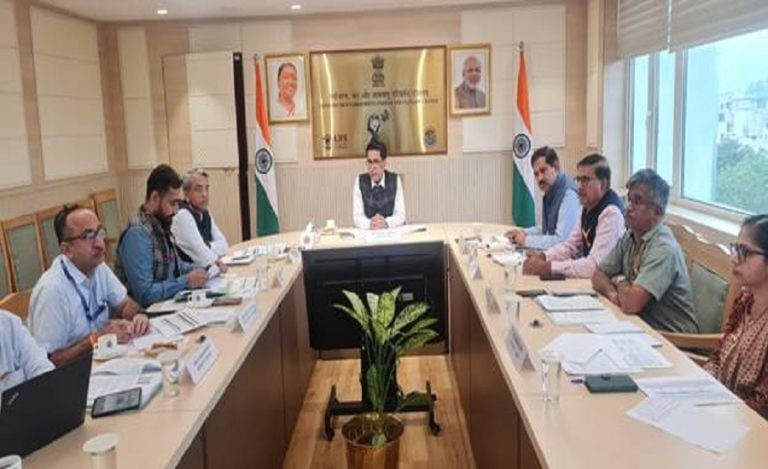
The instructions were issued during a high-level review meeting held at the Haryana Police Headquarters in Panchkula, where senior officers evaluated the functioning of the Rohtak-Jhajjar-Sonipat-Faridabad (RJSF) Unit and the Haryana Special Task Force (STF).
DGP Calls for Faster Sharing of Criminal Intelligence
During the meeting, DGP Ajay Singhal emphasized the importance of seamless coordination between districts in tackling organized crime.
He instructed officers that intelligence gathered in one district should be immediately shared with neighboring districts to prevent criminals from exploiting jurisdictional boundaries.
According to the DGP, timely sharing of information regarding gang members, repeat offenders and criminal movements can help law enforcement agencies take preventive action before suspects relocate or regroup in another district.
“Advance knowledge of criminal movement allows local jurisdictions to take pre-emptive action in time,” the DGP said while reviewing the state’s anti-gang strategy.
RJSF Unit Expanded Across Four Districts
The review focused heavily on the performance of the RJSF Unit, a specialized policing model created to monitor gang activity, repeat offenders and organized criminal networks operating across district boundaries.
Initially launched in Rohtak, the initiative has now been expanded to cover:
- Rohtak
- Jhajjar
- Sonipat
- Faridabad
Inspector General of Police Simrdeep Singh, Rohtak Range, informed the meeting that the model is functioning effectively across all four districts.
He further stated that preparations are underway to replicate the RJSF framework in other parts of Haryana, potentially creating a statewide network for monitoring organized criminal activity.
Database Contains Records of 10,892 Serious Offenders
One of the most significant revelations during the review meeting was the scale of the criminal database maintained under the RJSF initiative.
According to officials, the database currently contains records of 10,892 individuals accused or convicted of serious crimes over the last decade.
The database includes offenders linked to:
- Murder
- Attempt to murder
- Violent crimes
- Organized criminal activities
- Gang-related offences
Police officials said the centralized repository enables district police units to quickly identify repeat offenders, habitual criminals, gang associates and individuals with histories of violent behavior.
The information is also used to strengthen surveillance and improve crime prevention measures.
Focus on Preventing Gang Recruitment
Apart from monitoring established gang members, Haryana Police is also focusing on preventing the recruitment of new individuals into criminal networks.
Officials informed the meeting that gangs frequently attempt to recruit:
- Young offenders
- Individuals released on bail
- Persons with previous criminal records
- Vulnerable youth with criminal associations
To counter this trend, local intelligence units have been tasked with monitoring recruitment patterns and sharing relevant information with district police authorities.
The strategy is aimed at disrupting gang expansion before criminal groups can strengthen their networks.
Haryana STF Arrested 941 Gang-Linked Criminals in Three Years
The Haryana Special Task Force presented details of its ongoing operations against organized crime across the state.
According to Waseem Akram, Superintendent of Police, Haryana STF, the agency has arrested 941 gang-linked criminals over the past three years.
The STF continues to conduct intelligence-driven operations targeting gang leaders, active members and their support networks.
Officials said the sustained crackdown has significantly disrupted several criminal organizations operating within and outside Haryana.
22 Wanted Gangsters Brought Back to India
The meeting was also informed about progress in efforts to bring back fugitives linked to Haryana-based gangs who had fled abroad.
According to STF officials:
- 22 wanted criminals have been deported or extradited to India so far.
- Nine fugitives were brought back during 2026 alone.
Fourteen additional fugitives are currently in custody overseas and are undergoing legal proceedings related to their return to India.
The developments highlight increasing coordination between Indian law enforcement agencies and international authorities in tracking and repatriating wanted criminals.
Statewide Expansion of Anti-Gang Framework Planned
Officials indicated that the success of the RJSF model has encouraged Haryana Police to consider expanding the system to additional districts.
The proposed expansion is expected to improve intelligence gathering, facilitate real-time information exchange and create a unified response mechanism against organized crime across the state.
Police leaders believe that broader implementation of the model will strengthen the state’s ability to identify emerging gang networks and monitor repeat offenders more effectively.
DGP Directs Continued Vigilance Against Organized Crime
Concluding the review meeting, DGP Ajay Singhal instructed district police chiefs to maintain close coordination on gang-related investigations and criminal intelligence.
He emphasized that information regarding wanted criminals, gang associates and suspicious activities must be shared promptly across districts to ensure swift action and prevent criminal networks from exploiting administrative boundaries.
The review reflects Haryana Police’s increasing focus on intelligence-led policing, inter-district cooperation and proactive measures aimed at curbing gang activity and organized crime throughout the state.
Read Also: Who Is IPS Officer Abdur Rahman? Supreme Court Orders Fresh Review of His Voluntary Retirement Plea