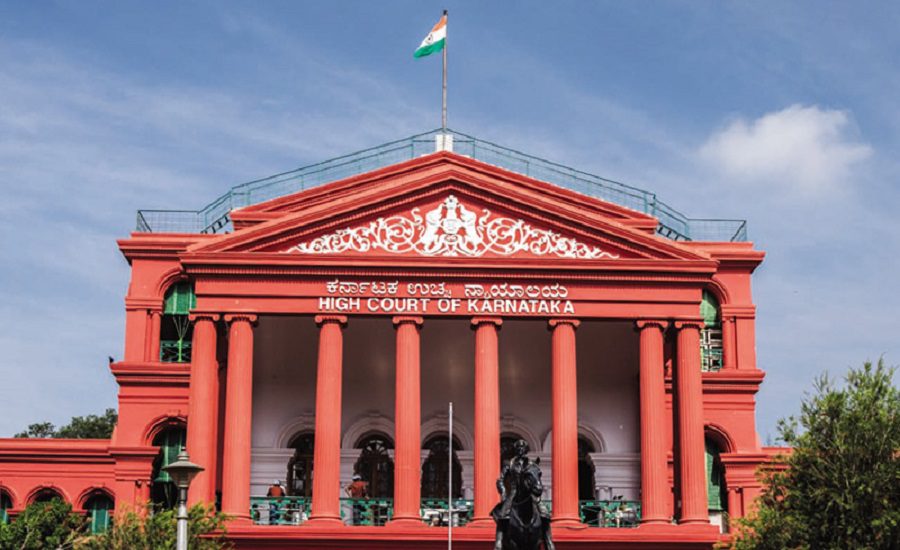
Bangalore: The Karnataka High Court ethanol allocation case has brought attention to India’s ethanol procurement system. The court has directed state-owned Oil Marketing Companies (OMCs) to reconsider a representation filed by Vinp Distilleries and Sugars Pvt. Ltd., which sought a higher allocation of ethanol supply for the Ethanol Supply Year (ESY) 2025–26. The court ordered the companies to take a decision within four weeks and before finalizing the ongoing tender process.
Details of the Ethanol Allocation Case
Vinp Distilleries, a dedicated ethanol manufacturer based in Karnataka, approached the High Court after receiving a significantly lower ethanol allocation than what it had bid for. According to court records:
| Particulars | Quantity |
| Annual production capacity | 9.90 crore litres |
| Bid quantity for ESY 2025-26 | 9.26 crore litres |
| Allocation received | 3.92 crore litres |
The company argued that despite having a dedicated ethanol plant, it was allotted only 3.92 crore litres, far below its production capacity and bid quantity.
Ethanol Allocation Case: Which Companies Were Involved
The case involves three major public-sector oil companies:
- Bharat Petroleum Corporation Limited
- Hindustan Petroleum Corporation Limited
- Indian Oil Corporation Limited
These companies procure ethanol under the Government of India’s ethanol blending programme.
What Did the Distillery Argue
Vinp Distilleries claimed that the allocation violated Clause 6.8 of the Long-Term Offtake Agreement (LTOA). The company said:
- It established a dedicated ethanol plant based on government policy and procurement assurances.
- Dedicated ethanol plants are contractually restricted from supplying ethanol to third parties.
- Such plants were promised preferential allocation under the agreement.
- OMCs had already used Clause 6.8 to increase procurement from 1.44 crore litres to 3.92 crore litres.
- Therefore, the same clause should not be selectively applied while denying a larger allocation request.
Ethanol Allocation Case: What Was the Government’s Stand
The Attorney General of India opposed the petition and argued that:
- Preferential allocation does not create an automatic right to receive the entire requested quantity.
- OMCs must follow national ethanol procurement guidelines.
- Allocation decisions depend on overall ethanol demand and supply across states.
- Courts should avoid interfering in procurement policies and commercial allocation decisions.
What Did the Karnataka High Court Say?
Justice N. Nagaprasanna observed that the OMCs could not selectively invoke Clause 6.8.
The court noted that if the clause could be used to increase procurement from 1.44 crore litres to 3.92 crore litres, then the company’s request for further enhancement also deserved proper consideration. The court directed the OMCs to:
- Examine the company’s representation.
- Consider the observations made in the judgment.
- Pass a reasoned order within four weeks.
- Complete the process before taking a final decision on the tender.
Background: Why Is Ethanol Important
India has aggressively expanded ethanol blending in petrol to:
- Reduce crude oil imports.
- Improve energy security.
- Support sugarcane and maize farmers.
- Cut carbon emissions.
The government has encouraged private companies to build dedicated ethanol plants through long-term procurement agreements with OMCs. These plants are often restricted to supplying ethanol primarily to government-backed oil companies.
Read also: Explained: Why Karnataka High Court Said Singing Full ‘Vande Mataram’ in Schools Is Not Compulsory