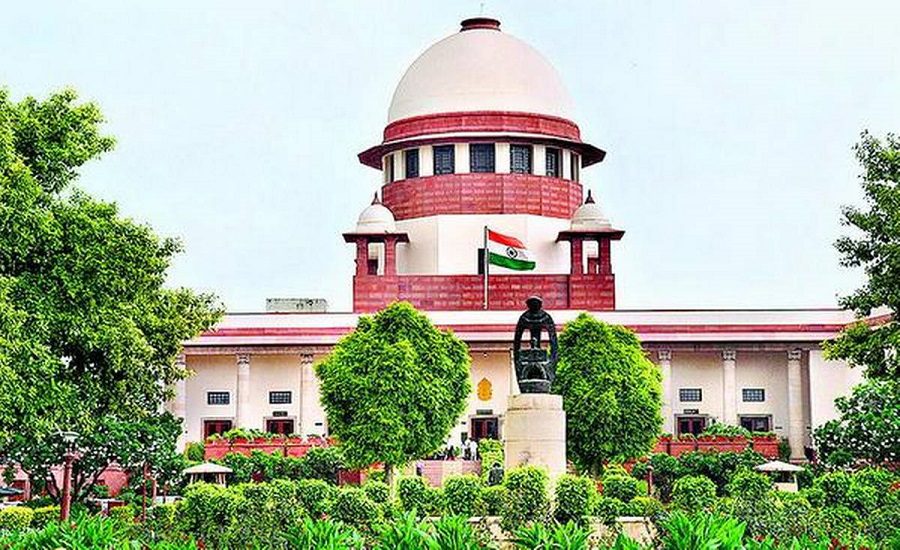
Madras: The Thiruparankundram Hill Deepa Thoon dispute has reached the Supreme Court after the Tamil Nadu government challenged a Madras High Court order that allowed the lighting of the traditional Karthigai Deepam lamp at a stone pillar near a dargah on the historic hill in Madurai district. The move has reignited a legal and religious debate over tradition, property rights, and public order.
Details of Thiruparankundram Hill Deepa Thoon Case
The Tamil Nadu government has filed a Special Leave Petition (SLP) in the Supreme Court against a January 2026 judgment of the Madras High Court’s Madurai Bench.
Read also: Supreme Court Declares Safe Footpaths a Fundamental Right, Pedestrians Get Priority Over Vehicles
The High Court had permitted devotees to light the Karthigai Deepam at the Deepa Thoon (stone lamp pillar) situated atop Thiruparankundram Hill, around 50 meters from a dargah.
According to court records, the petition before the Supreme Court was filed on June 11, 2026, shortly after the new Tamil Nadu government led by Chief Minister Vijay assumed office.
Why Is the Deepa Thoon Important
The Deepa Thoon is a stone pillar located on Thiruparankundram Hill, a site associated with the famous Lord Subramaniya Temple. Devotees argued that the pillar has traditionally been used for lighting the Karthigai Deepam, a significant Hindu religious ritual observed annually.
The issue became controversial because the pillar is located near a dargah, leading to concerns about competing claims and administrative control over the site.
Thiruparankundram Hill Deepa Thoon Case: What Did the Madras High Court Say
The Madras High Court upheld an earlier single-judge order permitting the ritual. The court rejected arguments that the stone structure was merely a British-era survey marker and accepted evidence suggesting it functioned as a traditional lamp pillar. The bench also observed that:
- The Deepa Thoon is located on land recognized as belonging to the temple administration.
- Lighting the lamp could be regulated and supervised.
- Law-and-order concerns alone were not enough to deny the ritual.
Tamil Nadu Government’s Argument
The State had earlier opposed the plea through the Hindu Religious and Charitable Endowments (HR&CE) Department. Officials argued that:
- There was no established custom of lighting the lamp at the disputed pillar.
- The Deepam was traditionally lit at another location.
- Administrative and public-order considerations needed to be taken into account.
The government has now asked the Supreme Court to review the High Court’s findings.
Thiruparankundram Hill Deepa Thoon Case: Background of the Legal Battle
The dispute has seen multiple rounds of litigation since 2025.
Timeline
| Date | Development |
| Dec 2025 | Single Judge permits lamp lighting |
| Jan 2026 | Division Bench upholds the order |
| Feb 2026 | Supreme Court declines to interfere in related proceedings |
| June 2026 | Tamil Nadu government files fresh SLP against HC order |
Expert Analysis and Insights
The Thiruparankundram Hill Deepa Thoon case is no longer just a local religious dispute. It has evolved into a significant constitutional matter involving:
1. Religious Freedom vs Administrative Control
The Supreme Court may need to balance devotees’ right to perform religious rituals with the government’s responsibility to maintain public order.
2. Historical Evidence Will Be Crucial
A major question is whether the Deepa Thoon has a documented history as a ceremonial lamp pillar. The final verdict could depend heavily on historical records, archaeological findings, and customary practices.
3. Impact on Similar Cases
The judgment may become an important precedent for future disputes involving:
- Religious traditions
- Temple property rights
- Heritage sites
- Shared or contested religious spaces
4. Political Significance
The filing of the appeal soon after the new Tamil Nadu government took office has added political attention to the case. However, the Supreme Court’s focus is expected to remain on legal and constitutional issues rather than political arguments.
Read also: Justice GR Swaminathan Controversy: Supreme Court Seeks Tamil Nadu Government’s Reply on PIL