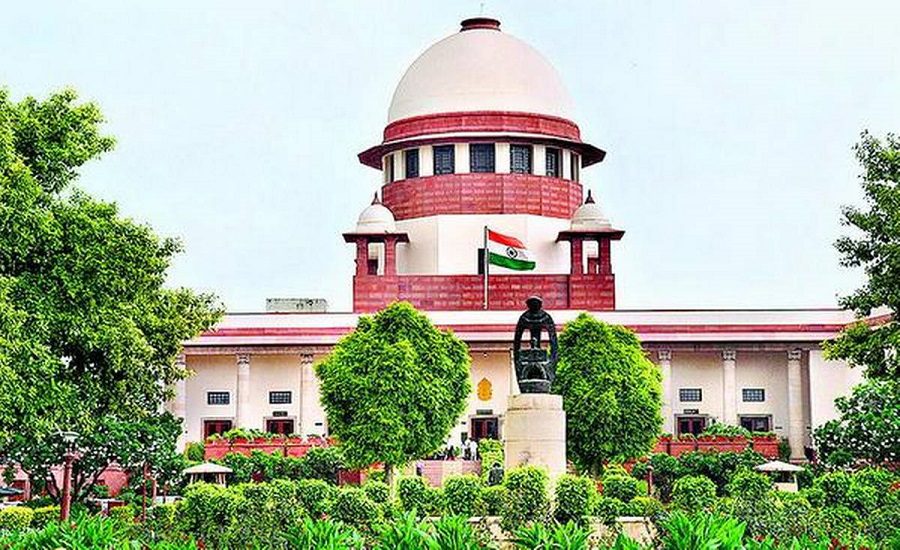
New Delhi: Magistrate cannot direct police to file a chargesheet after a closure report is submitted, the Supreme Court has reaffirmed in a significant judgment. The Court said that the decision to file a chargesheet or a closure report lies exclusively with the investigating agency. However, a Magistrate still has several legal options, including taking cognizance of the offence or ordering further investigation. This ruling strengthens the principle of independent police investigation and clarifies the powers of criminal courts.
Details of File Chargesheet Magistrate Rights
A Bench of Justice Sanjay Kumar and Justice K. Vinod Chandran held that once the police file a closure report, a Magistrate cannot instruct the investigating agency to submit a chargesheet.
The Court observed that the opinion on whether enough evidence exists to prosecute an accused belongs solely to the investigating officer. A Magistrate cannot replace that opinion with their own by directing the police to file a chargesheet.
What Can a Magistrate Do Instead
The Supreme Court explained that a Magistrate has the following legal choices after receiving a closure report:
- Accept the closure report and close the proceedings.
- Reject the closure report and take cognizance of the offence if the available material discloses a criminal case.
- Order further investigation if more evidence is required.
The Court clarified that these are the legally recognised options under criminal procedure. Ordering the police to file a chargesheet is not one of them.
Court Reaffirms Independence of Investigation
The judgment states that forming an opinion on whether an accused should face trial is an exclusive function of the investigating agency. If courts begin directing police to file chargesheets, it would interfere with the independence of criminal investigations and upset the balance between investigation and judicial oversight.
Committal Order Does Not Decide Nature of Trial
The Supreme Court also clarified another important legal issue. It held that a committal order only transfers the case to the Sessions Court. It does not determine whether the trial should be conducted jointly, separately or individually.
The Sessions Court has the discretion to decide the mode of trial, provided no prejudice is caused to the accused. Multiple committal orders may also be consolidated into one trial if permitted by law.
Background of the Case
The case arose from a dowry death incident that took place in 2000. Initially, a chargesheet was filed against only two accused after directions from the Superintendent of Police, while investigation continued against the remaining 15 persons named in the FIR.
Later, the police submitted a closure report stating that no evidence was found against the remaining accused. The Supreme Court examined whether the Magistrate’s actions in such circumstances were legally valid while interpreting the powers available after receiving a closure report.
What is the Importance of SC Judgement on File Chargesheet Magistrate Rights
The ruling provides important clarity for criminal courts across India. It confirms that:
- Police alone decide whether to file a chargesheet or closure report.
- Magistrates cannot compel police to submit a chargesheet.
- Courts may still independently take cognizance of an offence based on the material before them.
- Further investigation remains available whenever necessary.
The judgment reinforces the separation between investigative functions and judicial powers under India’s criminal justice system.
Read also: Explained: Why the Supreme Court Wants the Centre to Submit Aviation Law Rules Immediately