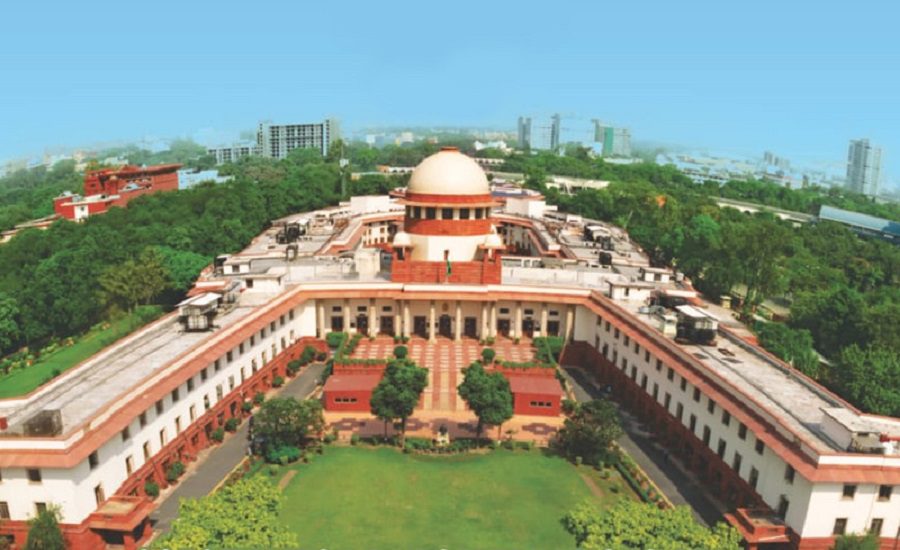
New Delhi: The Revenue Judicial Service PIL has come under the spotlight after the Supreme Court issued notice to the Union government and other authorities.
The petition seeks major reforms in how land disputes are handled in India. It raises serious concerns about untrained officials deciding complex property matters and calls for a structured judicial system with proper legal qualifications.
Supreme Court Issues Notice on Revenue Judicial Service PIL
A Bench of Chief Justice Surya Kant and Justice Joymalya Bagchi heard the plea filed by advocate Ashwini Upadhyay.
After reviewing the concerns, the Court issued notice to:
- Union of India
- Law Commission of India
- Other relevant stakeholders
The Court will now examine whether systemic changes are needed in revenue adjudication.
Why the Revenue Judicial Service PIL Was Filed
The petition highlights a major issue:
Land disputes in India are often decided by revenue officials who may not have formal legal education or judicial training.
According to the plea:
- Nearly two-thirds of civil cases in India involve land disputes
- Decisions are often made by non-judicial officers
- This leads to errors, delays, and inconsistent judgments
Key Problems in the Current System
1. Lack of Legal Expertise
Revenue officers handle complex issues like:
- Property ownership (title)
- Succession and inheritance
- Possession rights
But many lack proper legal training, which can result in flawed decisions.
2. Rising Litigation Burden
Poor-quality decisions at lower levels lead to:
- More appeals in higher courts
- Increased backlog
- Longer delays in justice
3. Impact on Citizens
The PIL argues that this system harms citizens by:
- Increasing legal costs
- Delaying property resolution
- Creating uncertainty in ownership
This uncertainty affects:
- Property transactions
- Economic activity
- Social stability
Revenue Judicial Service PIL: Constitutional Concerns Raised
The petition claims that the current system may violate:
- Article 14 (Right to Equality)
- Article 21 (Right to Life and Personal Liberty)
It argues that inconsistent and arbitrary decisions deny fair justice.
Reference to High Court Directions
The plea also refers to earlier directions by the Allahabad High court.
It claims:
- Concerns about untrained adjudication were already raised
- Proper implementation has not happened
Key Demands in the PIL
1. Creation of Revenue Judicial Service
A dedicated judicial cadre for land disputes with trained legal professionals.
2. Minimum Legal Qualification
Mandatory legal education for officials handling:
- Title disputes
- Inheritance
- Property rights
3. Judicial Oversight
The petition seeks that:
- Land dispute decisions be supervised by High Courts
4. Structured Training System
A formal judicial training module developed in consultation with High Courts to ensure:
- Uniform decisions
- Accountability
- Fair application of law