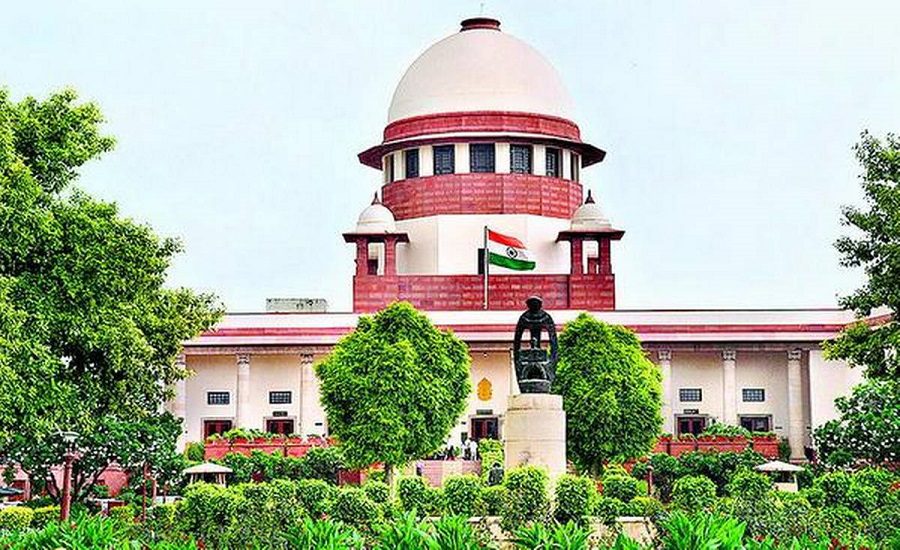
New Delhi: The Supreme Court of India urged the Central Government and the Bar Council of India (BCI) to frame a uniform mechanism for handling such complaints across courts and tribunals.
The Court observed that the existing POSH Act framework cannot be directly applied to women advocates because of the unique nature of the legal profession. The move could lead to a nationwide system to protect women lawyers and ensure safer workplaces in the justice system.
Supreme Court Seeks Women Lawyers Sexual Harassment Complaints Regulation
The Supreme Court has asked the Union Government and the Bar Council of India to jointly develop regulations for addressing sexual harassment complaints made by women lawyers practicing in courts across the country. The case was heard by a bench comprising Justice B.V. Nagarathna and Justice Augustine George Masih.
Read also: Draft Advocates (Amendment) Bill 2026: Top 5 Changes Proposed by the Bar Council of India
The Court emphasized that women advocates often work in professional environments that do not fit into the traditional employer-employee structure covered under the Sexual Harassment of Women at Workplace (Prevention, Prohibition and Redressal) Act, 2013, commonly known as the POSH Act.
Why The Supreme Court Raised The Women Lawyers Sexual Harassment Complaints Regulation Issue
The Court noted that the legal profession operates differently from most workplaces. Advocates practice independently and may work with senior lawyers, law firms, bar associations, tribunals, and courts without a formal employment relationship. Because of this, the existing POSH Act may not always provide an effective remedy for women lawyers facing harassment. The judges observed that a dedicated framework is needed to address these concerns.
Supreme Court’s Observation
The Court pointed out that its own Gender Sensitization And Sexual Harassment Of Women At The Supreme Court Of India (Prevention, Prohibition And Redressal) Regulations, 2013 already provide a mechanism for addressing complaints within the Supreme Court premises.
The judges suggested that similar regulations could be created and implemented for High Courts, District Courts, Taluka Courts, tribunals, and quasi-judicial bodies across India.
Background Of The Case
The matter arises from a Public Interest Litigation (PIL) seeking recognition that protections against workplace sexual harassment should extend to women advocates practicing before courts.
The petition also requested directions to Bar Councils and Bar Associations to establish Internal Committees or similar bodies to hear complaints from women lawyers.
The PIL was filed after a Bombay High Court ruling held that the POSH Act applies to employees of Bar Councils and Bar Associations but not necessarily to women advocates because there is no employer-employee relationship.
Arguments Presented Before The Court
Senior Advocate Mahalakshmi Pavani, appearing for the petitioner, argued that existing legal provisions are insufficient to deal with sexual harassment complaints involving women advocates.
She highlighted that the Supreme Court had earlier directed Bar Councils and Bar Associations to create mechanisms for handling such complaints.
According to the petitioner, Section 35 of the Advocates Act, 1961, which deals with professional misconduct, cannot replace a dedicated harassment complaint mechanism.
Women Lawyers Sexual Harassment Complaints Regulation: Government’s Position
Additional Solicitor General Aishwarya Bhati submitted that the Advocates Act may be broad enough to address certain concerns. However, the Court indicated that a more comprehensive framework may still be necessary for effective protection and grievance redressal.
Bar Council Of India Asked To Examine Existing Mechanisms
The Supreme Court directed the Bar Council of India to gather information from State Bar Councils regarding existing regulations and complaint mechanisms already operating in different states.
The objective is to understand what protections currently exist and whether a common nationwide model can be developed.
Advocate Radhika Gautam, appearing for the BCI, informed the Court that instructions would be sought and efforts would be made to explore a common regulatory framework for women lawyers.
Women Lawyers Sexual Harassment Complaints Regulation: Proposal For A Nationwide Framework
Justice Nagarathna suggested that the Supreme Court regulations could serve as a model for other courts and judicial institutions. However, the Court clarified that the proposed framework cannot simply copy the POSH Act.
The regulations would need to consider the unique nature of legal practice, including advocates working before various courts, tribunals, and quasi-judicial authorities.
What Happens Next?
The Supreme Court has asked the concerned parties to consult and explore the creation of a uniform regulatory system.
The Court has also directed the BCI to collect information from State Bar Councils regarding existing complaint mechanisms.
The matter has been listed for further hearing on November 25.
FAQs
The proposed regulations aim to create a uniform mechanism for handling sexual harassment complaints made by women lawyers across courts, tribunals, and judicial bodies.
The Court observed that the POSH Act cannot always be directly applied to women advocates because there is often no employer-employee relationship in legal practice.
The BCI has been asked to collect information from State Bar Councils and help develop a common framework for addressing sexual harassment complaints by women advocates.