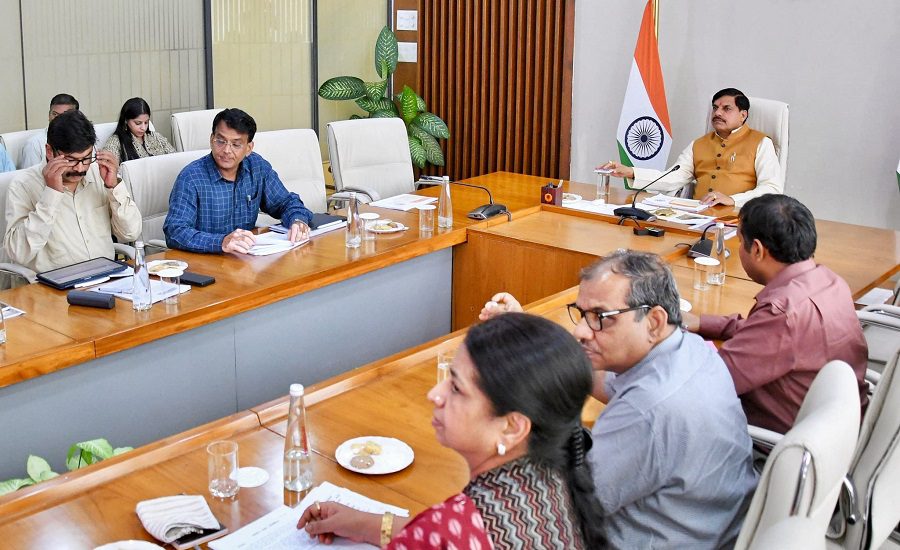
Bhopal: Madhya Pradesh Chief Minister Dr. Mohan Yadav has directed a major expansion of forest tourism in Madhya Pradesh while strengthening wildlife conservation, forest protection systems, and eco-tourism infrastructure. The decisions were taken during a high-level review meeting of the Forest Department held at Samatva Bhavan, the Chief Minister’s residence in Bhopal.
Forest Tourism to Be Expanded with Better Visitor Facilities
Chief Minister Dr. Yadav emphasized that Madhya Pradesh’s forests are a key part of its identity and must be developed sustainably through tourism.
Key directives include:
- Expansion of forest tourism across the state
- Improved tourist facilities and infrastructure
- Promotion of homestays in forest regions
- Increase in safari vehicle fleets
- Better engagement of tourists with eco-tourism experiences
He stated that the sector has strong potential for employment generation and rural development.
Read also: CM Mohan Yadav Leads Shramdaan at Indore’s Limbodi Talab Under Jal Ganga Samvardhan Abhiyan
Inter-State Wildlife Exchange and Species Relocation Approved
The state government has approved inter-state wildlife exchange initiatives to strengthen biodiversity:
- Madhya Pradesh will provide tigers and gaurs to Andhra Pradesh
- In exchange, efforts will be made to receive wild dogs (Dholes) and other species
- Rajasthan has agreed to provide Great Indian Bustard (Son Chiraiya), which will be released in Ghatigaon and Gandhi Sagar forest areas
These initiatives aim to improve species conservation and habitat restoration.
Two Cheetahs to Be Released in Gandhi Sagar Sanctuary
Wildlife conservation efforts under the cheetah reintroduction project continue to expand:
- Two cheetahs (male and female) will be released in Gandhi Sagar Sanctuary in July 2026
- Madhya Pradesh currently has 52 cheetahs, including 32 born in Kuno National Park
- Veerangana Durgavati Tiger Reserve is being developed as the third cheetah habitat in the state
Strengthening Wildlife Protection and Monitoring Systems
To enhance wildlife protection, several major proposals were approved:
- Formation of a State-Level Task Force to control organized forest crimes
- Establishment of a Command and Control Room at Forest Headquarters
- Increase in forest transport permit fees for mineral movement regulation
- Human-wildlife conflict to be considered for state disaster declaration
These measures aim to improve enforcement and inter-departmental coordination.
Wildlife Rescue Centres Near Five National Parks
The state will establish five wildlife rescue centres near major national parks:
- Kanha National Park
- Bandhavgarh National Park
- Pench National Park
- Panna National Park
These centres will help in rescue, treatment, and rehabilitation of injured wildlife.
Strong Performance in Tendu Leaf Collection and Tribal Welfare
The government reported significant achievements in forest produce collection:
- 17.76 lakh standard bags of tendu leaves collected in 2026
- ₹710.71 crore bonus to be distributed among collectors
- Strengthening of income support for tribal and forest-dependent communities
Additionally, around:
- 300 tribal Devsthan sites to be developed this year
- 1,421 Devsthans already developed in previous phases
Forest Crime Control and Administrative Reforms
To strengthen governance and forest protection:
- State-level task force modeled on Tiger Strike Force approved
- Command and Control Centre to improve surveillance and coordination
- Conversion of 700 forest villages into revenue villages underway
- Enhanced authority for forest settlement and land dispute resolution officers
Disease Outbreak and Forest Health Management
A rare ecological issue has been reported:
- Sal Borer pest outbreak detected in Anuppur and Dindori forests
- The pest appears once in 30 years (last occurrence in 1997)
- Emergency budget allocated for removal of affected trees
Elephant Management and Wildlife Research Initiatives
- Forest team sent to West Bengal for elephant management training
- Approval granted for radio-collaring of six elephants
- Increase in support staff for elephant care and management
- Expansion of wildlife research and monitoring systems
Madhya Pradesh Strengthens Its Leadership in Wildlife Conservation
Officials informed that Madhya Pradesh continues to lead India in key wildlife populations, including:
- Tigers
- Cheetahs
- Leopards
- Wolves
- Gharials
- Vultures
The state is also positioning itself as a national leader in eco-tourism and biodiversity conservation.
Meeting Attendance
The meeting was attended by:
- Chief Minister’s Secretary Kaushalendra Vikram Singh
- Principal Chief Conservator of Forests and Head of Forest Force Shubhranjan Sen
- Senior officials of the Forest Department