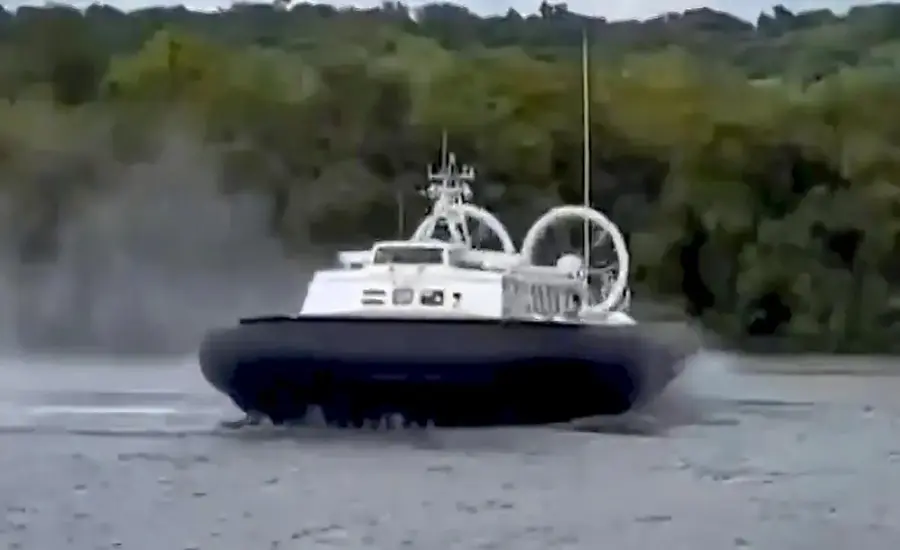
New Delhi: The Indian Coast Guard Indigenous Hovercraft has officially entered service, marking a major milestone for India’s maritime security and domestic defense manufacturing sector. The first indigenous Air Cushion Vehicle (ACV), commonly known as a hovercraft, was inducted into the Indian Coast Guard (ICG) fleet in Goa on June 18, 2026. The vessel is expected to strengthen coastal surveillance, search-and-rescue operations, and rapid response capabilities across India’s vast coastline.
Details of Indian Coast Guard Indigenous Hovercraft
The Indian Coast Guard inducted the first of six indigenous hovercraft being built by Chowgule & Company Private Limited. The induction ceremony was held in Goa and attended by senior Coast Guard officials and representatives from the Indian shipbuilding industry.
The move reflects India’s continued focus on strengthening maritime security through locally built defense platforms.
Six Indigenous Hovercraft Planned
This hovercraft is the first of six ACVs planned for the Indian Coast Guard fleet. The remaining vessels are expected to be delivered in phases, which will further enhance India’s coastal defense and operational reach across strategic maritime regions.
What Is an Air Cushion Vehicle (ACV)
An Air Cushion Vehicle (ACV), also called a hovercraft, is a special type of vehicle that travels on a cushion of air. Unlike traditional boats, hovercraft can move across:
- Water
- Mudflats
- Sandy beaches
- Marshy areas
- Shallow coastal waters
This ability allows them to operate in locations where normal ships and patrol boats may struggle.
Why Is Indian Coast Guard Indigenous Hovercraft Important
The new indigenous hovercraft will improve the Indian Coast Guard’s ability to perform a wide range of missions. Key benefits include:
- Faster coastal patrolling
- Better maritime surveillance
- Improved search and rescue operations
- Quick response during emergencies
- Enhanced coastal security
- Support for disaster relief missions
Its unique design makes it especially useful in difficult coastal terrains and shallow waters.
Strengthening India’s Maritime Security
India has a coastline of more than 7,500 kilometers, making maritime security a critical national priority. The Indian Coast Guard is responsible for:
- Protecting territorial waters
- Preventing smuggling
- Conducting search and rescue operations
- Enforcing maritime laws
- Protecting marine resources
The addition of indigenous hovercraft will help the force respond more effectively to emerging maritime challenges.
Supporting ‘Aatmanirbhar Bharat’
The project is an important step toward the Government of India’s Aatmanirbhar Bharat (Self-Reliant India) initiative. By building advanced maritime platforms within the country, India is:
- Reducing dependence on foreign suppliers
- Supporting domestic shipyards
- Creating skilled jobs
- Strengthening the defense manufacturing ecosystem
Officials said the hovercraft showcases the growing capability of India’s maritime industrial base.
Read also: Indian Coast Guard Unveils Indigenous Air Cushion Vehicles in Goa Under Aatmanirbhar Bharat Push