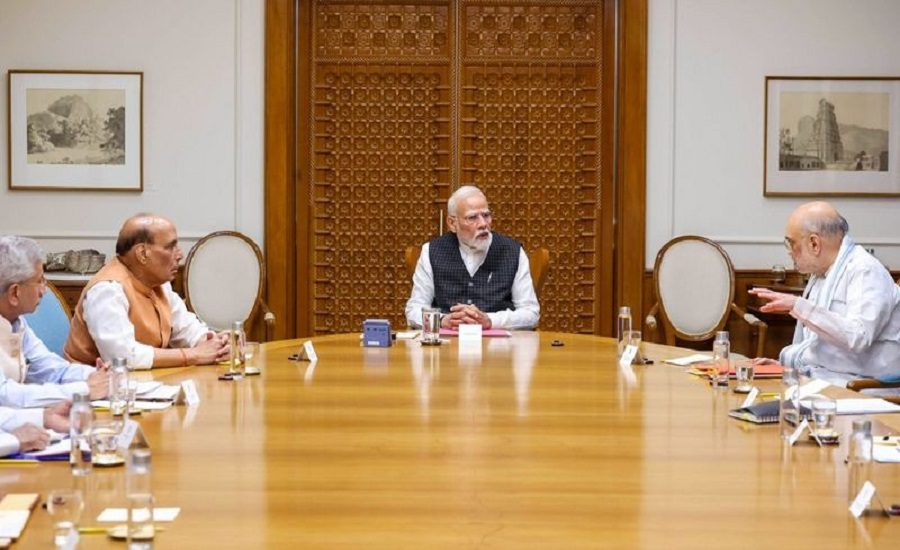
New Delhi: Prime Minister Narendra Modi is set to chair the 11th Governing Council Meeting of NITI Aayog at Rashtrapati Bhavan on June 11, where Chief Ministers, Lieutenant Governors and senior policymakers from across the country will deliberate on key issues ranging from economic growth and education reforms to infrastructure development and cooperative federalism.
The day-long meeting, scheduled from 9:15 AM to 5:00 PM, comes at a crucial juncture as India navigates emerging global uncertainties, particularly the ongoing crisis in West Asia, which has triggered concerns over energy security, supply chains and overall economic stability.
According to sources, the Prime Minister is expected to stress the importance of accelerating reforms, enhancing economic resilience and strengthening Centre-State coordination to maintain India’s growth trajectory amid geopolitical and economic headwinds.
Meeting Gains Significance Amid West Asia Crisis
The Governing Council meeting is expected to take place against the backdrop of escalating tensions in West Asia, a region critical to global energy supplies and international trade routes.
Officials indicate that discussions may focus on strategies to insulate India’s economy from external shocks, strengthen supply chain resilience and ensure uninterrupted energy availability. The Centre is likely to urge states to align development priorities with national economic objectives while remaining prepared for global disruptions.
Read also: The Future of India’s Chip Industry Is Here: Key Highlights From NITI Aayog’s Roadmap
Human Capital Development to Take Centre Stage
A major theme of this year’s meeting will be the development of human resources required to achieve the national vision of Viksit Bharat@2047.
Sources suggest discussions will focus on:
- Strengthening early childhood education
- Improving learning outcomes in schools
- Enhancing secondary education systems
- Aligning educational curricula with future workforce requirements
- Building a skilled and globally competitive workforce
The Centre is expected to emphasize that long-term economic growth will depend heavily on investments in human capital and educational reforms.
Paper Leak Controversy May Figure in Discussions
Although examination paper leaks are not formally listed on the agenda, the issue is likely to emerge during deliberations.
Recent incidents involving examination irregularities across several states have sparked a nationwide debate on the credibility and effectiveness of the education system. Sources indicate that some Chief Ministers may raise concerns regarding examination security, recruitment processes and the need for stronger institutional safeguards.
Given the growing public concern over paper leaks, discussions could lead to recommendations aimed at improving transparency and accountability in competitive examinations.
Focus on Holistic Education Beyond Academics
Apart from conventional educational reforms, leaders are expected to deliberate on promoting a more comprehensive learning ecosystem.
Discussions may include:
- Sports development
- Cultural and artistic activities
- Leadership training
- Skill-building initiatives
- Personality development programmes
The objective is to create a well-rounded educational framework that prepares students for challenges beyond academics.
Ease of Doing Business to Remain a Key Priority
The Governing Council is also expected to examine measures to improve the ease of doing business across states.
Key issues likely to be discussed include:
- Reducing regulatory bottlenecks
- Simplifying approval processes
- Enhancing investor confidence
- Improving industrial competitiveness
- Encouraging entrepreneurship and innovation
The Centre is expected to encourage states to adopt best practices and create a more business-friendly environment to attract investment and generate employment.
Infrastructure, Manufacturing and Agriculture on Agenda
Several critical sectors are expected to dominate discussions during the meeting, including:
- Infrastructure expansion
- Manufacturing growth
- Agricultural reforms
- Logistics and connectivity
- Welfare scheme implementation
- Regional development initiatives
The Council will also review progress reports submitted by states regarding the implementation of centrally sponsored schemes and previously agreed policy recommendations.
Newly Elected Chief Ministers Likely to Attend
The meeting is expected to witness the participation of several newly elected Chief Ministers following recent Assembly elections.
Among those likely to attend for the first time are:
- Shubhendu Adhikari
- V. D. Satheesan
- Joseph Vijay
Their participation is expected to add fresh perspectives to discussions on governance, development and Centre-State relations.
Opposition-Ruled States May Raise Accountability Issues
Sources suggest that opposition-ruled states may use the platform to seek greater accountability from the Centre on issues such as:
- Education reforms
- Examination paper leaks
- Resource allocation
- Federal cooperation
- Welfare implementation
Political observers believe these discussions could lead to spirited debates during the meeting.
Review of Development Initiatives and Regional Growth Strategies
The Governing Council is also expected to revisit outcomes from recent consultations involving the Prime Minister, Union Ministers and Chief Secretaries.
Special attention may be given to:
- Development of districts freed from Left-Wing Extremism
- Balanced regional growth
- Border area development
- Infrastructure expansion in underserved regions
- Strengthening governance mechanisms
Sustainability, Security and Long-Term Growth
Officials indicate that several strategic issues will also feature prominently during deliberations, including:
- Sustainable economic development
- Environmental protection
- Manufacturing expansion
- Energy security
- Border security preparedness
- Power sector resilience
The meeting is expected to contribute significantly to shaping policy priorities for the coming years while strengthening cooperative federalism and advancing India’s journey towards becoming a developed nation by 2047.
Read also: What is V2V Communication Technology? and How It can Boost Road Safety in India