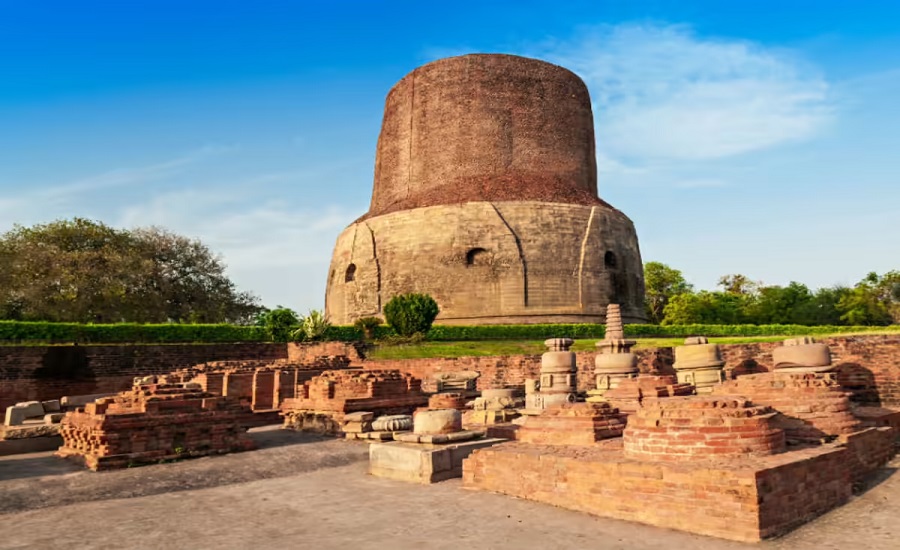
Sarnath: Sarnath, the ancient Buddhist site located near Varanasi in Uttar Pradesh, has been officially recognised as a UNESCO World Heritage Site. The announcement was made during the 48th Session of the World Heritage Committee held in Busan, South Korea, on July 25, 2026.
With the inclusion of Sarnath, India’s total number of UNESCO World Heritage Sites has increased to 45. The recognition highlights India’s rich cultural, historical and architectural legacy, especially the importance of Sarnath as a major centre associated with Buddhist heritage.
The Ministry of Culture stated that the global recognition celebrates India’s “enduring cultural legacy” and showcases the country’s diverse traditions, architectural excellence, regional identity and historical continuity.
Sarnath’s Importance in India’s Buddhist Heritage
Sarnath holds immense religious and historical significance as the place where Lord Buddha delivered his first sermon after attaining enlightenment, known as the Dharmachakra Pravartana.
The site is home to several important archaeological remains, including ancient monasteries, stupas and sculptures that represent India’s Buddhist traditions and artistic achievements. The UNESCO recognition places Sarnath among the world’s most important cultural landmarks.
India’s Total UNESCO World Heritage Sites Reach 45
According to UNESCO records, India now has 45 World Heritage Sites across cultural, natural and mixed categories.
The previous addition was the Maratha Military Landscapes of India, located in Maharashtra and Tamil Nadu, which was included in the UNESCO list in 2025.
Complete List of UNESCO World Heritage Sites in India
- Agra Fort — 1983 — Agra, Uttar Pradesh
- Ajanta Caves — 1983 — Maharashtra
- Ellora Caves — 1983 — Maharashtra
- Taj Mahal — 1983 — Agra, Uttar Pradesh
- Group of Monuments at Mahabalipuram — 1984 — Tamil Nadu
- Sun Temple, Konark — 1984 — Odisha
- Kaziranga National Park — 1985 — Assam
- Keoladeo National Park — 1985 — Bharatpur, Rajasthan
- Manas Wildlife Sanctuary — 1985 — Assam
- Churches and Convents of Goa — 1986 — Goa
- Fatehpur Sikri — 1986 — Uttar Pradesh
- Group of Monuments at Hampi — 1986 — Karnataka
- Khajuraho Group of Monuments — 1986 — Madhya Pradesh
- Elephanta Caves — 1987 — Maharashtra
- Great Living Chola Temples — 1987 — Tamil Nadu
- Group of Monuments at Pattadakal — 1987 — Karnataka
- Sundarbans National Park — 1987 — West Bengal
- Nanda Devi and Valley of Flowers National Parks — 1988 — Uttarakhand
- Buddhist Monuments at Sanchi — 1989 — Madhya Pradesh
- Humayun’s Tomb — 1993 — Delhi
- Qutub Minar and its Monuments — 1993 — Delhi
- Mountain Railways of India — 1999 — West Bengal, Tamil Nadu, Himachal Pradesh
- Mahabodhi Temple Complex — 2002 — Bihar
- Rock Shelters of Bhimbetka — 2003 — Madhya Pradesh
- Champaner-Pavagadh Archaeological Park — 2004 — Gujarat
- Chhatrapati Shivaji Terminus — 2004 — Maharashtra
- Red Fort Complex — 2007 — Delhi
- Jantar Mantar, Jaipur — 2010 — Rajasthan
- Western Ghats — 2012 — Maharashtra, Goa, Karnataka, Kerala and Tamil Nadu
- Hill Forts of Rajasthan — 2013 — Rajasthan
- Great Himalayan National Park Conservation Area — 2014 — Himachal Pradesh
- Rani-ki-Vav (The Queen’s Stepwell) — 2014 — Gujarat
- Archaeological Site of Nalanda Mahavihara — 2016 — Bihar
- Khangchendzonga National Park — 2016 — Sikkim
- Architectural Work of Le Corbusier — 2016 — Chandigarh
- Historic City of Ahmedabad — 2017 — Gujarat
- Victorian Gothic and Art Deco Ensembles of Mumbai — 2018 — Maharashtra
- Jaipur City — 2019 — Rajasthan
- Dholavira: A Harappan City — 2021 — Gujarat
- Kakatiya Rudreshwara (Ramappa) Temple — 2021 — Telangana
- Sacred Ensembles of the Hoysalas — 2023 — Karnataka
- Santiniketan — 2023 — West Bengal
- Moidams – Mound Burial System of Ahom Dynasty — 2024 — Assam
- Maratha Military Landscapes of India — 2025 — Maharashtra and Tamil Nadu
- Ancient Buddhist Site of Sarnath — 2026 — Varanasi, Uttar Pradesh
UNESCO World Heritage List: Criteria for Inclusion
To receive UNESCO World Heritage status, a site must demonstrate “Outstanding Universal Value” and meet at least one of UNESCO’s ten selection criteria.
The criteria include:
Cultural Criteria
1. Masterpiece of Human Creativity
The site should represent an exceptional achievement of human creative talent.
2. Exchange of Human Values
It should show important developments in architecture, technology, town planning, arts or landscape design over time.
3. Testimony of Cultural Tradition
The site must represent a unique cultural tradition or civilisation, whether living or historical.
4. Example of Significant Historical Stage
It should demonstrate an outstanding example of architecture, technology or landscape connected with important stages of human history.
5. Traditional Settlement and Human Interaction
The site should represent traditional human settlement patterns or interaction with the environment.
6. Association with Significant Events or Beliefs
It should have direct links with important historical events, traditions, beliefs, literature or artistic works.
Natural Heritage Criteria
7. Exceptional Natural Beauty
The site should contain remarkable natural landscapes or phenomena of outstanding aesthetic value.
8. Geological Importance
It should represent major stages of Earth’s history, including geological formations and natural processes.
9. Ecological and Biological Processes
The site should demonstrate important ongoing ecological and biological developments.
10. Biodiversity Conservation Importance
It should contain critical habitats supporting threatened species and biodiversity conservation.
Sarnath’s UNESCO Recognition Boosts India’s Heritage Profile
The inclusion of Sarnath strengthens India’s position among countries with rich cultural heritage representation on the UNESCO World Heritage List. The recognition is expected to increase global attention towards the ancient Buddhist site and encourage heritage conservation and tourism development in Uttar Pradesh.
Read also: CM Yogi Adityanath Holds Janta Darshan in Lucknow, Orders Time-Bound Resolution of Public Complaints