https://indianmasterminds.com

ADVERTISEMENT
ADVERTISEMENT

Explained: Why The Supreme Court Is Seeking A New Law For Court Deposits

The Supreme Court has asked the Law Commission to examine the need for a dedicated law governing court deposits, citing a lack of uniformity in how courts and tribunals manage deposited funds across India.
Court Deposits Law Regulation
Indian Masterminds Stories

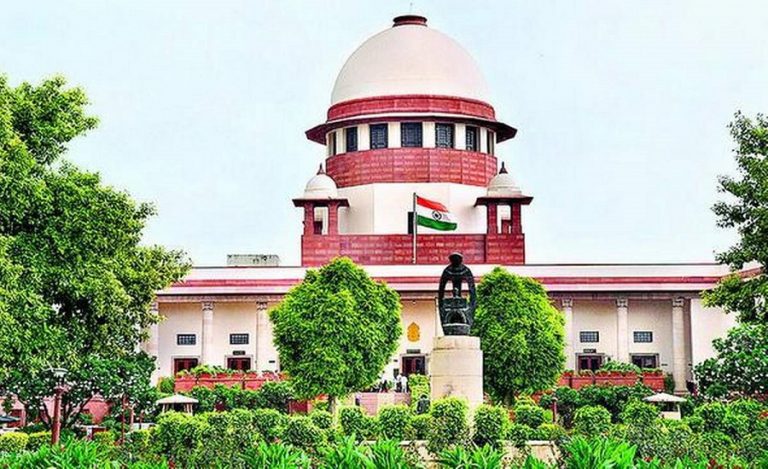
New Delhi: The Supreme Court of India has recommended the creation of a dedicated law to regulate how money deposited in courts and tribunals is managed. The Court observed that there is no uniform system across the country for handling these funds, leading to differences in how money is invested, administered, and released. 

The Court has now urged the Law Commission of India to examine the issue and suggest a legal framework. According to the Court, a clear law could improve transparency, accountability, and consistency in managing court deposits.

Why Did The Supreme Court Raise Court Deposits Law Regulation Issue

The matter came before a bench of Justice P.S. Narasimha and Justice Alok Aradhe during the hearing of a case involving money deposited before judicial authorities.

Read also: Supreme Court of India Upholds Retrospective Pay Hike for Delhi High Court Law Researchers

During the proceedings, the judges noted that courts and tribunals across India follow different practices when handling deposited funds. Some institutions invest the money differently, while others follow separate procedures for releasing funds to parties after a case is decided. The Court said such differences create uncertainty and highlighted the need for a uniform legal framework.

What Are Court Deposits

Court deposits are funds that individuals, companies, or government bodies deposit with a court or tribunal during legal proceedings. These deposits can arise in many situations, including:

  • Compensation disputes
  • Property matters
  • Commercial disputes
  • Arbitration cases
  • Tax and regulatory cases
  • Appeals against financial penalties

The money often remains with the court until the final outcome of the case.

What Problem Did The Court Identify

The Supreme Court pointed out that there is no single law governing how deposited money should be handled. As a result:

  • Different courts follow different procedures.
  • Investment practices vary.
  • Interest calculations may differ.
  • Fund release mechanisms are not standardized.

The Court observed that such inconsistencies can create confusion for litigants and affect efficient financial management.

Why Is A Separate Law Important

A dedicated law could clearly define:

How Money Should Be Deposited

The law could establish a standard process for receiving and recording deposits.

How Funds Should Be Invested

Guidelines could ensure that deposited money is invested safely and consistently.

How Interest Should Be Managed

Uniform rules could determine how interest earned on deposits is calculated and distributed.

How Funds Should Be Released

A common procedure could make it easier and faster to release money once legal disputes are resolved.

Role Of The Law Commission

The Supreme Court has requested the Law Commission of India to study the issue in detail and examine whether new legislation is required.

The Commission may review existing practices followed by courts and tribunals and recommend reforms to create a more uniform system. Such recommendations could eventually help Parliament consider a dedicated law on court deposits.

Court Deposits Law Regulation: How Could Litigants Benefit

For ordinary citizens and businesses, a standardized system could provide greater clarity. People involved in long-running legal disputes would know:

  • Where their money is kept.
  • How it is being managed.
  • Whether interest is being earned.
  • When and how the funds can be released.

This could improve confidence in the judicial process.

Read also: Supreme Court Proposes Ladies’ Bar Rooms Across India, Says Privacy and Dignity Are Essential for Women Lawyers

FAQs

Why Does The Supreme Court Want A New Law On Court Deposits?

The Court believes there is a lack of uniformity in how courts manage deposited funds. A dedicated law could create consistent rules across India.

What Are Court Deposits?

Court deposits are funds deposited with courts or tribunals during legal proceedings. The money remains under judicial control until the dispute is resolved.

What Role Will The Law Commission Play?

The Law Commission will study existing practices, identify gaps, and recommend whether a new law should be introduced to govern court deposits.



Indian Masterminds Stories
Join our WhatsApp Channel
ADVERTISEMENT
ADVERTISEMENT
Related Stories
ADVERTISEMENT
ADVERTISEMENT
NEWS
Court Deposits Law Regulation
Explained: Why The Supreme Court Is Seeking A New Law For Court Deposits
Ranvir Prasad Contempt Proceedings
UP Food Department Under Spotlight After High Court's Contempt Direction
Delhi Government Residences
Delhi Plans 244 New Government Residences for Judges and IAS Officers, Investment to Cross ₹500 Crore 
Solar-Power-Plant
From Homes to Schools: Bihar Plans Solar Village Ranking to Boost Rural Clean Energy
Delhi HC Interpol Red Notice
Why Delhi High Court Asked Interpol To Help Trace A Man Wanted In Contempt Case
SECI 15th Foundation Day
SECI Celebrates 15th Foundation Day, Highlights Expansion Across India’s Renewable Energy Ecosystem 
ALIMCO IEI Industry Excellence Award
ALIMCO Wins IEI Industry Excellence Award 2026 – Gold for Engineering Manufacturing and Innovation
Andhra Pradesh IPS reshuffle
Andhra Pradesh Gives Fresh Postings to IPS Officers Kanthi Rana Tata, Vishal Gunni After Suspension Revocation
ADVERTISEMENT
ADVERTISEMENT
Videos
Keshav kumar
From Police Officer to Forensic Pioneer: How Dr Keshav Kumar Made Science a Weapon Against Crime
ChatGPT Image Aug 20, 2026, 05_46_21 PM
How IPS Officer Keshav Kumar Used Forensics to Crack Gujarat’s Lion Poaching Case
Shakeel Ahmad Ganie IRS Interview
‘My Path Has Not Been Straight’: Shakeel Ahmad Ganie’s Journey to the IRS
ADVERTISEMENT
UPSC Stories
Umar Janj UPSC CAPF AC 2025
After 15 Failures, Umar Janj Finally Heard the Words He Had Been Waiting For: ‘I have made it'
Umar Janj from Jaisalmer secured AIR 160 in UPSC CAPF 2025 after 15+ failures, four attempts, four SSBs...
Abhishek Parmar
NDA Failures, CAPF Setbacks, Then AIR 248:How Abhishek Parmar Overcame Years of Exam Setbacks
Abhishek Parmar became the third generation of his family to enter uniformed service after overcoming...
Naveen Kumar Saini UPSC CAPF
After 3 NDA Attempts and a 7-Mark Miss, Naveen Kumar Saini Gets AIR 7 in UPSC CAPF 2025
Naveen Kumar Saini secured AIR 7 in UPSC CAPF 2025 after multiple NDA and SSB failures and missing CAPF...
CSR NEWS
HURL SHG
HURL Signs MoU to Empower 80–100 SHG Women Through Water Hyacinth Handicraft Training
CSR initiative in Namrup, Assam will provide 80–100 women with advanced skill development, upskilling...
NTPC Kanti CSR
NTPC Kanti Allocates ₹1 Crore CSR Budget to Improve Seven Chhath Ghats in Muzaffarpur
CSR initiative under FY 2026-27 will improve community infrastructure and provide safer, more convenient...
NCL Nanha-Sa-Dil
NCL Launches Second Phase of ‘Nanha-Sa-Dil’ CSR Initiative to Provide Free Cardiac Care to Children
₹9.17 crore programme to organise 700 screening camps, cover 52,500 children and facilitate 500 cardiac...
ADVERTISEMENT
ADVERTISEMENT
ADVERTISEMENT
Latest
Court Deposits Law Regulation
Explained: Why The Supreme Court Is Seeking A New Law For Court Deposits
ChatGPT Image Sep 21 2026 03_52_23 PM-200kb
S. V. Ramarao: How Institutional Reform, Technology & Communities Are Transforming Mangrove Conservation in Maharashtra
ADVERTISEMENT
ADVERTISEMENT
ADVERTISEMENT
ADVERTISEMENT
ADVERTISEMENT
ADVERTISEMENT
ADVERTISEMENT
Videos
Keshav kumar
ChatGPT Image Aug 20, 2026, 05_46_21 PM
Shakeel Ahmad Ganie IRS Interview
ADVERTISEMENT
ADVERTISEMENT