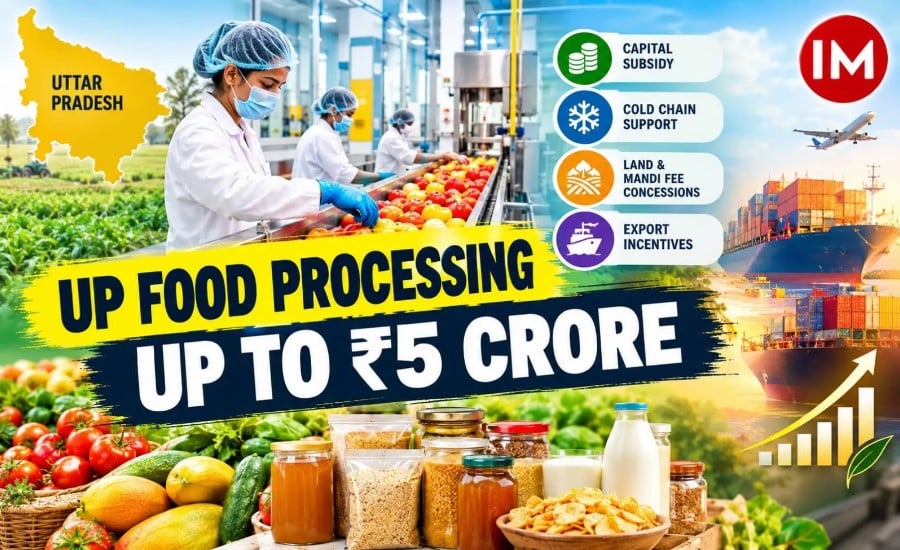
Lucknow: Uttar Pradesh’s Food Processing Industry Policy 2023 provides a package of financial and regulatory incentives for enterprises involved in processing agricultural and horticultural produce, with a focus on value addition, cold-chain infrastructure, market access and exports.
The policy, notified on February 2, 2023, is administered through the state’s Horticulture Department and is intended to support new food-processing units as well as eligible expansion and modernisation projects.
New Units Eligible for Up to ₹5 Crore Capital Subsidy
Under the policy, new food-processing units can receive a capital subsidy of 35% of expenditure on plant, machinery and technical civil work, subject to a maximum of ₹5 crore.
Read Also: UP Rolls Out Leather and Footwear Policy With Investment Incentives and Industry Support
For expansion, modernisation or technological upgradation of existing units, the policy provides a 25% capital subsidy, capped at ₹1 crore.
Key financial support includes:
- 35% subsidy for eligible cold-chain and value-addition infrastructure.
- 50% subsidy, up to ₹10 crore, for frozen storage/deep-freezer, value-addition and processing infrastructure.
- 35% grant, up to ₹10 crore, for eligible agro-processing clusters.
- 35% grant, up to ₹5 crore, for creating backward and forward linkages.
- Interest subsidy for reefer vehicles and mobile pre-cooling vans for five years, subject to a ₹50 lakh ceiling.
Land and Mandi Fee Concessions
The policy also provides several concessions intended to reduce the cost of setting up food-processing units.
Eligible projects can receive 100% exemption from stamp duty on land purchased for establishing food-processing industries. The policy also provides concessions relating to land-use conversion and external development charges.
Food-processing units can also receive exemption from mandi fees and cess for agricultural produce procured from other states for processing in Uttar Pradesh and for produce directly sold by farmers to processing units.
Support for Solar Power, Exports and Technology
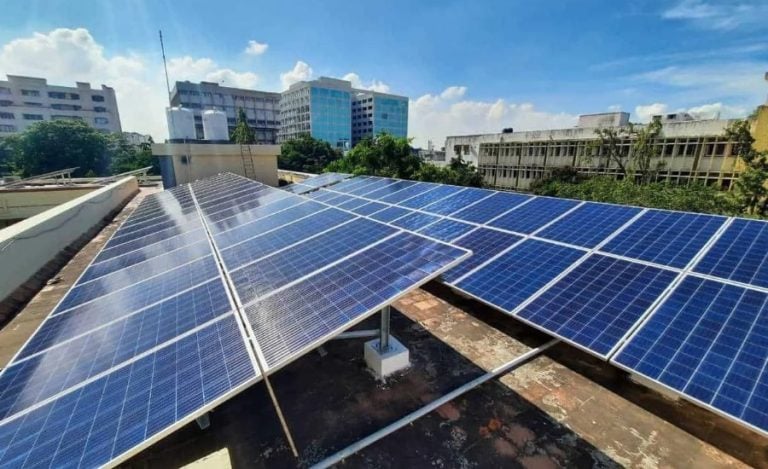
The policy includes incentives for rural food-processing units adopting solar power. It provides a 50% subsidy for solar-power utilities in rural areas, rising to 90% for women entrepreneurs in the specified category.
For exports, the policy provides a 25% freight subsidy on eligible transportation costs from Uttar Pradesh production facilities to destination ports, excluding exports to Nepal, Bangladesh and Bhutan.
The policy also provides support of up to ₹5 crore for food-processing startups adopting modern technology for agricultural value-chain development, production and productivity assessment, and evidence-based decision-making.
Who Can Benefit From the Policy?
The framework covers a range of food-processing activities and supporting infrastructure, including processing units, cold chains, pack houses, ripening chambers, refrigerated transport and other value-chain facilities. It applies to new units and qualifying expansion or modernisation projects.
The policy also provides assistance for decentralised processing and storage, under which SHGs, Farmer Producer Organisations and farmers can receive project-based grants subject to the prescribed limits.
Policy Targets Greater Value Addition to Farm Produce
The policy was framed against Uttar Pradesh’s large agricultural production base, covering commodities such as wheat, sugarcane, potatoes, mangoes, milk, meat and vegetables.
Its stated objectives include increasing value addition to agricultural produce, reducing post-harvest losses, creating employment, improving market access and expanding exports of processed food products. These are policy objectives rather than claims of outcomes already achieved.
Read Also: UP Clears ₹286 Crore Agriculture Package to Modernise Farms, Boost Storage and Allied Sectors