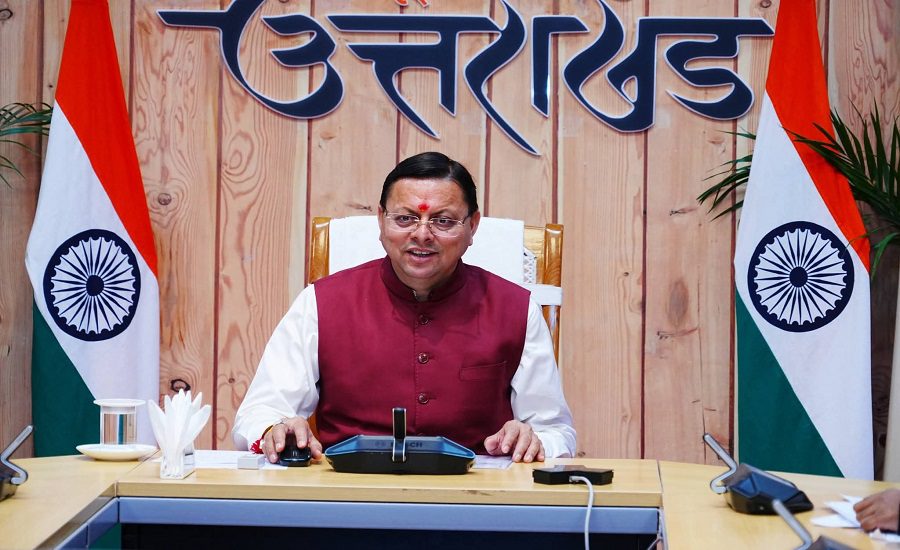
Dehradun: The government of Uttarakhand has cleared large-scale financial and administrative approvals worth ₹1,344 crore for multiple development projects across the state. The decision was approved by Chief Minister Pushkar Singh Dhami in a recent official statement dated May 19. The projects cover key sectors including power, drinking water, irrigation, tourism, housing, sanitation, and rural development.
The initiative aims to accelerate infrastructure growth, improve public utilities, and strengthen district-level planning across Uttarakhand.
Focus on Power Infrastructure Development
A major portion of the approvals has been allocated to strengthening the power sector in the state.
- ₹2 crore sanctioned as the first instalment for establishing power substations in Saryu Valley and Shama areas under Kapkot (Bageshwar district), with a total project cost of ₹6.54 crore
- ₹1.96 crore approved for bunch cable works in uncovered areas of Dehradun Cantonment Assembly constituency (total ₹4.92 crore project)
- ₹45 crore released under Power Finance Corporation-funded ongoing schemes
- ₹150 crore sanctioned as first instalment for ADB-funded projects implemented by PITCUL under the 2026–27 State Plan
These investments aim to improve electricity reliability and expand coverage in remote and urban regions.
Read also: CM Pushkar Singh Dhami Flags Off 4 CSR-Backed Advanced Ambulances to Boost Healthcare in Uttarakhand
Drinking Water, Irrigation, and Rural Development Works
The government has also prioritized water supply and rural infrastructure.
- ₹63.62 lakh approved for tube well construction in Vikasnagar Colony, Bithoria No. 1 (Nainital district)
- ₹2.84 crore sanctioned as state share under the Lakhwar Multipurpose Project (PM Krishi Sinchai Yojana)
- ₹1 crore approved for Ukhimath–Pingalapani development scheme
These projects are expected to improve irrigation capacity and ensure better drinking water availability in rural and semi-urban areas.
Tourism and Public Infrastructure Expansion
Tourism development and public amenities have also received significant funding support.
- ₹55 crore released under Uttarakhand Tourism Development Council schemes
- ₹30.03 crore allocated for conservation and promotion of Badri cows at Bhararisain under Animal Husbandry Department
- ₹25 lakh approved for beautification of Dr Bhimrao Ambedkar Park and pond in Darau village (Udham Singh Nagar)
- ₹83.64 lakh sanctioned for parking construction at Jamnikhal (Tehri Garhwal)
- Approval for construction of 9 igloo huts at Nabi Dhang camp on the Kailash Mansarovar Yatra route (Pithoragarh)
These initiatives are designed to boost tourism infrastructure while preserving cultural and ecological assets.
Housing, Administrative Buildings and Police Infrastructure
Several approvals were granted for residential and government infrastructure development:
- ₹1.54 crore approved for construction of a Rural Construction Department office building in Raitoli village (Rudraprayag)
- ₹3.02 crore sanctioned for six Type-2 and one Type-3 residential quarters at Pati Police Station (Champawat)
- ₹4.39 crore approved for NBCC-led cleaning and special services at the newly built District Court Complex in Dehradun
These developments aim to improve administrative efficiency and staff housing facilities.
Strong Push for District-Level Planning and Subsidies
A major allocation of ₹1,018 crore has been placed under district plans for the financial year 2026–27, empowering District Magistrates to implement localized development projects.
Additionally:
- ₹100 crore budgeted for electricity tariff subsidy for domestic consumers
- ₹27.74 crore already released under the subsidy scheme
These measures are expected to support both governance decentralization and public welfare.
The ₹1,344 crore approval marks one of the largest recent development pushes in Uttarakhand, focusing on balanced growth across infrastructure, energy, tourism, water supply, and rural development. The wide-ranging projects reflect the state government’s focus on improving connectivity, public services, and sustainable development across all districts.