Lucknow: Uttar Pradesh Chief Minister Yogi Adityanath on Saturday highlighted the transformation of Gautam Buddh Nagar, stating that Noida, Greater Noida, and the Yamuna Authority region are rapidly becoming one of India’s most attractive investment destinations. He said that “old inefficiencies have been removed, governance systems have improved, and a new work culture has emerged” in the region.
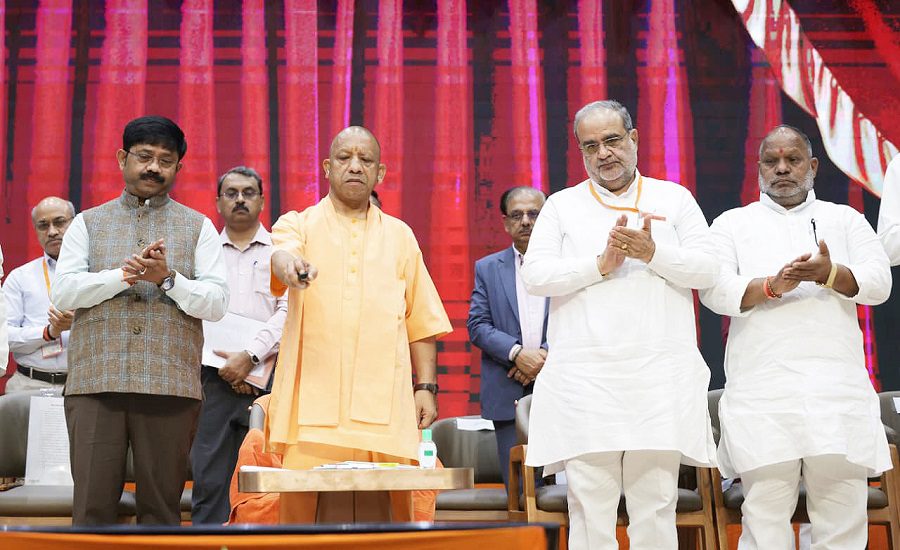
The Chief Minister was speaking at an event in Noida where he inaugurated and laid the foundation stone for development projects worth ₹2,479 crore, along with several other major policy and welfare initiatives.
₹2,479 Crore Projects Launched in Noida and Dadri Regions
On the occasion of International MSME Day, the Chief Minister inaugurated and laid the foundation stone for 70 development projects across the Noida and Dadri assembly constituencies.
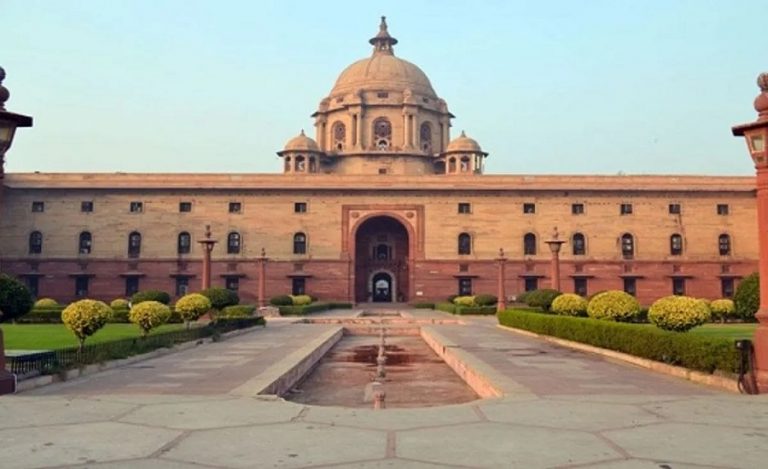
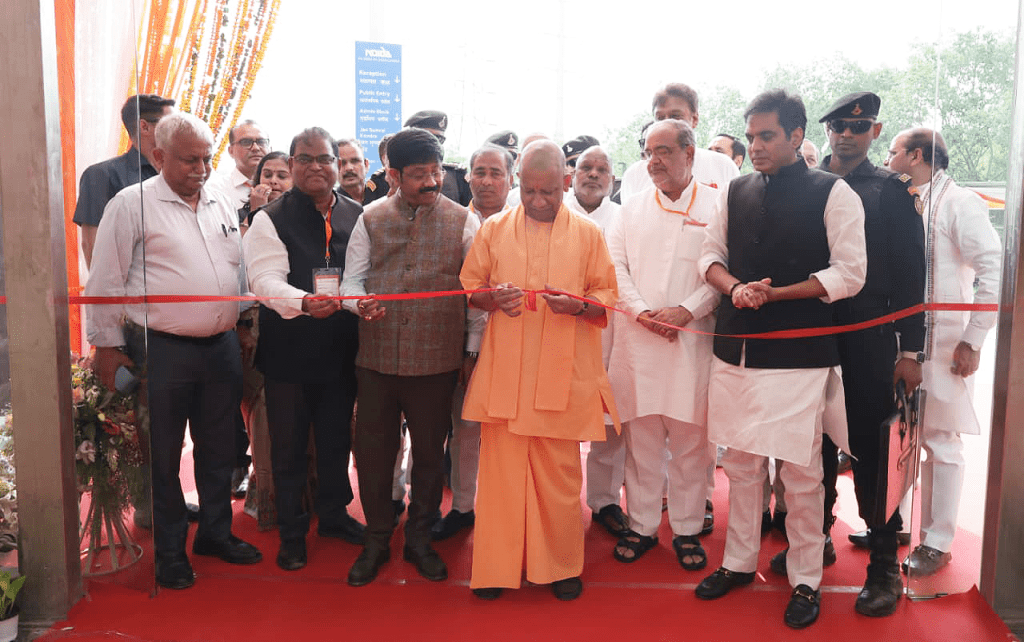
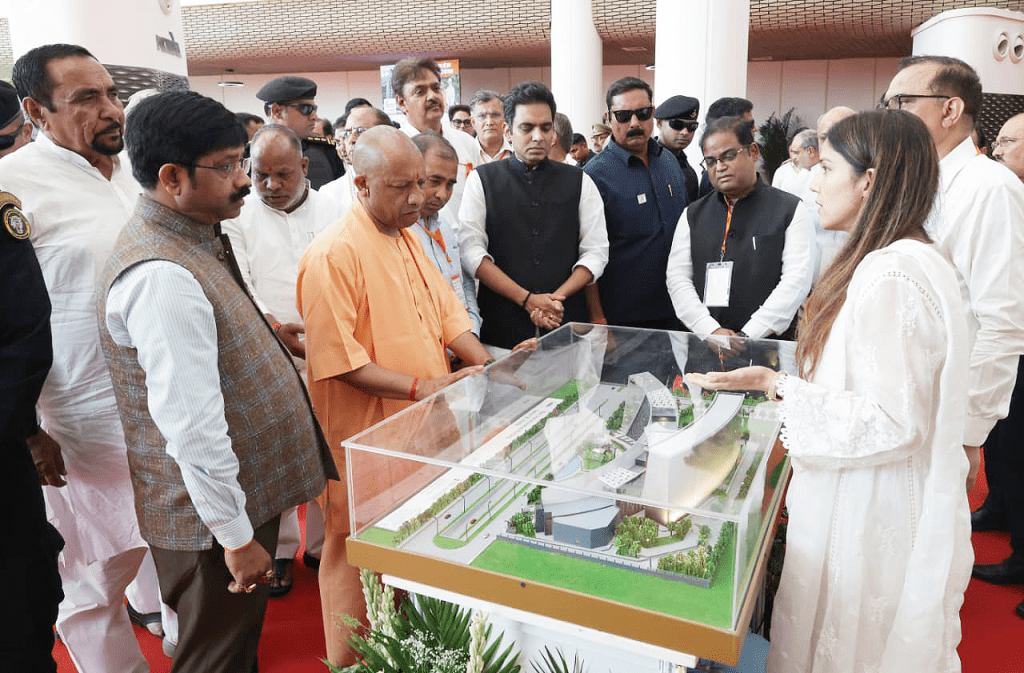
A major highlight was the inauguration of the new administrative building of the Noida Authority Headquarters, built at a cost of approximately ₹390 crore.
Officials said the infrastructure will improve administrative efficiency and provide integrated services under one roof for citizens, farmers, entrepreneurs, and investors.
Read also: CM Yogi Adityanath Holds Janata Darshan in Gorakhpur, Assures Housing and Medical Aid to 200 People
“Noida is No Longer Cursed, It is a Symbol of Progress”
CM Yogi strongly rejected earlier perceptions about the region, stating that Gautam Buddh Nagar is no longer “cursed” but has become a symbol of development and prosperity.
He added that earlier governments avoided visiting Noida due to negative perceptions, but today the region is at the center of industrial growth and global investment interest.
He also recalled that in 2017, when the Prime Minister was scheduled to visit Noida for a metro inauguration, there were concerns about protocol conventions. However, he personally ensured participation, stating that governance must prioritize public welfare over superstitions or outdated beliefs.
Major Breakthrough in Builder-Buyer Dispute Resolution
The Chief Minister highlighted that one of the biggest governance challenges in the region was the builder-buyer dispute crisis.
According to him, the government successfully resolved housing issues for over 1.25 lakh homebuyers within a year, and later, under a Supreme Court-monitored process supported by a high-level committee led by the CEO of NITI Aayog, more than 3 lakh buyers were provided housing.
He said that with the new Noida Authority headquarters, public grievances will now be resolved more efficiently under one system, with an emphasis on digitization and integrated command monitoring.
Action Against Non-Performing Land Investors
CM Yogi directed officials to identify individuals and entities that acquired land from authorities but failed to initiate investment projects.
He instructed that such defaulters should be issued time-bound notices, and if they still fail to invest, the land should be reallocated to new investors to create a stronger land bank for future development.
Jewar Airport and Industrial Expansion Driving Transformation
The Chief Minister emphasized the role of the Noida International Airport in reshaping the region’s economic landscape.
He said domestic commercial flights have already begun, and international operations will start soon, further boosting connectivity and investment.
He also highlighted major industrial projects, including:
- ₹7,000 crore electronics component and circuit manufacturing project
- ₹8,200 crore solar cell manufacturing unit
These projects are expected to position Gautam Buddh Nagar as a major hub for electronics and renewable energy manufacturing.
MSMEs: Backbone of a Developed India
Speaking on International MSME Day, the Chief Minister said Micro, Small, and Medium Enterprises (MSMEs) are the foundation of a developed India.
He noted that a strong manufacturing ecosystem, world-class infrastructure, and prosperous farmers are essential pillars of national growth.
Before 2017, artisans and small industries in Uttar Pradesh lacked market access, branding support, and modern technology. The government introduced reforms, including design innovation, branding initiatives, and technology integration to support them.
ODOP Becomes a National Brand
CM Yogi stated that the One District One Product (ODOP) scheme has become a globally recognized brand and a key pillar of India’s self-reliance strategy under Narendra Modi.
He said Uttar Pradesh now has more than 96 lakh MSME units, providing employment to over 3.3 crore people.
During the COVID-19 pandemic, despite global disruptions, MSME units in the state remained active and provided livelihood support to returning migrant workers.
Uttar Pradesh’s Export and Manufacturing Growth
The Chief Minister stated that Uttar Pradesh now exports goods worth over ₹2 lakh crore annually.
He added that:
- The state contributes nearly 55% of India’s mobile manufacturing
- Around 60% of electronic components production takes place in Uttar Pradesh
This has positioned the state as a major industrial and export powerhouse.
Major Investments and Employment Announcements
Several major investments and employment-generating projects were highlighted during the event:
- TCS (SK Nair): ₹2,300 crore investment, ~30,000 jobs
- Physics Wallah (Alakh Pandey): ₹855 crore investment, ~3,500 jobs
- LG Soft India: ₹600 crore investment, ~500 jobs
- DLF: ₹3,500 crore investment, ~10,000 jobs
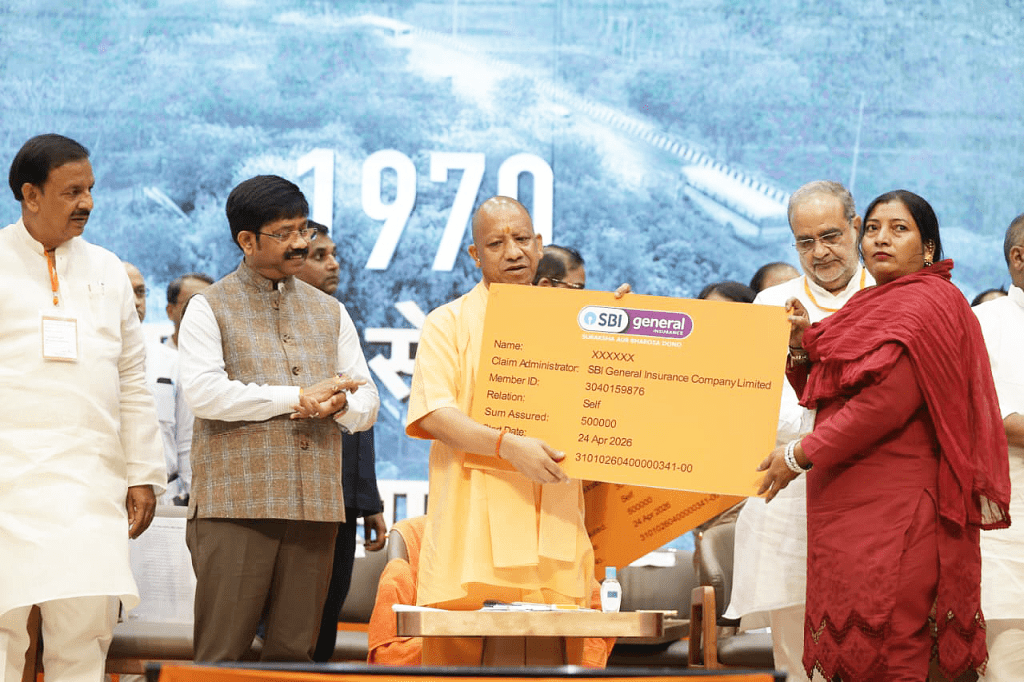
The Chief Minister also distributed certificates, subsidy checks, toolkits, and benefit documents to MSME entrepreneurs, beneficiaries of youth entrepreneurship schemes, and banking officials.
Uttar Pradesh Strengthens Its Industrial Future
The event underscored Uttar Pradesh’s rapid transformation into a leading industrial and investment destination in India. With major infrastructure projects, expanding MSME ecosystems, and large-scale investments in electronics and renewable energy, Gautam Buddh Nagar is emerging as a key growth engine of the state’s economy.
Officials believe that continued policy reforms and infrastructure development will further accelerate employment generation and industrial expansion in the coming years.