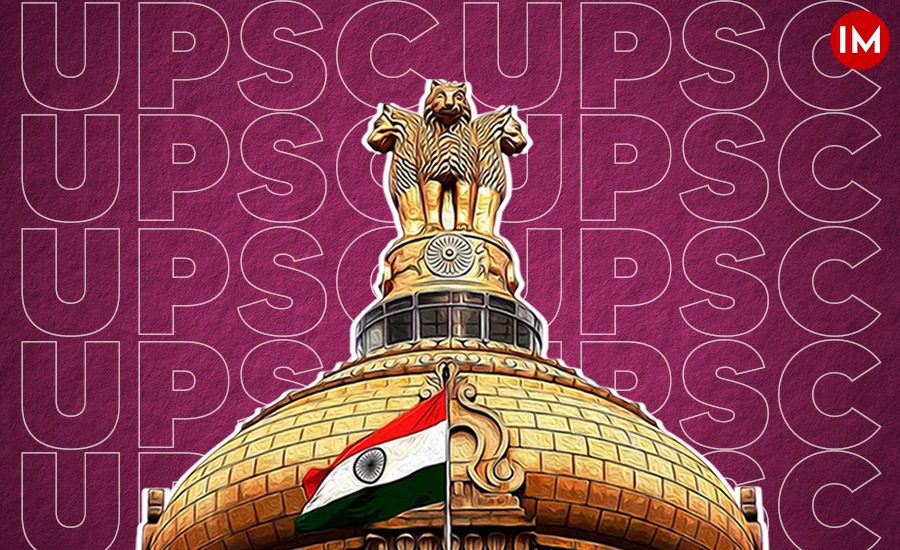
New Delhi: A significant trend has emerged in the Union Public Service Commission (UPSC) Civil Services Examination (CSE), with engineering graduates continuing to dominate the selection process while overwhelmingly opting for humanities subjects instead of their core engineering disciplines in the Main examination. According to official data presented before the Parliamentary Standing Committee on Personnel, Public Grievances, Law and Justice, nearly 84% of engineering candidates appearing for the UPSC Mains have chosen Arts subjects as their optional papers, prompting policymakers to seek a review of the current examination and evaluation system.
The trend has reignited the debate over whether the existing pattern of optional subjects offers an advantage to candidates from certain academic backgrounds.
Parliamentary Committee Flags Emerging Pattern
The issue came into focus after the UPSC shared data with the Parliamentary Standing Committee, which highlighted changing trends in the educational backgrounds of successful candidates over the past seven years.
Members of Parliament and several former civil servants have reportedly urged the UPSC to examine whether the current optional subject system requires reforms in light of the growing preference for humanities subjects among engineering graduates.
Humanities Candidates Increasing at Interview Stage
The data reveals a gradual rise in the proportion of humanities graduates reaching the final stages of the Civil Services Examination.
Among candidates called for the Personality Test (Interview):
- Humanities graduates increased from 20.59% in 2019 to 34.41% in 2025.
- Candidates from science, engineering and medical backgrounds declined from 79.41% to 65.59% during the same period.
Arts Graduates Improve Final Selection Share
A similar trend was observed in the final merit list.
According to the UPSC data:
- The share of humanities graduates in the final selection increased from 24.19% in 2019 to 35.28% in 2025.
- The proportion of candidates from science and technology backgrounds declined from 75.81% to 64.72%.
Despite this shift, engineering graduates continue to constitute the single largest group among successful candidates.
Engineers Continue to Dominate UPSC
Although the representation of technical graduates has declined marginally, engineers remain highly successful in the Civil Services Examination.
In 2025, engineering graduates accounted for 47% of all finally selected candidates.
Among the Top 50 rank holders, there were 16 engineering graduates, but only one candidate opted for an engineering subject as the optional paper.
The remaining 15 candidates selected humanities subjects, continuing a trend seen over the past decade.
Similar Pattern Observed Earlier
The preference for humanities optionals among engineers is not new.
In 2016, engineers occupied 36 of the Top 50 ranks in the UPSC examination.
However, only five candidates chose engineering as their optional subject, while the majority preferred humanities disciplines such as Sociology, Political Science, Anthropology, Public Administration and Geography.
Why Are Engineers Choosing Arts Subjects?
Experts attribute this trend largely to the structure of the Civil Services Examination.
The UPSC General Studies papers have substantial overlap with humanities disciplines, making Arts subjects attractive as optional papers.
Subjects such as:
- History
- Geography
- Political Science
- Public Administration
- Sociology
- Economics
directly support preparation for various General Studies papers.
Candidates therefore often choose optionals that complement the broader syllabus rather than their graduation discipline.
Advantages of Arts Background
Candidates from humanities backgrounds naturally study several UPSC-related subjects during graduation.
These subjects contribute significantly to:
- General Studies Paper-I
- General Studies Paper-II
- Ethics (GS-IV)
- Economy portion of GS-III
- Preliminary Examination
As a result, Arts students often begin UPSC preparation with a stronger conceptual foundation in many General Studies topics.
The overlap also reduces the effort required to prepare both the optional subject and General Studies simultaneously.
Strengths of Engineering Students
Despite choosing humanities optionals, engineering graduates continue to perform exceptionally well in the examination.
Their strengths include:
- Strong analytical thinking
- Logical reasoning
- Quantitative aptitude
- Structured problem-solving
- Effective answer presentation
These skills prove particularly useful in the Civil Services Aptitude Test (CSAT) as well as analytical answer writing in the Main examination.
Recent UPSC Toppers Reflect Diverse Academic Backgrounds
Recent UPSC toppers have come from both engineering and humanities streams.
Some notable examples include:
- Aditya Srivastava (2023) – Electrical Engineering, IIT Kanpur
- Ishita Kishore (2022) – Economics (Honours), Shri Ram College of Commerce (SRCC), Delhi University
- Shruti Sharma (2021) – History graduate, St. Stephen’s College
- Shubham Kumar (2020) – Civil Engineering, IIT Bombay
- Kanishak Kataria (2018) – Computer Science Engineering, IIT Bombay
These examples demonstrate that candidates from diverse academic disciplines continue to excel in the Civil Services Examination.
Debate Over Optional Subject System Continues
The growing tendency of engineering graduates to opt for humanities subjects has sparked fresh discussions on whether the optional subject framework continues to serve its intended purpose.
With policymakers and former civil servants calling for a review, the issue is likely to remain part of the broader conversation on possible reforms to the UPSC Civil Services Examination.
Read also: UPSC CSE Mains 2026 DAF Submission Window Closes Today; Here’s How to Apply Before Deadline