By Dr Shailendra Srivastava, IPS (Retd.)
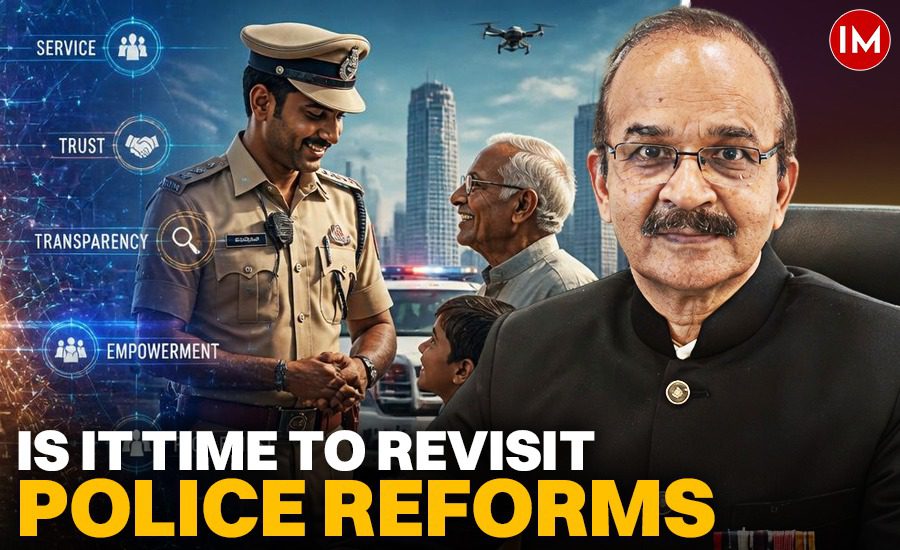
The maintenance of law and order is the most visible test of State capacity. It is here that governance meets the citizen. In India’s constitutional framework, “police” and “public order” fall squarely within the domain of State governments. Yet, for nearly two decades, policing has also been shaped by judicially mandated reform, most notably through the landmark judgment in Prakash Singh v. Union of India.
The judgment was historic. Its objective was to insulate the police from undue influence, ensure professional autonomy, provide stability of tenure, and create institutional mechanisms for accountability. These were legitimate and necessary concerns. It must be acknowledged that the Supreme Court’s intervention marked a significant and necessary step in bringing police reform into constitutional focus.
After nearly twenty years, however, it is appropriate to examine, through evidence-based analysis, the extent to which these reforms have delivered measurable outcomes, and whether further refinement may be beneficial.
Also read: Why India’s Ethanol Policy Needs a Food Security Reality Check
From Design to Outcomes
The central issue today is not the intent of reform, but the absence of systematic evaluation. Have the directives reduced arbitrary transfers? Improved neutrality in investigation? Increased public trust? Ensured prompt FIR registration? Strengthened conviction rates?
There remains limited publicly available empirical assessment of these questions. Across States, reform structures such as Security Commissions, Establishment Boards, and Complaints Authorities exist in varying degrees of compliance, but their effectiveness is uneven. Institutional form, in many cases, has not translated into behavioural change.
Reform cannot be judged by architecture alone. It must be judged by outcomes at the level where citizens actually encounter policing.
The Constitutional Balance
Law and order is a State responsibility for a reason. Chief Ministers are politically accountable for breakdowns in policing, whether in communal situations, organised crime, or public confidence. In that framework, the appointment of the Director General of Police is a critical governance decision.
The State must have confidence that the police chief brings not only seniority, but operational judgment, crisis leadership, integrity, and the ability to command the force. Safeguards against arbitrariness are necessary, though their operational impact may warrant periodic review in light of administrative experience.
The UPSC Panel Question
A key feature of the present framework is the requirement that States appoint the DGP from a panel prepared through the Union Public Service Commission.
The intent is objectivity. The difficulty lies in the method.
In practice, such panels rely heavily on seniority and service records. At senior levels, appraisal systems often show limited differentiation, with most officers graded “Very Good” or “Outstanding.” This raises a fundamental question: how is leadership capability to be meaningfully assessed?
Policing is not a file-based function. It requires judgment in crisis, restraint during tension, fairness in sensitive situations, and the ability to inspire confidence among citizens and within the force. These attributes are not always captured in formal records.
A DGP is not merely the senior-most officer available, but the right leader for the State’s specific policing challenges at a given time. The present system must examine whether documentary excellence alone is an adequate basis for such a decision. A more rounded approach may be considered, including a 360-degree assessment of leadership suitability, drawing on operational experience, peer and subordinate feedback, field performance, and public-facing credibility, in addition to formal service records.
The Election Commission Benchmark
A useful constitutional contrast emerges from the functioning of the Election Commission of India. During elections, the Commission evaluates police leadership based on neutrality, credibility, and effectiveness, and may transfer officers where concerns arise.
This represents a practical benchmark. At a time when democratic processes are under the highest scrutiny, leadership is assessed not only on record, but on real-time credibility and public confidence.
This raises an important question: if such criteria are relevant in the electoral context, should they not also inform the regular selection of police leadership?
Balancing Independence with Accountability
The purpose of insulating police leadership was to improve professionalism. Yet operational concerns persist. Delays in FIR registration, despite the clarity of Lalita Kumari v. Government of Uttar Pradesh, remain a recurring issue. In sensitive cases, public confidence often depends more on ground-level conduct than on formal structures.
This highlights a key reality: independence at the top does not automatically ensure fairness at the police station. Internal supervision, training, forensic capacity, and leadership culture remain equally critical.
What Needs to Be Measured
After two decades, the reform framework calls for structured evaluation. Key indicators include the functioning of oversight bodies, stability of tenure, FIR registration practices, investigation quality, conviction rates, and citizen trust. Comparative assessment across States with varying levels of compliance would also be instructive.
Evaluation may also need to examine certain unintended institutional consequences arising from aspects of the present framework. One such area concerns the impact of fixed minimum tenure provisions for Directors General of Police. The objective behind tenure stability remains important and deserves full respect, since it was intended to insulate police leadership from arbitrary interference.
At the same time, it may be useful to study whether, in practice, fixed tenure arrangements have narrowed opportunities for other equally competent officers who retire without ever getting an opportunity to lead the force. The effect of such structures on morale, succession planning, leadership motivation, and institutional cohesion within senior police leadership may merit objective study rather than assumption.
Without such measurement, reform risks remaining an assumption; with it, reform becomes accountable.
Refinement, Not Reversal
A careful re-examination of the framework arising from Prakash Singh v. Union of India should not be seen as a departure from reform, but as its natural progression.
The Supreme Court has, in several contexts, recognised that institutional directions may require refinement in light of experience and outcomes. Constitutional governance is not static; it evolves through engagement with ground realities.
What is required, therefore, is not a reconsideration of intent, but a calibration of mechanisms, so that the original objectives of professionalism, fairness, and accountability are more effectively realised.
The broader principle underlying tenure stability may also merit examination in other areas of public administration.
This evaluation may also have implications beyond police leadership. If fixed minimum tenure has, over two decades, demonstrably improved institutional independence and governance outcomes in the office of the DGP, governments may consider extending a similar minimum tenure framework to Chief Secretaries, who occupy an equally critical position in State administration. If stability is a governance virtue for police leadership, the same logic may merit examination for the senior-most civil service post. However, such extension should be based on evidence, not analogy alone.
The Way Forward
India needs police reform, but reform must ultimately be judged by results. The system may benefit from examining whether structural insulation alone is sufficient to ensure neutrality, and whether citizens experience tangible improvements in policing.
The DGP selection process, in particular, may require a more holistic assessment of leadership suitability, including crisis experience, integrity, public credibility, and field-tested performance.
Oversight institutions must also become substantively functional. Complaints Authorities and Security Commissions cannot remain symbolic if reform is to have meaning.
Conclusion
The Prakash Singh judgment remains a milestone in Indian governance. Its contribution to advancing police reform must be acknowledged with respect.
At the same time, no reform can remain static. After two decades, the question is not whether reform was necessary, but whether its current design has fully achieved its intended outcomes.
A data-driven review is not a reversal of reform, but its continuation. It seeks to align constitutional intent with institutional experience.
In a mature democracy, reform must move from design to demonstrable results.
This discussion is offered in the spirit of constructive constitutional dialogue, with full respect for the authority and intent of the Supreme Court.
(Dr Shailendra Srivastava served the Government of Madhya Pradesh for over 34 years, and retired from the post of Director General/Chairman of MP Police Housing and Infrastructure Development Corporation.)
Also read: Why the Rhododendron Is More Than Just a Beautiful Himalayan Flower