18 November 2026
ADVERTISEMENT
ADVERTISEMENT

How Jashabanta Sethi Used AI Towers to Stop Train–Elephant Collisions in Rourkela

OFS Jashabanta Sethi leads Odisha’s first AI-enabled elephant protection system in Rourkela, preventing train collisions, saving over 170 elephants, and setting a model for wildlife-railway safety in India.
Indian Masterminds Stories

In the dense forests of Rourkela Forest Division, the rumble of trains once carried a grim reminder. The railway lines under South Eastern Railway cut across traditional elephant corridors, including the high-traffic Howrah–Mumbai Main Line and the Hatia–Bondamunda–Barsuan branch intersecting at Bondamunda.

Until November 18, 2024, five elephants had died in train accidents in this division. For Divisional Forest Officer OFS Jashabanta Sethi, each incident was painful.

“It caused us deep distress. We knew elephants were moving at night, but we couldn’t detect them in time,” he shared exclusively with Indian Masterminds.

On average, 70 to 80 elephants move through these forest stretches. In darkness and dense foliage, manual surveillance was never enough.

Something had to change.

Read More : Meet Chandana Sinha: The RPF Inspector Behind 1,500 Child Rescues

NOVEMBER 19, 2024: WHEN AI ENTERED THE FOREST

On November 19, 2024, four AI-enabled Elephant Protection Towers became operational — the first deployment of such technology in Odisha.

They were strategically installed at:

  • Mahipani and Sonakhan along the Howrah–Mumbai Main Line
  • Dalakudar and Kucheita along the Bondamunda–Barsuan line

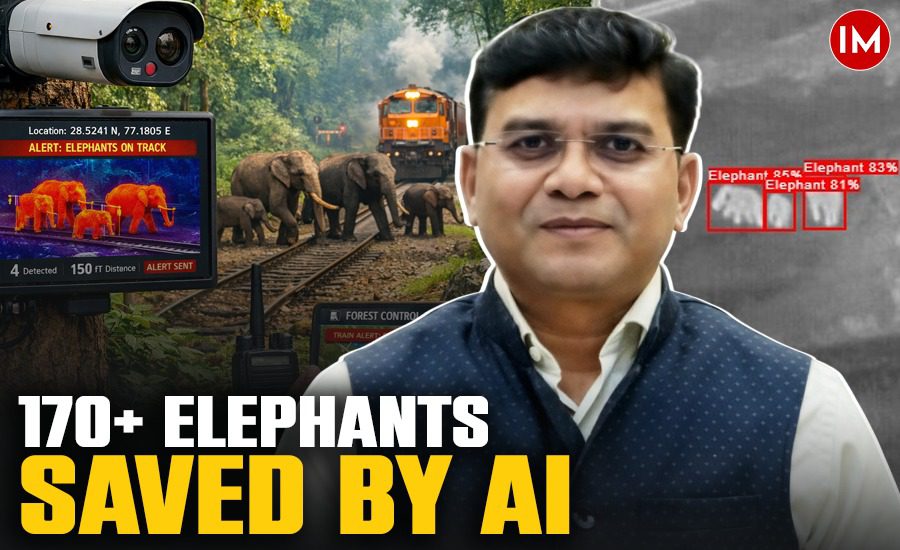
Each tower is equipped with advanced thermal imaging cameras, motion detection sensors, machine learning–based animal recognition systems, and real-time alert transmission to a centralized control room.

The AI camera coverage extends up to five kilometres. The moment an elephant enters the zone, an alert is instantly sent to the Forest Department control room at Bandamunda Railway ARM Office.

“The moment elephant movement is captured, we receive an immediate alert. We inform railway authorities, and trains are either slowed down or stopped right away,” Sethi explains.

880 ALERTS. HUNDREDS OF ELEPHANTS PROTECTED.

Between November 19, 2024 and December 31, 2025, the system generated nearly 880 alerts — each linked to elephant crossings ranging from single individuals to herds of up to 30.

A crucial incident occurred at Kucheita on November 26, 2025, when a single alert helped avert a potential collision involving nearly 30 elephants.

Impact by location:

  • Kucheita: 34 incidents prevented, approximately 233 elephants protected
  • Sonakhan: 6 incidents prevented, around 22 elephants safeguarded
  • Mahipani: 4 incidents prevented, 6 elephants saved
  • Dalakudar: 2 incidents prevented, 9 elephants protected

“During one year, around 850 alerts were received in our control room,” Sethi notes. “Our analysis shows that more than 170 elephants were directly saved from possible accidents.”

He recalls another tense moment:
“Just the previous night at 1:21 am, three elephants attempted to cross the tracks. The camera captured them instantly, and trains were stopped in time.”

TECHNOLOGY CREATING SAFER CORRIDORS

The initiative is being implemented in coordination with the Odisha Government’s Forest & Environment Department and Indian Railways. Upon receiving alerts, railway officials regulate speed or temporarily halt trains, preventing collisions while ensuring passenger safety.

Human-elephant conflict and train fatalities have long challenged forested railway corridors in Odisha. The Rourkela model now offers a practical solution — combining artificial intelligence with rapid inter-departmental coordination.

“This is about finding balance,” Sethi says. “By using Artificial Intelligence, we are saving elephant lives and ensuring safety for people as well.”

In forests once shadowed by risk, silent towers now scan the night — turning technology into protection, and alerts into life-saving action.

Read More: When Elephants Turn Killers: Inside Jharkhand’s Sudden Man–Animal Flashpoint

Indian Masterminds Stories
Join our WhatsApp Channel
ADVERTISEMENT
ADVERTISEMENT
Related Stories
ADVERTISEMENT
ADVERTISEMENT
NEWS
CAQM
CAQM Withdraws GRAP Stage III in Delhi-NCR as AQI Improves to 204; Stage I and II Measures Continue
Harpreet Singh Jaggi IPS
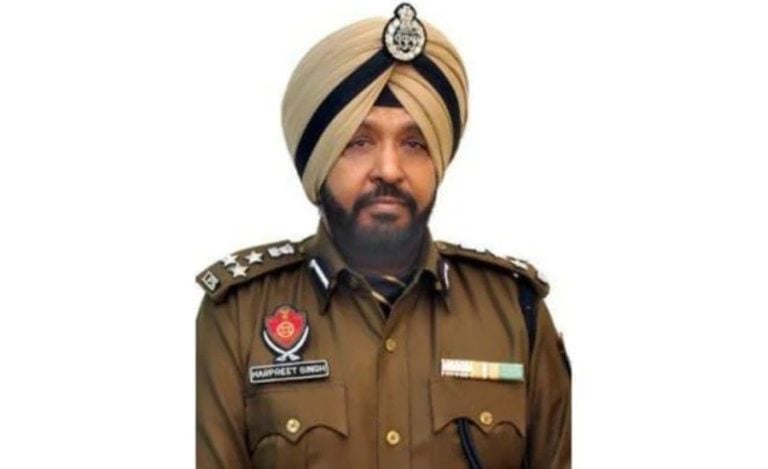
Who Is IPS Harpreet Singh Jaggi? 2012-batch Officer Appointed Police Observer for Moga Civic Polls; Voting in Dharamkot, Bagha Purana on November 28
Northeast Films at IFFI 2026 Feature
Northeast Cinema Makes Mark at IFFI 2026 With Four Indian Panorama Selections, Including First Nyishi-Language Film
Telangana Police Promotions 2026
Telangana DGP C.V. Anand Breaks 35-Year Promotion Deadlock; 54 Additional SP Posts to Be Filled in First Phase
KAP Sinha
Punjab High Court Summons Chief Secretary KAP Sinha on December 7 Over Pending DA Arrears; Clarifies Scope of Supreme Court Stay
India-SIDS Climate Partnership
India Sets Four Priorities for Climate Partnership with Island Nations at COP31, Focuses on Coastal Resilience and Renewable Energy
IAS Shikhar Agrawal ACB Probe
IAS Shikhar Agrawal Moves Rajasthan High Court to Quash ACB Probe Approval Over Ananta Resort Allegations
UPSC
CIC Advises UPSC to Maintain Year-Wise Records of Civil Services Exam Attempts
ADVERTISEMENT
ADVERTISEMENT
Videos
Five years after Kargil, India sent its cricketing heroes to Pakistan where terrorism posed a deadly threat. The man guarding them, former Special Director of Intelligence Bureau, Mr. Yashovardhan Azad, reveals what all went behind the scenes during that crucial tour. 
Trust No One, Said His Instinct in Pakistan
Gajendra Singh Shekhawat
How India Plans to Boost Tourism, Create Jobs and Ease Overcrowding : Gajendra Singh Shekhawat on the Road to 2047
Dr Saket Badola IFS
Beyond Tigers and Safaris: How Corbett Literature Festival Wants to Change the Conservation Conversation
ADVERTISEMENT
UPSC Stories
Mayank Gurjar
He Lost His Father in Class 12, Then Cleared UPSC in One Attempt to Become an IPS Officer
After losing his father in Class 12, Mayank Gurjar held on to his dream of public service, graduated...
Gautam UPSC
He Studied at 4 AM in a 10×10 Mumbai Slum Room; Today, Gautam Padibhar is an Indian Forest Service Officer
Meet IFS officer Gautam Padhibhar, a 2023-batch Chhattisgarh cadre officer who rose from financial hardship...
Aniket Sagar ICoAS
No Coaching, Full-Time Job and Two Attempts: How Aniket Sagar Cleared ICoAS
Aniket Sagar, a chartered accountant from Bundelkhand, cleared UPSC ICoAS 2025 after working at PwC,...
CSR NEWS
Coal India CSR Programme
Coal India Organises CSR Programme to Align Mining Operations with Community Development 
Initiative Aims to Strengthen CSR Implementation in Coal-Bearing Regions and Improve Community Well-Being...
hurl
HURL Signs MoU with Injot Trust to Launch Project ANGOR for Children's Education in Assam
The three-year CSR initiative will cover five locations in Assam, focusing on holistic education, digital...
cmpdil
CMPDIL Partners with Tata Steel Foundation to Upgrade Technical Education at ITI Tamar 
The project will modernise training infrastructure with robotic welding technology, digital learning...
ADVERTISEMENT
ADVERTISEMENT
ADVERTISEMENT
Latest
CAQM
CAQM Withdraws GRAP Stage III in Delhi-NCR as AQI Improves to 204; Stage I and II Measures Continue
Harpreet Singh Jaggi IPS
Who Is IPS Harpreet Singh Jaggi? 2012-batch Officer Appointed Police Observer for Moga Civic Polls; Voting in Dharamkot, Bagha Purana on November 28
ADVERTISEMENT
ADVERTISEMENT
ADVERTISEMENT
ADVERTISEMENT
ADVERTISEMENT
ADVERTISEMENT
ADVERTISEMENT
Videos
Five years after Kargil, India sent its cricketing heroes to Pakistan where terrorism posed a deadly threat. The man guarding them, former Special Director of Intelligence Bureau, Mr. Yashovardhan Azad, reveals what all went behind the scenes during that crucial tour. 
Gajendra Singh Shekhawat
Dr Saket Badola IFS
ADVERTISEMENT
ADVERTISEMENT