India has just become the fourth-largest economy in the world. It has struck a trade deal with Britain. India has also been talking to the United States of America for a trade deal. We have a robust infrastructure. Our stock markets are booming once again, and the Sensex is poised to cross the one lakh mark by the end of next year. India’s per capita GDP is Rs 2.31 lakh. Our GDP is $ 3909 billion.
India’s economy is poised for growth, with Deloitte forecasting 6.3–6.7% GDP expansion in FY 2025–26, driven by domestic demand and strategic tax reforms. The recent UK-India trade deal, expected to boost bilateral trade by 60% (£25.5 billion annually), underscores India’s ambition to diversify partnerships amid global trade realignments.
However, the U.S.-India trade ongoing talks, if successful, could elevate growth to 6.5%. India has already offered unprecedented concessions to US, including a “forward most-favoured-nation” clause to “future-proof” the agreement and secure access to U.S. markets vacated by China.
PAK ECONOMY IN DOLDRUMS
Pakistan’s economy on the other hand is in doldrums. Their per capita GDP is Rs. 1.34 lakh (Indian currency). Its total GDP is $ 373 billion (less than India’s one tenth). Inflation is skyrocketing. Joblessness is increasing fast. Infrastructure is crumbling. It is suffering internal strife in North West Frontier Provice (NWFP), Balochistan and Sindh while its fourth province Punjab is a hotbed of extremists. It is in danger of disintegration anytime soon.
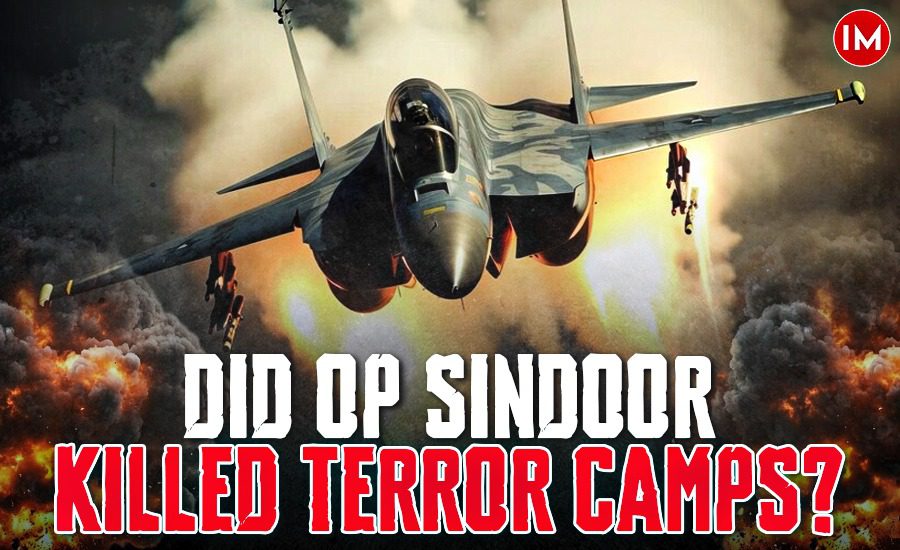
Can there be any comparison between the two? Then, was the missile strike on nine terror factories as part of Operation Sindoor, in response to the Pahalgam terror attack, prudent, especially since the skirmish has every chance of escalating into a battle if not war? It may be said that we wanted to annihilate the terror masterminds hiding in Pakistan. But have they been killed or hurt? Jury is yet to be out on that, except that some 14 relatives of a terror kingpin, Maulana Masood Azhar have been killed.
INNOCENT LIVES BEING LOST
We lost 26 innocent lives in Pahalgam. Another 10 were killed in and 40 injured in cross-border shelling by Pakistan on May 7th, following India’s Operation Sindoor on their terror camps. More lives might be lost in case the skirmish escalates. We have already been carrying out air and naval exercises after the Pahalgam attack. We have also mobilised our military on the frontier posts and closed our northern airspace completely in anticipation of Pakistani retaliation.
Following India’s Operation Sindoor, Pakistan’s leadership vowed to retaliate. Prime Minister Shehbaz Sharif denounced the strikes as an “act of war” and promised a “befitting reply” and a “robust response”. Pakistan’s National Security Committee convened to deliberate on the appropriate response, and the country summoned India’s charge d’affaires to formally lodge a protest.
CONFLICT ESCALATION SCARE
International experts like Michael Krugman, Alex Plitsas, Rajeshwari Pillai etc, don’t rule out escalation of the conflict. Past incidents, such as the 2019 Pulwama-Balakot crisis, illustrate how quickly tensions can escalate. While a large-scale conventional war seems improbable due to the nuclear factor, the potential for miscalculation and escalation remains a serious concern. Pakistan’s capacity for asymmetric retaliation and the volatile domestic political situations in both countries contribute to this risk.
The escalating tensions between India and Pakistan have elicited strong reactions from the international community, with numerous calls for restraint and de-escalation. However, India has expressed reluctance towards third-party mediation, consistently emphasizing the Simla Agreement as a framework for bilateral resolution of issues.
Reports suggest that most of the terror masterminds in Pakistan had gone into hiding soon after Pahalgam massacre as they anticipated retaliatory strikes by India. That explains why none of them were killed. So, has the purpose of the missile attack been fulfilled?
UNANSWERED QUESTIONS
Some questions remain answered? Does demolishing mere empty buildings serve our purpose. Is there any guarantee that terror masterminds like Masood Azhar, Zaki-ur-rehman-Lakhvi and Saifullah Kasuri (responsible for Pahalgam attack) will not raise their heads again? Can’t they re-build their Madarsas? Will they stop training terrorists to be sent to India? Will Pak Army stop funding these terrorist organisations?
Then what was the actual reason for Operation Sindoor? Domestic political and social pressure in India was on an All-Time High following Pahalgam massacre. People wanted action against Pakistan – at all costs – just like they pressurised then Central Government into releasing four terrorists including Maulana Masood Azhar to secure release of hijacked Indian Airlines flight IC-814 passengers. Government this time knew the cost of attacking Pakistan or its military establishment which has been sponsoring terrorism in India. It would have resulted in a full flown war. That’s why a middle path was found – to attack the terror training camps and the madarsas acting as recruitment centres of potential terrorists.
WILL JINGOISM TRIMPH?
Voices in both countries demanding more forceful action could override cautious approaches. An increase in cross-border firing and artillery duels along the LoC could also escalate the situation. The risk of escalation to the nuclear level would increase significantly if Pakistan felt it was on the verge of losing a conventional war. The path to de-escalation lies in dialogue and mutual recognition of the need for stability in South Asia.
In the short term, Operation Sindoor may succeed in signalling resolve, but its long-term efficacy hinges on India’s ability to compartmentalize security challenges while advancing its economic agenda. For now, Modi’s government appears to prioritize national security imperatives, betting that economic momentum will absorb geopolitical shocks.