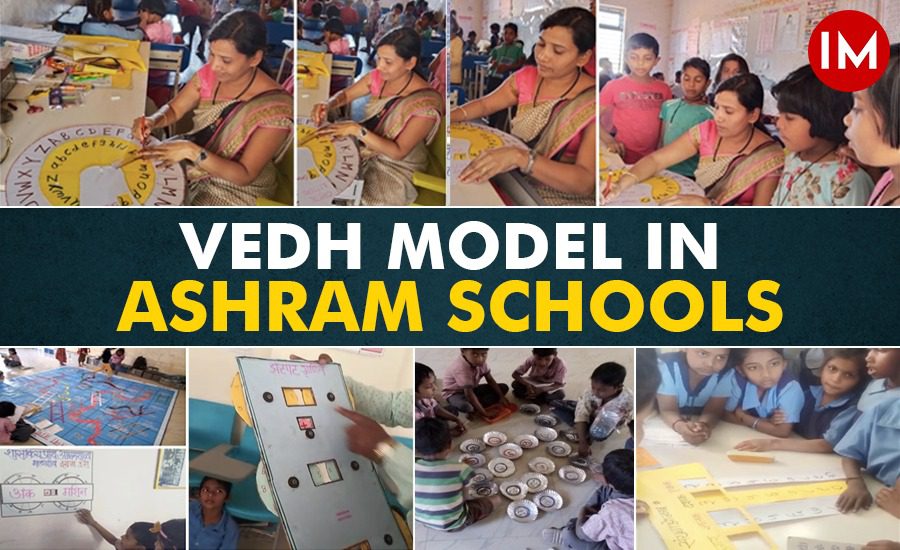
A revolutionary change is taking place across the schools for tribal children in Nadurbar district of Maharashtra. Known as Ashram, these are government run residential schools which impart education to children belonging to scheduled tribes.
The aim of Ashram Schools is to provide an environment conducive to learning to increase the literacy rate among the tribal students and to bring them at par with other students of the state. However, numbers told a different story altogether in Nandurbar. Hence, a new IAS officer to the district decided to experiment with a radically different education model. And, the progress achieved within a few months is phenomenal.
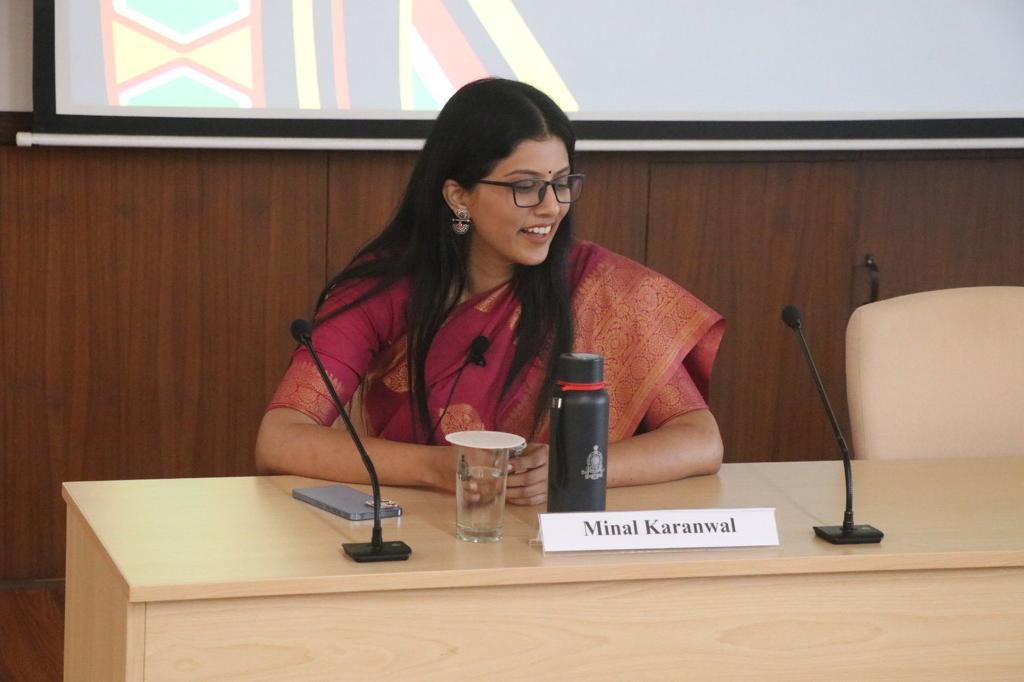
Speaking to Indian Masterminds, the 2019-batch IAS officer of Maharashtra cadre, Ms. Minal Karanwal, who is now posted as CEO, Zila Parishad, Nanded, gave details about the model which is now being rolled out in the entire state of Maharashtra.
PROJECT VEDH
Foundational Literacy and Numeracy or FLN is an indicator that shows how many children can read a paragraph of text and solve division questions of the Class 2 level. In Nandurbar’s Ashram Schools, till July 2022, around 3,000 children were at the introductory stage – not knowing how to read or solve mathematical problems, 1,117 knew how to read a story at the Class 2 level, and 935 children could do division at the Class 2 level.
“This was the data when we began Project Vedh in July 2022. Since then, 10,500 children out of a total of 16,000 have reached the FLN goal by March 2023. We achieved this by working on significant behavioural aspects of teachers and placing our trust in the capacity of our children to learn,” Ms. Karanwal said. At that time, she was posted in Nandurbar as Sub Divisional Magistrate and Project Officer.
HEUTAGOGY MODEL
And, in this quest to improve the numbers, which would go towards the overall improvement in teaching standards in schools, the guiding light was the idea of ‘heutagogy’ or ‘self-determined learning’.
“It is something we have been doing all our lives, whether it’s learning a recipe or a musical instrument from a YouTube instructional video, or even learning how to lie or steal! People become experts through the innate skill of self-learning,” Ms. Karanwal explained.
This culture of self-learning was integrated into classrooms for bridging FLN skills. A look at the traditional classroom shows three things: a monologic lecture delivered by a teacher; ‘x’ number of students in a class being able to make sense of it; and the administration of exams to test students on the same level of understanding. This also means that a student is limited by the pace of the teacher.
However, in the Vedh model, the student’s pace and curiosity have to determine the pace of the class. Hence, teachers were told that if the student wants to learn through stones and not books, that had to be given preference.
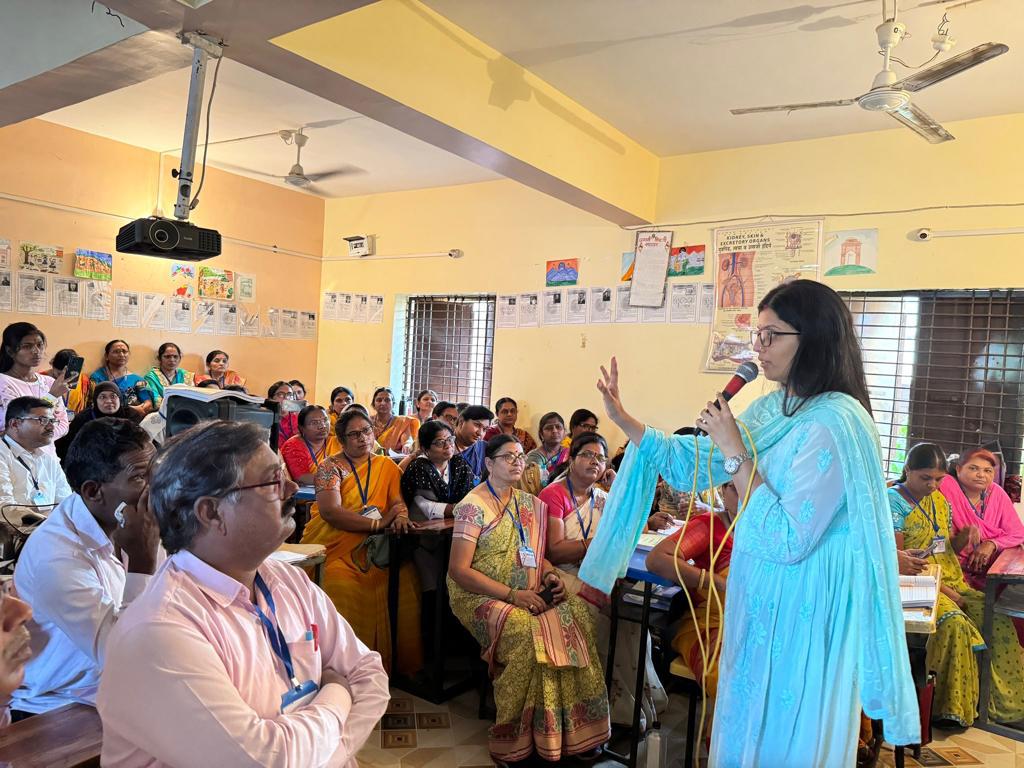
“It was a test of the teachers’ patience, but they performed very well at that. This involved a lot of change in the mindset of the teachers, as they were in a class not to fulfill the duty of teaching, but to move at the pace and will of the student,” Ms. Karanwal said.
The teachers, rooted in the philosophy of Heutagogy or Vedh, started designing their classroom sessions in a way that would fetch them results and appreciation both. The latter was ensured with a selfie of success and the former by periodic progress reports.
STEP BY STEP
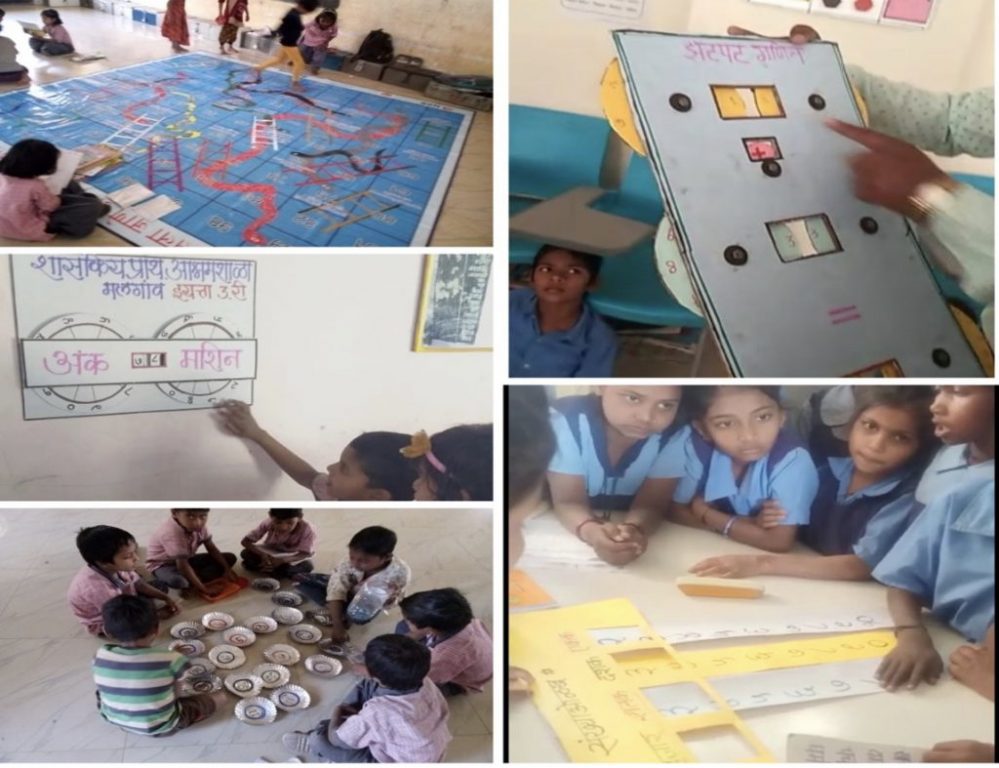
Led by a well-crafted ‘Vedh’ module of training and the efforts of self-volunteering teachers from across Maharashtra, the heutagogy movement happened step by step.
First, the bias about poor or tribal children that they are slow learners was broken by showing them live examples as possibilities.
Second, students were helped to understand how, over the course of their lives, they have learned a host of things on their own.
Third, teachers were helped to understand how the problem of lack of learning can be solved. Once they realised that creating basic learning materials or looking up YouTube videos on pedagogical techniques lay within their own powers, there was a marked change in attitude.
Fourth, teachers were helped to realise that self-motivation for completing a target in their classroom is important. Using a guided module, teachers were asked to list down the things that they learned through self-motivation and why these learnings have lasted longer in their lives.
The fifth and final intervention was to help students organise themselves into ‘peers’ and learning groups and identify ‘subject friends’ (students with expertise in a subject who can help their classmates understand it better) in their classroom.
SELFIE WITH TEACHER
All of this was pinned around the concept of ‘avhan’ or ‘challenge’. This was a practical learning intervention that was based on the idea that a child can learn best in a competitive environment.
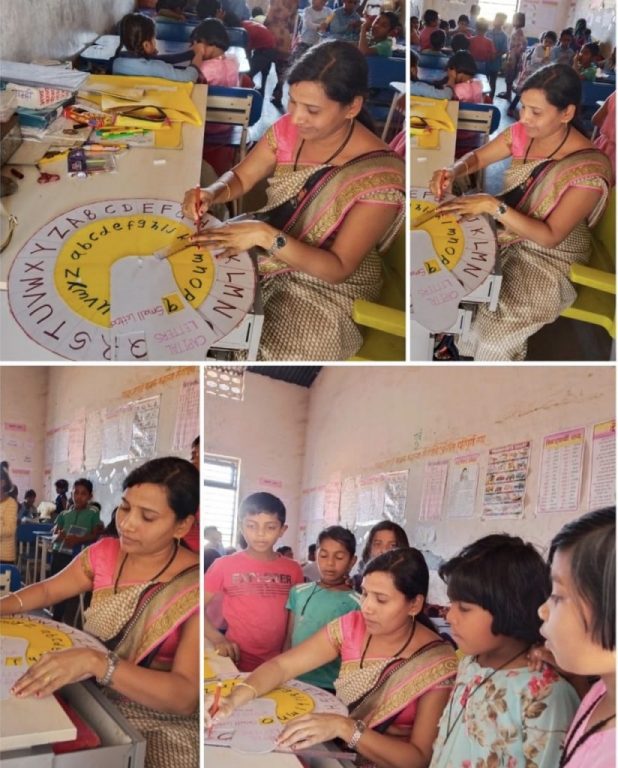
This didn’t mean that the teacher no longer teaches, but instead she plans one such ‘avhan’ for each child. The student is incentivised to complete each ‘avhan’ within a time limit by the promise of a ‘Selfie with Success’ with the class teacher.
Ms. Karanwal said, “Slowly, we saw the emergence of classrooms where the teachers were busy planning and monitoring such challenges and then awarding the students with selfies.”
BEYOND CLASSROOM
All the challenges were curated by the teachers, with the children learning and helping their friends learn. This went beyond the monologic delivery of lectures of the teacher and helped classrooms reach their FLN targets more rapidly.
“We have attempted to rejuvenate the unit of the teacher and the classroom towards the concept of learning that is un-relied on any external support in terms of books, trainings, and smart classes. This is how we should envision education in 21st century India, because as technology evolves, we need no longer rely on teacher- and classroom-limited pedagogies,” said Ms. Karanwal.
The success of the Vedh Movement in Nandurbar proves that none of the tried and tested methods – like book and workbook printing; syllabus fine-tuning; not failing a student till class 8; or building a smart class – can match the power of a motivated teacher to gently nudge the student towards self-learning.