No treaty was signed with a gun to anyone’s head. That, oddly enough, is the story.
Most commentary on 2026 will list India’s diplomatic year as a series of separate wins – a summit here, an exercise there, a trade deal somewhere in between. Read them separately and you miss the plot.
Having spent years reading military maps, I know a pattern when I see one. This isn’t India collecting friendships. It’s India building an architecture and it is mostly maritime and mostly deliberate.
The Strategic Picture: Quiet Doesn’t Mean Passive
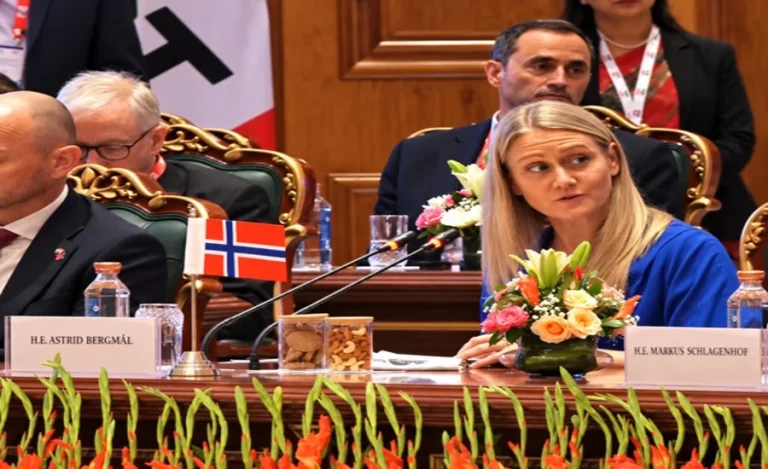
Start with Europe. The India-EU Security and Defence Partnership, signed in New Delhi in January 2026, set up an annual dialogue on maritime security, cyber, space, counterterrorism and defence technology, the unglamorous plumbing actual alliances run on. The long-negotiated trade agreement reached its final stretch around the same window.
Then June. Prime Minister Modi‘s visits to France and Slovakia, followed by the G-7 Summit at Évian-les-Bains. Not routine stops. A calculated deepening of India’s most dependable European relationship -Rafale jets aside, the Paris-Delhi rapport has hardened into institutional habit, not just personal chemistry.
Why partnerships over pacts? A pact binds you to someone else’s war. A partnership lets you choose your own. Strategic autonomy is not a seminar slogan. It is policy, exercised daily, one MoU at a time.
Also Read: Why India Must Build Public Services Around Migration Routes, Not Just Villages
Military Affairs: The Indian Ocean Is No Longer a Waiting Room
Here’s where the real story sits and why we need to understand it deep enough.
In May 2026, the Quad Foreign Ministers met in New Delhi and India proposed the headline initiative, not merely hosted it. The Indo-Pacific Maritime Surveillance Collaboration, focused initially on the Indian Ocean Region, was not handed to us on a platter. We built the case, and now we own the outcome.
Our Information Fusion Centre in Gurugram is the operational hub for the wider Indo-Pacific Partnership for Maritime Domain Awareness. Read that again, slowly. Not a participant hub. The hub.
Field Marshal Sam Manekshaw once said, half in jest, wholly in earnest “If a man says he is not afraid of dying, he is either lying or is a Gurkha.” Underneath the humour sat a serious point: competence earns respect faster than bravado. Our navy has been quietly, professionally earning its seat at every table it now sits at.
INS Trikand’s joint patrol with EUNAVFOR Atalanta frigates in the Indian Ocean. The P-8I’s deployment at RIMPAC 2026 in Hawaii. The upcoming Milan exercise bringing in Australian participation, with India in turn committing to Talisman Sabre 2027. None of this made front-page news. It didn’t need to. The message was for planners in Beijing and Canberra alike, not headline writers.
Doctrinal shift required, and I say this without much hedging: For decades our defence planning treated the Indian Ocean as a moat something to be watched, guarded, kept at arm’s length from entanglement. That doctrine is now obsolete. The Ocean has become a shared commons we co-administer with Quad partners, the EU, France, Australia. Our planners must stop thinking like sentries at a gate and start thinking like conveners at a table. Surveillance-sharing, common operating pictures, joint tabletop exercises these are the tools of the convener, not the guard.
There is one difficult question here buried in this shift, and it deserves an honest answer
Are our procurement and training pipelines evolving as fast as our diplomacy? Not yet, in my assessment. The doctrine is ahead of the delivery. That gap needs closing, not celebrating.
Kautilya wrote, long before any of us wore a uniform- that the enemy of my enemy is not automatically my friend only my temporary convenience. India’s current posture, spread across Quad, EU and Indo-Pacific frameworks, reflects exactly that discipline. Trust everyone conditionally. Depend on no one entirely.
The Boardroom Parallel
The one-line lesson for India Inc is – this is a masterclass in reducing single-point dependency.
Diversify your critical relationships – suppliers, technology partners, even regulators before a crisis forces the diversification on you. Governance committees would do well to study India’s method here, not its politics.
The Strong Message
India is not choosing sides in a new Cold War. It is refusing to let anyone else choose for it.
For military planners, for policymakers, for anyone responsible for national or organisational resilience the lesson isn’t subtle. Build trust before you need it. Own the architecture rather than merely occupying it. And never mistake quiet diplomacy for weak diplomacy.
The loudest powers in history have not always been the ones still standing at the end.
(This is a first of the two part series on Indian Partnership Doctrine in the new global order. To be concluded.)
Col MV Shashidhar (Retd) is a defence and strategic affairs expert, certified Independent Director, and governance thought leader.
Also Read: The Officer Chosen at a Critical Time: Inside IPS Anurag Kumar’s Journey to Delhi Police Chief