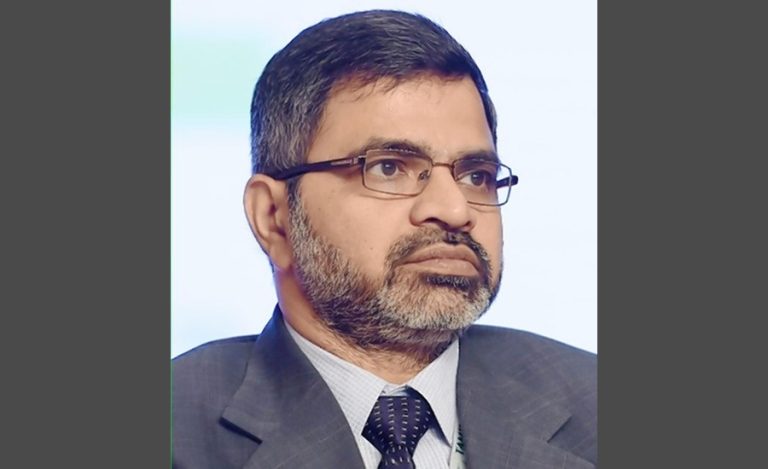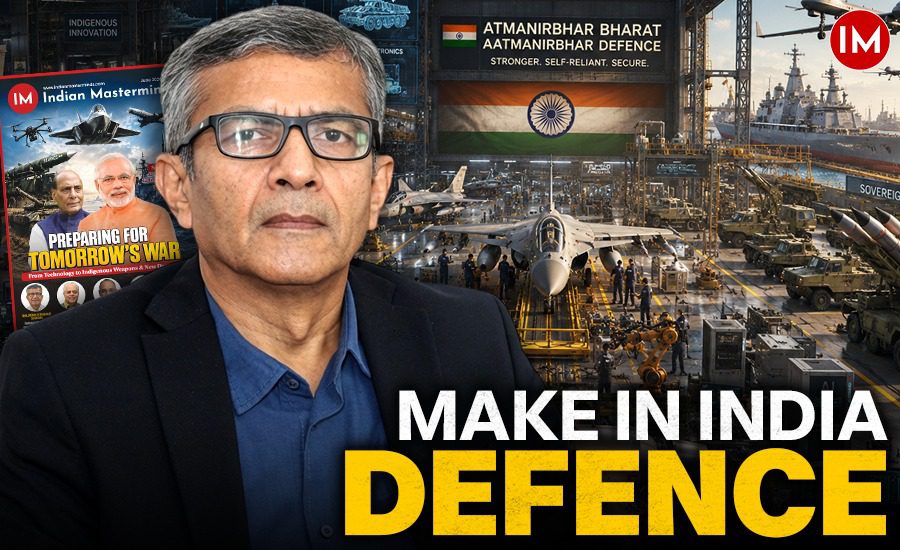
As India accelerates its military modernisation drive, self-reliance has emerged as the cornerstone of defence policy. In this exclusive interview, Defence Secretary Rajesh Kumar Singh, a 1989 batch of the Indian Administrative Service (IAS) from the Kerala cadre, explains how imports are being phased out in favour of domestic manufacturing, outlines plans to boost defence spending to 2.5% of GDP, and discusses India’s growing capabilities in drones, missiles, advanced technologies and private-sector-led defence production.
The government’s emphasis is on indigenisation. How much are we indigenising versus importing, and how is the trend changing?
We have taken a conscious decision to not allow imports in most cases. Any import proposal now mandatorily goes to the Defence Acquisition Council (DAC) under the Raksha Mantri — it cannot be cleared at the services level or at the ministry level alone. This means imports have become more an exception than a rule.
We have also set an internal target: at least 75% of the capital budget (CAPEX) must be spent on domestic procurement in Indian rupees. In practice, last year about 79–80% of our CAPEX budget was spent within the country. This represents a historical shift — any platform or equipment we buy must either be indigenously designed or, even if technology is transferred from abroad, it must be manufactured within India. Buying small quantities in a ‘flyaway condition’ (fully assembled from abroad) is done very rarely, and even then, the bulk of any such order is linked to domestic manufacturing — as seen with the C-295 aircraft, and as will be the case with future projects like the MRFA/Rafale once approved.
Read Also: How Does India Could Become a Major Beneficiary of Canada’s Massive $500 Billion Defence Push
We have seen in the Ukraine war, the Iran conflict, and even in Operation Sindhu that warfare is increasingly driven by drones and artificial intelligence. How much are we integrating drones and missiles — especially cost-effective ones?
On missiles: India’s missile programme is almost entirely homegrown. Barring the BrahMos — where some design and engine technology is of Russian origin — all our strategic and non-strategic missiles trace their roots to the work initiated by Dr. APJ Abdul Kalam. There are some gaps in seeker technology and ramjet engine technology, but the designs are largely indigenous.
On drones: India now has a very large drone manufacturing ecosystem. The only category where we have gone abroad is High Altitude Long Endurance (HALE) drones — we have signed a contract with General Atomics for the MQ-9 Predator from the US. For all other categories — including loitering munitions and smaller drones — we intend to procure only through Make in India routes. Even for Medium Altitude Long Endurance (MALE) drones, the intent is to source them domestically, even if they use some foreign technology components. The overarching intent, in both missiles and drones, is to rely predominantly on domestic sources.
Jet engines, semiconductors, and advanced sensors are areas where India still lags behind global standards. How are we coping with this gap?
The Hon’ble Prime Minister’s India Semiconductor Mission is working to build a domestic semiconductor manufacturing ecosystem, including through subsidies and incentives. Some progress has been made, but until that ecosystem matures, there will be some import dependence.
The intent is to collaborate with an international engine house to co-develop an advanced aero jet engine in the 120 kilonewton (kN) class within India. The condition for any such collaboration is that full Intellectual Property Rights (IPR) must vest with India. Approval for this project is being sought at the highest level. The philosophy is: if you cannot do it entirely in-house, tie up with a global partner but ensure the technology and IPR remain within the country.
Efforts are ongoing to reduce dependence on imported sensor technology through indigenous development and international partnerships — following the same principle of domestic manufacturing with full IPR control.
What are the broader modernisation plans being launched by the government?
Modernisation follows the Long-Term Integrated Perspective Plan (LTIPP) developed by the services through the Integrated Defence Staff (IDS). The process involves: identifying capability gaps, conducting an Operational Research and System Analysis (ORSA) study to prioritise those gaps and determine equipment requirements, and then seeking in-principle approval from the Defence Acquisition Council (DAC).
The DAC approval also specifies the procurement category. In exceptional cases, an item may be imported — but in 99% of cases, it will either be ‘Buy Indian’ (with Indian design and manufacture) or ‘Buy Indian-IDDM’ (Indigenously Designed, Developed and Manufactured), which is the preferred category. Where Indian Technology Readiness Levels (TRL) are not yet sufficient, we allow ‘Buy Indian’ where an Indian manufacturer ties up with a foreign technology provider but manufactures in India.
Are there still systematic bottlenecks in the defence procurement process today?
Yes, the existing Defence Acquisition Procedure (DAP 2020) has delays in three key areas: preparation of Request for Proposals (RFPs), the trial process (which is very long), and cost negotiations — all three contribute to procurement cycles stretching to 2–3 years.
To address this, we are working on a revised DAP with several innovations:
• A faster induction model for fast-moving technologies with high obsolescence rates, where trials and processes are expedited. • Streamlined RFP preparation and cost negotiation timelines. • Greater use of technology such as digital twins for trials. • Concurrent processing of steps that were earlier sequential. • A new low-cost capital acquisition procedure for simpler, lower-cost equipment.
The revised DAP framework is already in the public domain and is expected to be finalised within the next couple of months.
Meanwhile, even within the existing framework, we have significantly accelerated decision-making. In both the last two years, we exceeded ₹2 lakh crore in contract signings — more than double the highest figure ever achieved prior to FY 2024–25.
A major portion of the defence budget is still spent on salaries and pensions. How do we change that balance?
The only way to change the ratio is to grow the capital budget at a faster rate than salary and pension liabilities. Pay and pension expenditures will increase at roughly 10–11% annually, with potentially higher jumps after Pay Commission revisions.
For capital expenditure, I have been pushing for a 20% year-on-year increase. Last year, we secured a 20% increase from the Finance Ministry, reversing the declining share of CAPEX in the overall MoD budget — it now stands at 27% of the overall Ministry of Defence budget, up from a lower figure the previous year.
Defence expenditure as a share of GDP had dipped to as low as 1.7–1.8%. With the CAPEX increase this year, we brought it back to approximately 2%. My target, which I intend to seek from Finance, is to raise it to 2.5% of GDP over the next five years, moving towards the ideal benchmark of 3% of GDP. Given that India is growing at 8–10% in nominal terms, a 20% CAGR in CAPEX — especially in the current operational context — is achievable and essential.
How much private sector participation are we seeing in defence acquisition, procurement, and manufacturing compared to the public sector?
Currently, the split is approximately 70% public sector and 27–30% private sector — but the private sector share is rising.
On the demand side, we have removed all reservations and nominations. Earlier, there was a de facto product reservation for Munitions India Limited (MIL) for ammunition and rockets, requiring a No Objection Certificate (NOC) from MIL before the Army could float an open tender. That provision has been removed from the Defence Procurement Manual. All tenders are now competitive.
A significant example: for the fifth-generation AMCA (Advanced Medium Combat Aircraft) programme, HAL was also a bidder but was kept out due to procedural errors in their paperwork. The RFP is being issued to three private sector-led consortia (with some public sector involvement). Similarly, we have now decided to extend technology transfer opportunities to the private sector in the missile production programme as well.
Some structural advantages still favour public sector companies — for instance, private firms require industrial licences, which DPSUs do not. But on the demand side, we have eliminated all protective barriers, and the intent is to make the private sector equally important to the public sector in defence manufacturing.
Given that modern wars are fought through drones, missiles, and standoff weapons, do we still need such a large army?
Standoff weapons dominate the opening phase of any conflict, but to take and hold territory, you still need boots on the ground — as even the Americans have found: sustained air superiority and long-range strikes alone have rarely achieved decisive strategic outcomes such as regime change.
That said, there is a valid case for manpower optimisation. We should allocate more of the budget towards long-range and standoff weapons, drone warfare, and long-range missiles — and this will indeed be reflected in our procurement plans.
Read Also: How India Plans to Make the World’s Fastest Cruise Missile 20% Cheaper by 2028