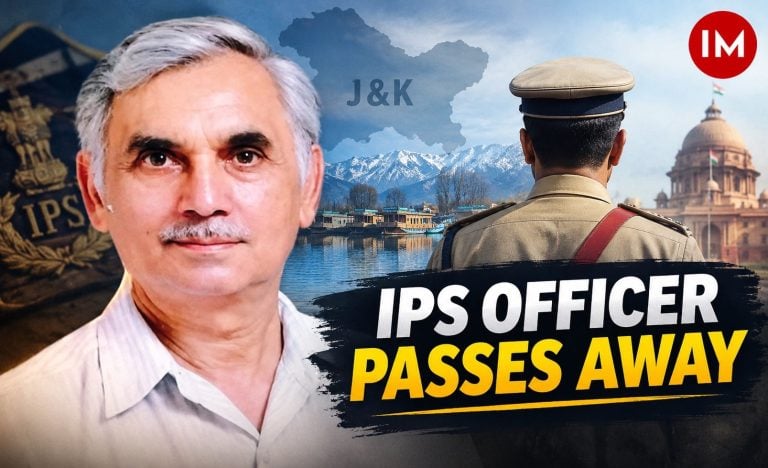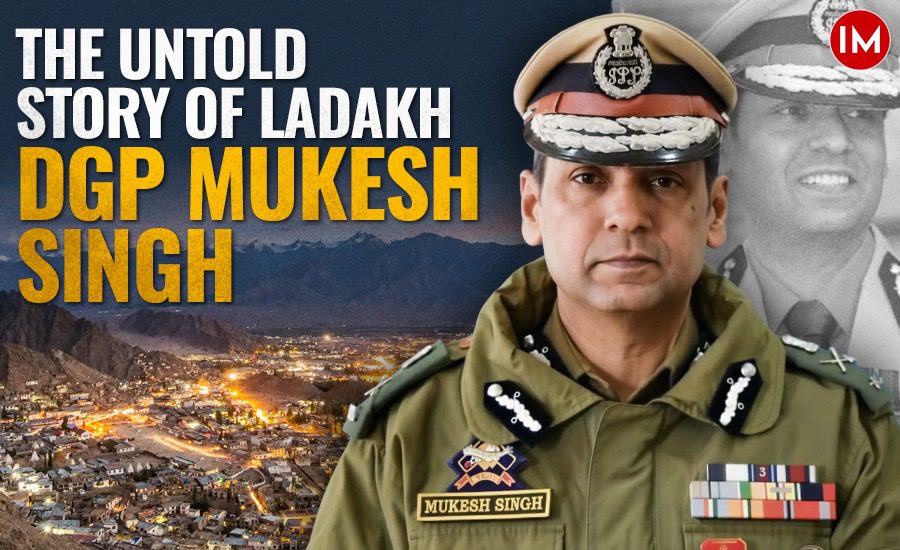
Some police officers become public figures. Others become part of the system’s quiet backbone — the men who are called when the situation is too volatile, the terrain too dangerous, or the stakes too high.
Mukesh Singh belongs to the second category.
For nearly three decades, the 1996-batch IPS officer of AGMUT cadre, spent his career moving through some of India’s most difficult security landscapes — from militancy-hit districts in Jammu & Kashmir to high-altitude border zones guarded by the Indo-Tibetan Border Police. Long before he took charge as Director General of Police, Ladakh, Mukesh Singh had already spent years navigating gunfire, infiltration routes, intelligence networks, terror investigations, and fragile law-and-order situations.
And perhaps that is what makes his story striking.
Despite occupying major security positions, he remained largely away from public glare. No dramatic television appearances. No loud public persona. Just years of operational policing in regions where one wrong move could change the course of an entire district.
A Boy from Bokaro Who Chose a Different Road
IPS Singh was born on January 24, 1971, in Bokaro Steel City, then part of Bihar and now in Jharkhand.
Like many academically gifted students of his generation, engineering seemed the natural path ahead. He secured admission to IIT Delhi and pursued Civil Engineering at one of India’s most prestigious institutions.
Read Also: Who Is Manoj Agarwal, The New Chief Secretary of West Bengal, Who Oversaw SIR?
At a time when an IIT degree almost guaranteed a lucrative private-sector career, Singh took a different route. He entered the Indian Police Service in 1996 and was allotted the Jammu & Kashmir cadre — perhaps one of the most demanding postings any young IPS officer could receive during that period.
The Valley was burning. Militancy had deepened. Terror attacks were frequent. Infiltration from across the border was at its peak. Officers entering service during those years were not stepping into routine policing. They were entering a conflict zone.
IPS Singh walked straight into it.
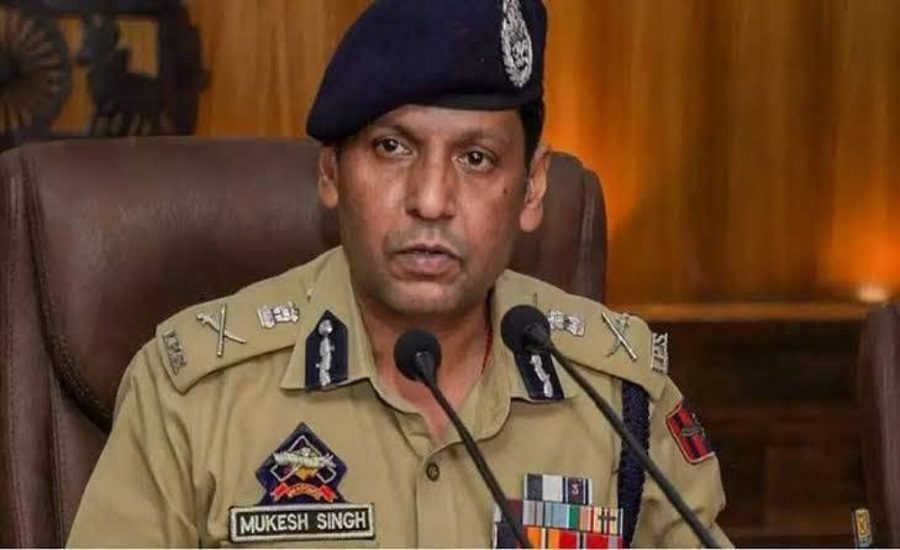
Learning Policing in the Middle of Militancy
His early postings placed him in districts where policing was not confined to crime control alone. Every decision carried security implications.
He served in Reasi, Pulwama, Poonch, and Jammu — districts that represented very different dimensions of Jammu & Kashmir’s security challenge.
In Pulwama, intelligence gathering and counter-insurgency operations formed the core of policing. In Poonch, the Line of Control and infiltration routes shaped daily security concerns. In Jammu, communal sensitivity, political activity, and terror threats often collided within crowded urban spaces.
These were not easy years for the region. Militancy networks were active, terror outfits were expanding operations, and security forces were constantly engaged in anti-terror missions.
For officers like Mukesh Singh, policing became a test of nerve, judgement, and operational control.
Over the years, he built a reputation as a field officer deeply familiar with ground realities. His work increasingly revolved around counter-terror structures, intelligence coordination, and dismantling militant support systems.
The Rise of a Security-Focused Officer
As his career advanced, Mr Singh moved into larger command responsibilities.
He served as Inspector General of Police for Jammu Zone — one of the most strategically sensitive policing regions in the Union Territory. The zone demanded continuous coordination with the Army, CRPF, BSF, and intelligence agencies.
Cross-border infiltration attempts, terror networks, narco-linked activities, and law-and-order management all converged within this command structure.
By then, Mr Singh had become known as an officer shaped almost entirely by operational assignments.
But his career was not limited to field command alone.
He later served as IG Crime in Jammu & Kashmir, handling investigations and sensitive criminal matters. The role expanded his exposure beyond encounters and operations into intelligence-driven investigative work.
Then came another significant chapter — the National Investigation Agency.
From Kashmir’s Streets to India’s National Security Grid
Mr Singh’s tenure as Inspector General in the National Investigation Agency placed him inside India’s federal counter-terror architecture.
The shift was important.
He was no longer dealing only with district-level policing or regional operations. The NIA role brought him closer to larger terror ecosystems — terror financing, radical networks, cross-border linkages, and national security investigations.
It gave him a wider perspective on how militant structures function beyond local boundaries.
For an officer who had already spent years in insurgency-hit regions, the assignment strengthened his profile as a security specialist.
And then came the mountains.
The High-Altitude Years
Mr Singh later moved into senior leadership roles within the Indo-Tibetan Border Police, serving as both IG and later ADG in the force.
The ITBP guards some of India’s toughest frontier regions along the China border. These are landscapes defined by freezing temperatures, oxygen-starved altitudes, and extreme logistical challenges.
The experience proved crucial.
Read Also: In Bihar’s Changing Policing Story, IPS officer Swarn Prabhat Stands for Firmness with Fairness
Unlike conventional urban policing, high-altitude border management demands military-style coordination, strategic planning, and endurance under harsh conditions.
For Singh, it added another layer to an already unusual career — insurgency policing on one side and frontier security on the other.
Years later, this combination would make him a natural fit for Ladakh.
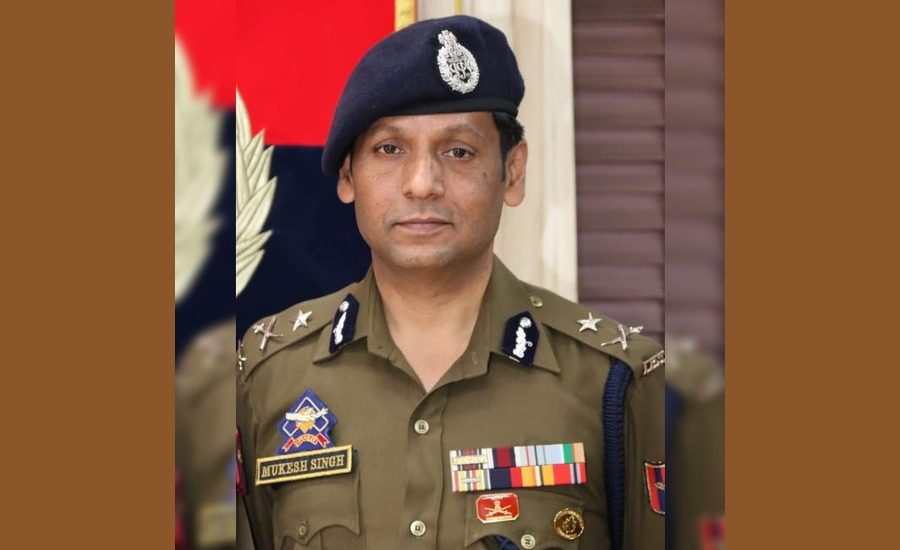
A Career That Moved Alongside Kashmir’s Most Defining Years
IPS Singh’s journey through policing mirrors many of Jammu & Kashmir’s most turbulent phases.
He served during the intense militancy years of the late 1990s. He witnessed the security restructuring that followed the Kargil conflict. He remained within the policing system through periods of unrest, terror crackdowns, and changing militant tactics.
His career also overlapped with one of the biggest political shifts in the region’s modern history — the abrogation of Article 370 in 2019.
After the reorganization of Jammu & Kashmir and Ladakh, the old J&K cadre was merged into the AGMUT cadre structure. Officers who had spent years within the state’s policing ecosystem suddenly became part of a wider administrative network covering multiple Union Territories.
Mukesh Singh was among them.
By then, however, he was no longer just another IPS officer from Jammu & Kashmir. He had become one of the region’s most experienced operational officers.
The Call to Lead Ladakh Police
In January 2026, IPS Singh was appointed Director General of Police, Ladakh.
The appointment carried weight.
Ladakh today is not merely a scenic Himalayan territory. It is one of India’s most strategically important frontier regions. Border tensions with China, sensitive military infrastructure, internal administrative challenges, and difficult terrain have transformed policing there into a highly specialized responsibility.
Singh arrived with exactly the kind of experience the region demanded.
Years in conflict policing. Counter-terror operations. National security investigations. High-altitude border management.
When he formally took charge and received the ceremonial Guard of Honour at Ladakh Police Headquarters, it marked another transition in a long career spent in difficult terrains.
Only this time, the mountains were even higher.
The Man Behind the Uniform Remains Largely Unknown
Perhaps the most unusual aspect of IPS Singh’s story is how little is publicly known about his personal life.
There are almost no extensive interviews. Very few public speeches. Almost no media-driven storytelling around his family, hobbies, or private world.
In an era where visibility often shapes public image, Singh remained largely defined by his postings and operational responsibilities.
The silence around his personal life almost mirrors the nature of his career itself — controlled, measured, and away from spectacle.
Even so, his work did not go unnoticed. Reports over the years indicate that he received the President’s Police Medal more than once for distinguished and gallant service.
For many officers, recognition arrives through visibility.
For Mukesh Singh, it arrived through years spent in places where visibility was often the least important thing.
From IIT Corridors to India’s Northern Frontiers
The arc of Mr Singh’s life is unusual even by IPS standards.
An IIT-trained engineer who chose policing over a corporate career.
An officer who spent most of his years inside conflict zones instead of metropolitan comfort postings.
A policeman whose career stretched across militancy-hit districts, terror investigations, national security assignments, and border command structures.
And now, as DGP of Ladakh, he stands at another critical frontier — one where policing intersects directly with strategy, sovereignty, and national security.
Some officers build public image.
Others build operational trust.
Mukesh Singh’s career was built in the second category — in districts where nights were uncertain, borders remained tense, and the next challenge was never too far away.
Read Also: C.V. Anand: The Cricketer Who Walked Off the Pitch to Command Telangana Police