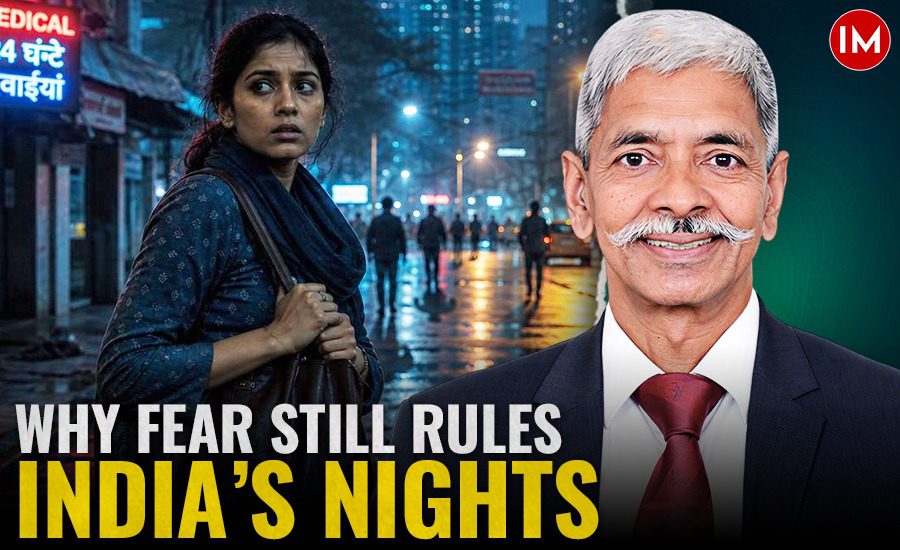
A midnight operation in Hyderabad exposed more than unsafe streets. It exposed the urgent need for administrative accountability, civic vigilance, and leadership-driven governance reform.
India has never lacked laws on women’s safety. What it has lacked is visible, relentless, and accountable enforcement.
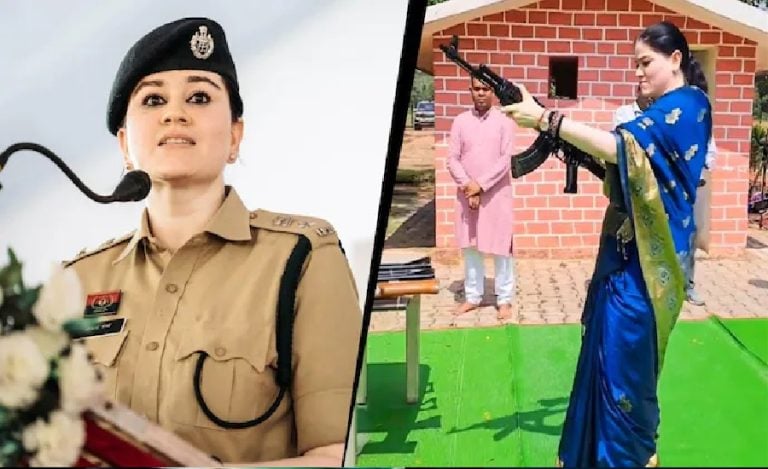
The recent undercover operation conducted by a senior woman IPS officer in Hyderabad should therefore not be viewed merely as a policing exercise. It was a governance audit conducted in real time.
Standing alone at a public bus stop past midnight without visible security cover, the officer reportedly encountered nearly 40 men within a few hours, many allegedly intoxicated. The operation immediately triggered public debate. But beyond the headlines lies a far more serious question:
If a trained senior police officer experiences vulnerability on public streets, what must an ordinary citizen feel every single night?
Also Read – When the Uniform Comes Off : The Hyderabad Murder and the Fragile Reality of Retired Officers
This is where India’s challenge moves beyond criminality and enters the domain of governance.
For years, India’s institutional response to crimes against women has largely followed a predictable cycle — outrage, media attention, committee formation, procedural assurances, and eventual administrative fatigue. The result is that society remembers incidents emotionally, but systems rarely reform structurally.
India now needs a transition from “Nirbhaya moments” to a “Nirbhav mindset”, fearless governance backed by continuous institutional accountability.
Women’s safety can no longer remain the exclusive responsibility of police departments. It must become a whole-of-government mission involving district administrations, municipalities, transport departments, judicial institutions, educational bodies, and community organisations.
District Collectors, Municipal Commissioners, Superintendents of Police, local judicial authorities, and elected representatives must collectively own measurable public safety outcomes.
The first reform India requires is preventive governance instead of reactive governance.
Every district should establish integrated Women Safety Steering Committees involving police leadership, municipal authorities, judicial representatives, transport departments, ex-servicemen, citizen volunteers, and women’s organisations. These committees should produce publicly accessible district safety report cards assessing lighting gaps, CCTV coverage, unsafe transport corridors, police response time, repeat offender zones, and conviction rates.
Transparency itself becomes deterrence.
Second, India must fundamentally rethink how it supports policing. A nation aspiring to become a global power cannot continue operating overstretched police forces with outdated infrastructure, exhausting work cycles, manpower shortages, and limited welfare support. Police reform is not merely an administrative issue. It is a national security issue.
Making police service more attractive through better housing, modern technology, improved career progression, mental wellness support, and professional respect will directly improve public safety outcomes.
Third, India must revive the idea of community vigilance. Civil Safety Booths staffed by trained volunteers, retired defence personnel, ex-servicemen, youth representatives, and senior citizens can become force multipliers for local policing. Public participation changes the psychology of urban spaces. Criminal behaviour thrives where social vigilance disappears.
Technology must also become central to the next phase of public safety governance. AI-enabled surveillance, smart lighting systems, integrated emergency response grids, predictive policing tools, panic-alert systems, and real-time monitoring of vulnerable zones are no longer futuristic ideas. They are governance necessities.
India already possesses one globally admired governance innovation, the mandatory Corporate Social Responsibility. Perhaps the country now requires another national framework.
INDI: Inspire New Drastic Initiative.
A mission that treats women’s safety not as a periodic campaign, but as a permanent national development priority.
Because the vision of Viksit Bharat becomes incomplete without Surakshit Bharat.
Kautilya wrote in the Arthashastra that the foremost duty of the state is the protection of its people. More than two millennia later, that principle still defines the legitimacy of governance.
Economic growth may build national power. But public safety builds national trust.
The Hyderabad operation will be remembered not merely because a courageous IPS officer stepped into uncertainty at midnight. It will be remembered because she forced the nation to confront truths hidden in plain sight.
That moment was not simply a police operation.
It was a wake-up call to the Indian state.
Also Read – “A Lot of Things Are Done Unsaid”: IPS Officer Sakshi Verma on Service, Marriage, and Sacrifice