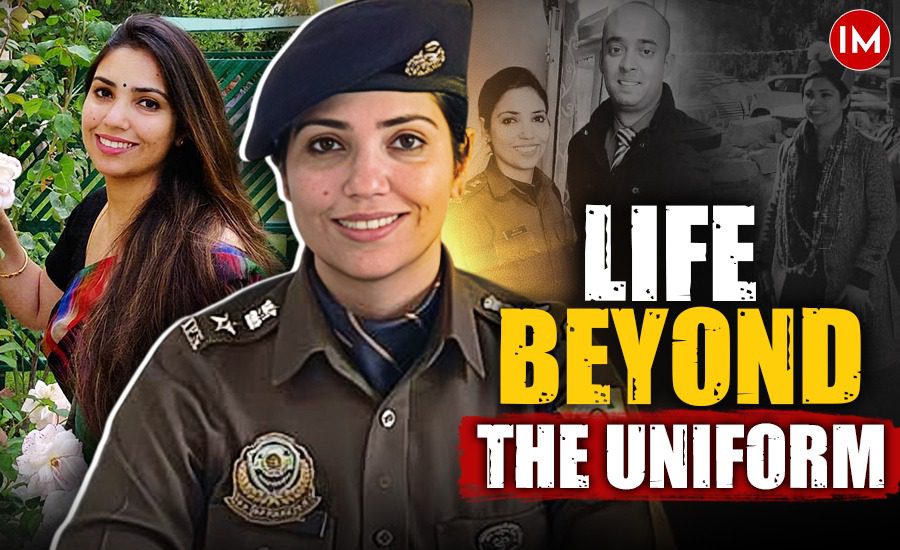
There are some officers who are remembered for the fear they inspire. And then there are those who are remembered for the faith they restore. Ms. Sakshi Verma belongs firmly to the latter category.
An Indian Police Service officer of the 2014 batch from the Himachal Pradesh cadre, Ms. Verma is currently serving as SP, Vigilance in Himachal Pradesh. Over the years, she has handled challenging districts like Kullu, Mandi, Bilaspur, and Shimla, fought drug networks, managed disaster-hit regions, and balanced motherhood alongside one of the country’s most demanding services.
But beneath the uniform and administrative responsibilities lies a deeply reflective individual who believes success is meaningful only when accompanied by balance, empathy, and perspective.
In an interaction with Indian Masterminds, Ms. Verma spoke candidly about her UPSC journey, marriage, motherhood, and the emotional realities of policing.
THE FOURTH ATTEMPT THAT CHANGED EVERYTHING
Ms. Verma’s civil services journey did not begin with certainty or privilege. She was the first person in her family to clear the UPSC Civil Services Examination, inspired and motivated largely by her father.
She began preparing after college and, remarkably, reached the interview stage in all her first three attempts before finally securing a rank in her fourth.
Read Also: IAS Nazuk Kumar: Engineering Change, Anchoring Governance in Empathy
Instead of seeing repeated setbacks as failure, she viewed them as momentum.
“I had been going for interview since my first attempt, luckily, which kept the flow going. And I finally got through in my fourth attempt,” she told Indian Masterminds.
For many aspirants, repeated near-success can become emotionally exhausting. But Ms. Verma says the UPSC cycle itself helped her stay focused.
“One might feel that it was disappointing. But for me, it was actually motivating that the cycle was regular.”
The gap between one disappointment and the next prelim examination was often so small that she barely had time to overthink failure.
Her message to aspirants today comes not from textbooks, but from lived experience.
“We have to give our 100%. But at the same time, we have to understand that life is much, much beyond this. Even if it doesn’t work out, maybe it’s for your own good. It’s not the end of the world.”
It is a perspective shaped not just by examinations, but by years spent witnessing human suffering, resilience, and recovery up close.
“THE IDEA WAS TO CLEAR UPSC”
Interestingly, Ms. Verma never entered preparation with a rigid dream of becoming an IPS officer specifically. Like many aspirants, her larger goal was simply to enter the civil services.
IAS remained her first preference and IPS the second, but policing was not a carefully scripted ambition.
Yet, over time, the service shaped her identity just as much as she shaped her role within it.
Today, she is known for her work against narcotics networks in Himachal Pradesh and for her compassionate approach toward women’s safety and public welfare.
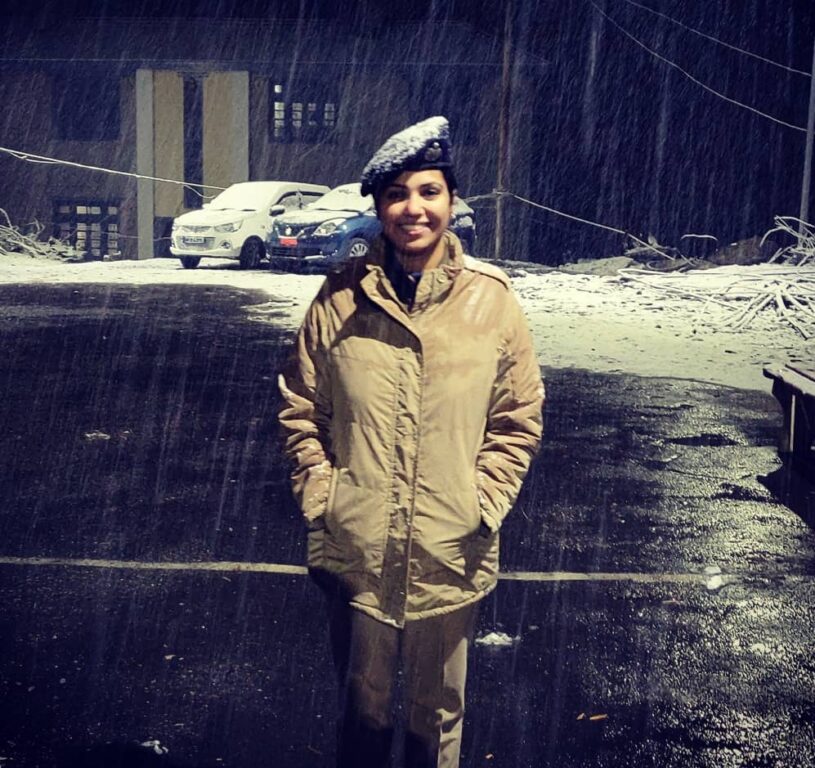
A MARRIAGE BUILT ON MUTUAL UNDERSTANDING
One of the most unusual and heartwarming chapters of Ms. Verma’s career came when her husband — also an IPS officer — succeeded her as SP in Kullu district.
Originally allotted the Kerala cadre, he later shifted to Himachal Pradesh after their marriage in 2018.
What made the Kullu posting memorable was not merely the transfer, but the emotional continuity behind it.
“It was a very special and very unexpected moment,” she recalled.
At the time, Ms. Verma was moving from Kullu to Mandi while her husband was taking over Kullu after serving in Bilaspur. Both transitions represented bigger professional responsibilities.
But for Ms. Verma, the moment carried deeper significance because her husband had already witnessed the intensity of her work during Himachal Pradesh’s devastating floods and disasters.
“He had seen the challenges in the district. He had seen me work through all that.”
The shared experience of service, she believes, creates an unspoken understanding between two officers.
“A lot of things are just done unsaid only,” she said while describing life with another IPS officer.
MOTHERHOOD IN A 24/7 SERVICE
Policing, especially at the district level, rarely offers predictability. Emergencies can arise at any hour, and public duty often overrides personal comfort.
For Ms. Verma, motherhood arrived amid this relentless professional pace.
She resumed her responsibilities in Kullu after maternity leave when her child was just six months old — precisely around the time Himachal Pradesh was grappling with one of its worst disasters.
The period tested her emotionally in ways no training academy ever could.
“Every new mother keeps thinking — am I doing enough for the child? Am I doing enough for my job?”
The disaster situation made things even more uncertain.
“For two months or so, we didn’t know which place was safe, where we were going, or if we were going to come back.”
Yet she continued working through the crisis, relying heavily on a strong support system and the silent understanding within her family.
She admits that guilt remains a constant companion for working mothers, regardless of profession.
But she has also discovered something else — resilience grows quietly in difficult seasons.
A POLICE OFFICER WHO LOOKS BEYOND LAW ENFORCEMENT
What stands out most in Ms. Verma’s journey is her refusal to view policing merely as enforcement.
Whether dealing with drug abuse, women in distress, or disaster-hit communities, her approach consistently focuses on the human side of governance.
She understands that crime often emerges from deeper social fractures — addiction, hopelessness, fear, or vulnerability.
And perhaps that is why her words resonate far beyond UPSC aspirants or police officers.
Because after handling disasters, narcotics, motherhood, and public pressure simultaneously, she still chooses to believe in perspective over panic.
“Life is much, much beyond this.”
In a world increasingly driven by pressure and performance, that may be her most powerful lesson of all.
Read Also: C.V. Anand: The Cricketer Who Walked Off the Pitch to Command Telangana Police